Batch Prep for Salads: Keep Greens Fresh All Week (No Soggy Leaves)
Frustration with Soggy Leaves? Here's Why it Happens
If you're like most salad lovers, you've experienced the inevitable disappointment of soggy greens halfway through the week. This common struggle isn't just frustrating—it's wasteful. The root of this issue is moisture. When exposed to condensation inside the packaging, your delicate greens start to break down faster, losing their crispiness and vitality. This guide is here to help you avoid these pitfalls and enjoy fresher salads every single day.
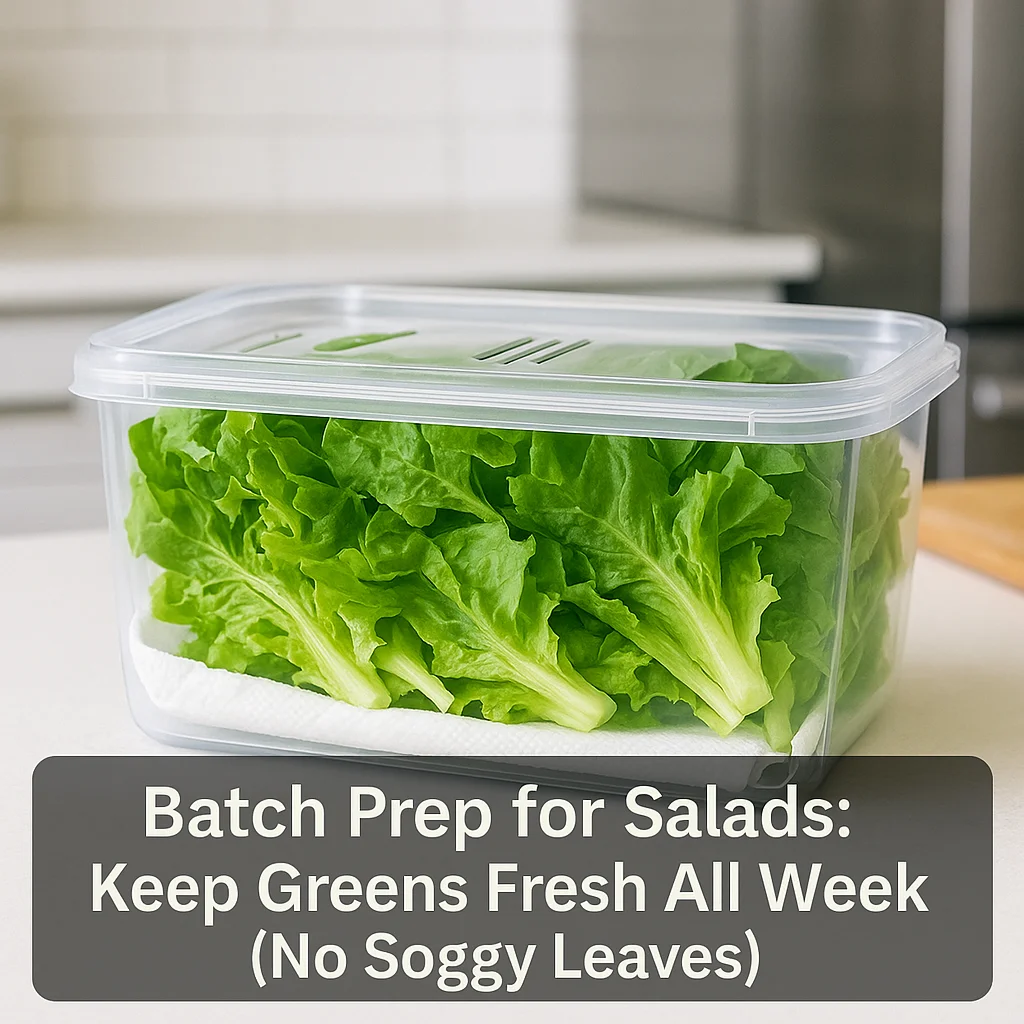
Fast Rules for Salad Longevity
- Wrap greens loosely in a paper towel to absorb excess moisture.
- Store in an airtight container if dry; vented if humidity is an issue.
- Separate ethylene-producing fruits (like apples) from your salad stash.
- Wash only before eating to prevent premature wilting.
- Avoid overpacking containers; give greens space to breathe.
- Use the crisper drawer set to low humidity for most salad greens.
- Check your greens every couple of days for signs of spoilage.
- Layer more robust greens at the bottom and delicate ones on top.
- Keep away from too cold areas in the fridge; avoid freezing.
Buying Checklist: Choosing the Freshest Greens
When shopping for salad ingredients, making the right choices at the store can prevent waste later.
- Look for: Brightly colored, crisp greens with no darkened or wilted edges.
- Avoid: Bags with excessive moisture or browning at the edges.
- Test: Gently squeeze loose greens; they should feel firm, not mushy.
- Examine: Check for any slimy or overly soft spots.
- Understand: Ethylene-sensitive products like spinach should be kept away from fruits.
Step-by-Step Solution for Salad Prep
Our goal is to keep your greens dry but not dehydrated, controlling moisture and storage conditions.
- Start fresh: Choose crisp, vibrant greens with no signs of spoilage. Why: The fresher the start, the longer they last. Look for: Firmness and color.
- Prepare a dry container: Use an airtight container if brown edges are a common issue, or a vented one to reduce condensation. Why: It balances moisture levels. Look for: No condensation on leaves.
- Layer with paper towels: Lay a clean, dry paper towel at the bottom and top of your greens batch. Why: To absorb excess moisture. Look for: No pooling water.
- Sort your greens: Arrange them from sturdiest (like kale) below to delicate (like arugula) on top. Why: Prevents crushing lighter leaves. Look for: Intact, vibrant greens.
- Refrigerator placement: Store in the crisper drawer set to low humidity. Why: Reduces moisture without drying out. Look for: Crispness retained.
- Away from ethylene producers: Keep greens away from fruits like apples and pears. Why: Ethylene accelerates wilting. Look for: No fast wilting amongst greens.
- Check every two days: Inspect for signs of spoilage and remove any affected greens immediately. Why: Prevents spread of decay. Look for: No sliminess or dark spots.
- Rewrap paper towels if damp: Replace any damp paper towels with dry ones. Why: Ensures continued absorption of excess moisture. Look for: Dry, crisp towels.
- Avoid washing until ready to use: Moisture speeds up spoilage. Why: Keeps them fresh longer. Look for: No signs of wilting.
- If wilted slightly: Revive greens in icy water for 5 minutes before serving. Why: Restores turgor pressure. Look for: Recrisped appearance.
- If greens are too damp → Add an extra paper towel or switch to a vented container.
- If greens begin browning quickly → Check for ethylene exposure, move to a cooler spot.
- If greens freeze in the fridge → Move away from the back wall or where the airflow is direct.
- If greens get slimy → Dispose of spoiled greens and repackage rest with dry towels.
- If dryness occurs → Consider a crisper setting adjustment or humidifier use.
15–20 Minute Weekly Prep Routine
- Check fridge setting: Ensure a low humidity setting in the crisper drawer.
- Examine greens: Sort out any old or damaged pieces before storage.
- Wash only as needed: Rinse just before using, not during the prep day.
- Prepare containers: Set up clean, dry containers with paper towels.
- Layer properly: Heavier, sturdier greens on bottom, lighter on top.
- Seal and store: Securely close containers and place them in an appropriate fridge spot.
If I only had 2 minutes
- Grab containers, check and replace paper towels as needed.
- Move greens further from ethylene producers like fruits.
- Quickly check for noticeable signs of spoilage and remove.
If your fridge is weird: If it tends to be too dry, put a bowl of water in the fridge; if too humid, ensure containers are vented. If produce freezes by the back wall, move them forward or to a warmer spot.
Common Mistakes and How to Avoid Them
- Overlooking humidity settings → crisper browning → Readjust drawer to low humidity.
- Storing with fruits → quick wilting → Keep greens separate.
- Skipping spoilage check → spread of decay → Regularly inspect and remove bad leaves.
- Washing before storing → soggy greens → Wash only before eating.
- Overfilling containers → increased softness → Allow breathing space.
- Using damaged leaves → early rot → Only use crisp, undamaged greens.
- Not replacing wet towels → improper moisture control → Monitor and replace regularly.
- Frequent fridge opening → temp swings → Minimize opening for freshness consistency.
- Using opaque containers → hard monitoring → Use clear containers for visibility.
- Assuming all greens are the same → blanket method failure → Tailor method to specific leafy types.
Food Safety Notes
Always wash salad greens right before use, not ahead of time, to prevent them from becoming waterlogged and spoiling quickly. Discard any leaves showing signs of slime, mold, or strong off-putting odors. Being cautious during inspections can save you from consuming spoiled produce.
Quick Reference Table
| Produce | Best storage | What to avoid | Typical problem | Quick fix |
|---|---|---|---|---|
| Lettuce | Low humidity crisper drawer, paper towel-wrapped | Direct contact with fruits | Wilting | Away from ethylene sources |
| Spinach | Airtight container with paper towel | Wet storage | Sogginess | Check for moisture, replace towel |
| Arugula | Layered in vented container | Excessive humidity | Browning | Switch container to vented |
| Kale | Crisper drawer with little air movement | Stacking with soft greens | Stiffness loss | Position sturdily below |
FAQ
- Q: Can I wash and store greens? A: It's best to wash only when ready to use to prevent sogginess.
- Q: What if my fridge is too humid? A: Use vented containers to allow moisture escape.
- Q: How do I know if my greens are spoiled? A: Look for slime, unusually dark spots, or off odors.
- Q: Why is there condensation in my container? A: It’s due to temperature changes or trapped humidity.
- Q: Does storing fruit with greens harm them? A: Yes, fruits emit ethylene gas that speeds up wilting.
- Q: Can frozen greens be saved? A: Unfortunately, once frozen, the texture is compromised for fresh salads.
- Q: Should I use the vent function on my crisper drawer? A: Use it to regulate moisture depending on produce needs.
- Q: What are the safest salad greens to store longer? A: Kale and romaine due to their sturdiness.
- Q: How often should I check the stored greens? A: Every couple of days to ensure they're still fresh.
- Q: Are pre-packaged greens worse to store? A: They can be, as they're usually more susceptible to moisture issues.
Closing Thoughts
- Pre-plan storage setup to manage moisture successfully.
- Inspect regularly to prevent spoilage from spreading.
- Always adjust settings and prep based on specific leafy types.
With these strategies, your salads will remain fresh and crisp throughout the week. Here's to no more soggy leaves and less waste!
Check out more tips on our Full Post List or explore our Comparison Guides and Substitution Tips.