Onion Sprouts: Is It Still Safe? What to Do With It
When Sprouts Happen: Why It Annoys and How You End Up There
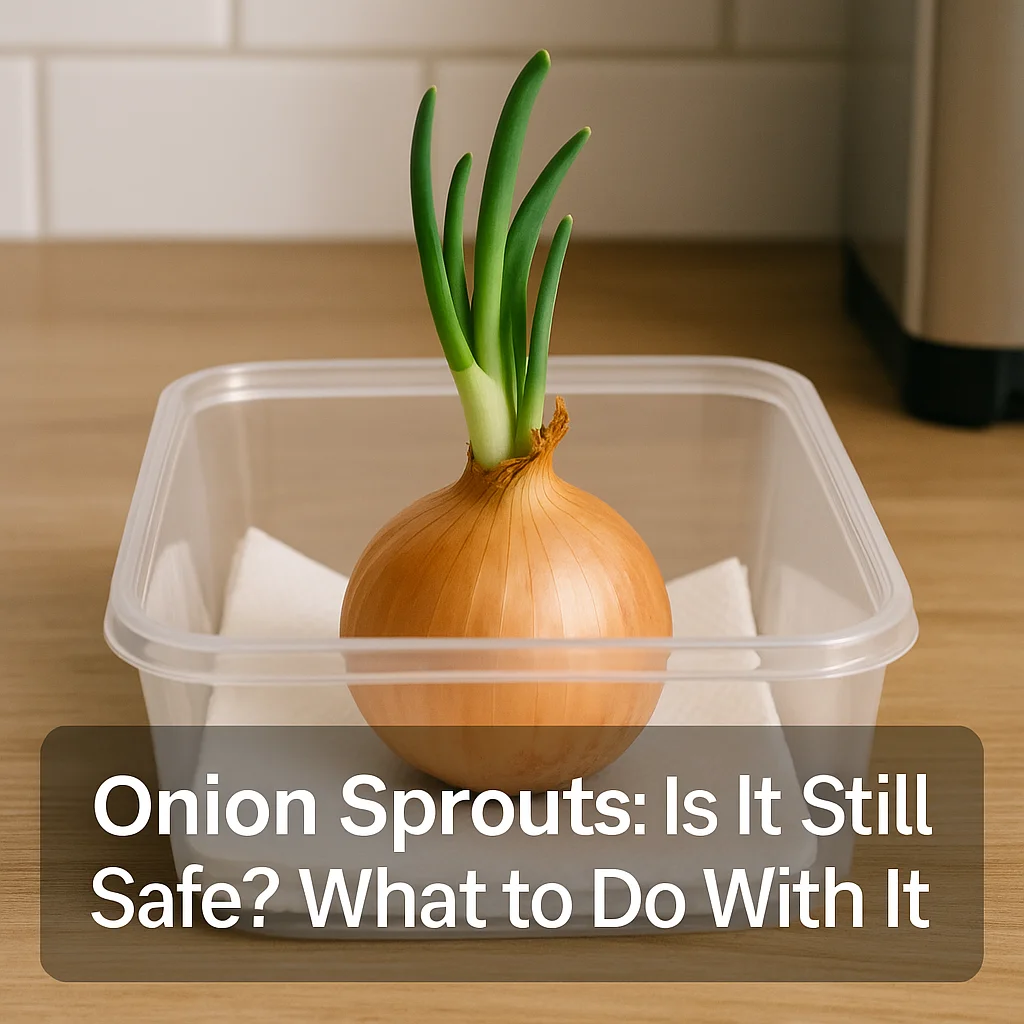
We've all been there—looking forward to a fresh onion only to find a green sprout poking out. It's not just you—these little shoots can develop quickly under the wrong conditions, turning your culinary expectations into feelings of waste and frustration. Moisture and temperature swings are usually to blame, encouraging onions to sprout.
Your Go-to Rules for Onion Storage
- Store onions in a cool, dry, and well-ventilated place to minimize moisture.
- Avoid keeping onions in a plastic bag—it traps moisture and accelerates sprouting.
- Keep onions away from potatoes; ethylene gas from potatoes speeds up sprouting.
- Inspect onions regularly for sprouting or soft spots and use them accordingly.
- Store chopped onions in an airtight container in the fridge to avoid moisture loss.
- If onions begin to sprout, use the sprouts similar to chives for garnish.
- Use ventilated containers or mesh bags to encourage air circulation.
- Handle onions gently to avoid surface damage, which can trigger spoilage.
Buying the Perfect Onion: Checklist
To minimize the risk of sprouting and spoilage, keep these tips in mind while shopping:
- Firmness: Select onions that feel heavy for their size and are firm.
- Color: Choose onions with even coloring and no discoloration.
- Skin: Look for onions with dry, papery skins, free of cuts or blemishes.
- Avoid moisture: Pass on onions that are moist or have green sprouts.
How to Handle Them: Step-by-Step Solution
Your main goal is to keep onions dry but not dehydrated. Here’s the detailed recipe for storage success:
- Choose the right container: Use a mesh bag or ventilated basket to store onions. This allows air to circulate, reducing moisture buildup and slowing sprouting.
- Find the best spot: Store onions in a cool, dry area, such as a pantry. High humidity encourages sprouting, while a steady, cool temperature prolongs shelf life.
- Avoid stacking: Place onions in a single layer if possible. Stacking can damage onions underneath, creating soft spots that lead to spoilage.
- Regular checks: Once a week, inspect your onions for sprouting or softening. This allows you to use them in time, reducing waste.
- Watch your setup: Pair onions with garlic for storage; both benefit from similar conditions, and neither emit ethylene gas that accelerates sprouting.
- Keep them apart: Never store onions with potatoes; potatoes emit a gas that hastens sprouting and spoilage in onions.
- Prevent moisture contact: Moisture is your enemy; use paper towels in your storage spots if the area tends to be humid.
- What to do with sprouted onions: Use sprouts like chives in salads or soups. The bulb itself is generally still fine to eat, though it may have a slightly altered texture.
- Troubleshooting Signs: If you see soft spots, humidity is likely too high. If sprouts form often, your space may be too warm or moist.
- If you notice a bad smell → Check for spoilage and discard any rotten pieces.
- If bulbs feel slimy → Increase ventilation and reduce humidity immediately.
- If focus is on firm texture → Store in a cooler pantry space below 50°F (10°C).
- If onions constantly sprout → Consider lessening storage time before use.
15–20 Minute Weekly Prep Routine
- Check the stash: Inspect onions for signs of spoilage or sprouting.
- Organize: Reorganize remaining onions for optimal airflow.
- Prep ahead: Chop and refrigerate a portion for recipes in airtight containers to save time during the week.
- Check environment: Ensure no ethylene-producing fruits (like apples or pears) are nearby.
If I Only Had 2 Minutes
- Inspect onions for obvious spoilage.
- Remove anything showing sprouts and plan them for immediate use.
If your fridge is weird: For too dry, use a damp paper towel in your container. For too humid or if you have a freezing back wall, move onions to a pantry.
10 Mistakes That Ruin Your Onions
- Plastic bags → trap moisture → use ventilated bags
- Too hot → triggers sprouting → store in a cooler place
- Over-stocking → leads to pressure damage → space them properly
- Ignoring sprouting → potential waste → utilize sprouts as chives
- Leaving moisture unchecked → risk of mold → check for dampness weekly
- Mishandling during storage → surface damage → handle with care
- Mixing with potatoes → accelerates sprouting → store separately
- Neglecting damaged skins → quick spoilage → remove affected layers
- Storing in direct sunlight → increased temperature → keep in a shaded corner
- Skipping weekly checks → unseen spoilage → establish a routine
Food Safety Notes: When to Wash and Discard
Wash onions right before using to avoid excess moisture in storage. Be conservative: discard onions with extensive surface mold, deep soft spots, or a sour smell. As always, if in doubt, toss it out.
Quick Reference Table
| Produce | Best Storage | What to Avoid | Typical Problem | Quick Fix |
|---|---|---|---|---|
| Onions | Cool, dry, ventilated | Plastic bags, humidity | Sprouting | Use sprouts as chives |
FAQ
- Are sprouted onions safe to eat? Yes, generally. Remove the sprout if the texture has changed.
- Can I store onions in the fridge? Yes, but only once they are peeled or cut.
- Do green sprouts make onions toxic? No, but they can alter the flavor and texture.
- What's the best way to prevent sprouting? Store them cool, dry, and away from potatoes.
- What's an efficient use for sprouted onions? Use sprouts like herbs in cooking.
- How long do onions last? When stored properly, up to 2-3 months.
- What if my pantry is humid? Use a dehumidifier or store onions in a mesh bag.
- Can the whole onion be used if it has sprouted? Yes, just remove the sprout if it's large.
- Does air circulation affect storage? Absolutely, poor air flow can lead to earlier sprouting.
- What if I find mold on an onion? Discard any with extensive mold, wash visible areas off immediately when spotted.
Closing: The Magic Trio of Onion Care
- Keep them cool, dry, and well-ventilated to extend their shelf life.
- Avoid storing them with ethylene-producing fruits and vegetables.
- Check regularly to use sprouted or softening ones first.
By mastering these simple techniques, you're not just minimizing waste but enhancing your cooking adventures. Happy onion storing from your kitchen to your table!
For more helpful tips and guides, head over to our complete list here.
Or explore comparisons and problem-solving insights here.