Recipe Substitutions: Onion vs Shallot vs Green Onion (Easy Swap Guide)
Hook: Why Does Your Produce End Up in the Trash?
Have you ever bought a bunch of green onions or shallots, only to find them languishing and slimy in the fridge drawer a week later? The issue usually comes down to improper storage and not knowing the perfect ways to substitute them when your recipe calls for something you don't have on hand. Here, we break down how simple changes can keep these alliums fresh and usable.
Fast Rules for Quick Swaps
- Use half a shallot in place of one small onion for a subtler taste.
- Green onions can substitute chopped onions in fresh recipes for a milder flavor.
- 1 tablespoon of chopped green onion equals about 2 teaspoons of minced shallots.
- Adjust cooking time when substituting shallots; they cook faster than onions.
- Raw shallots work well in dressings as a substitute for finely minced onions.
- When caramelizing, start shallots later to prevent burning compared to onions.
- To test flavor, add half the substitute amount and taste before adding more.
- Use the greens of green onions as a garnish to save the white parts for cooking.
- Store cut onions and shallots in airtight containers to avoid odor transfer.
- When substituting, balance flavors with additional spices or citrus.
Buying Checklist: Choose the Best Onions, Shallots, and Green Onions
- Onions: Choose firm bulbs with papery skins and avoid any with mold or soft spots.
- Shallots: Look for dry, purple-red skin and firm bulbs. Avoid any that are spongy.
- Green Onions: Opt for bright green, crisp tips, and avoid any with slimy or wilting leaves.
The Real Fix: Step-by-Step Solution for Storage and Substitution
Goal: Store these ingredients properly to avoid waste and simplify substitutions.
- Onions: Store in a mesh bag or basket in a cool, dark place to reduce moisture and airflow. Look for any sprouting or mold for freshness checks.
- Shallots: Keep in a cool, dry, well-ventilated place to avoid sprouting and shriveling. Check for firmness regularly.
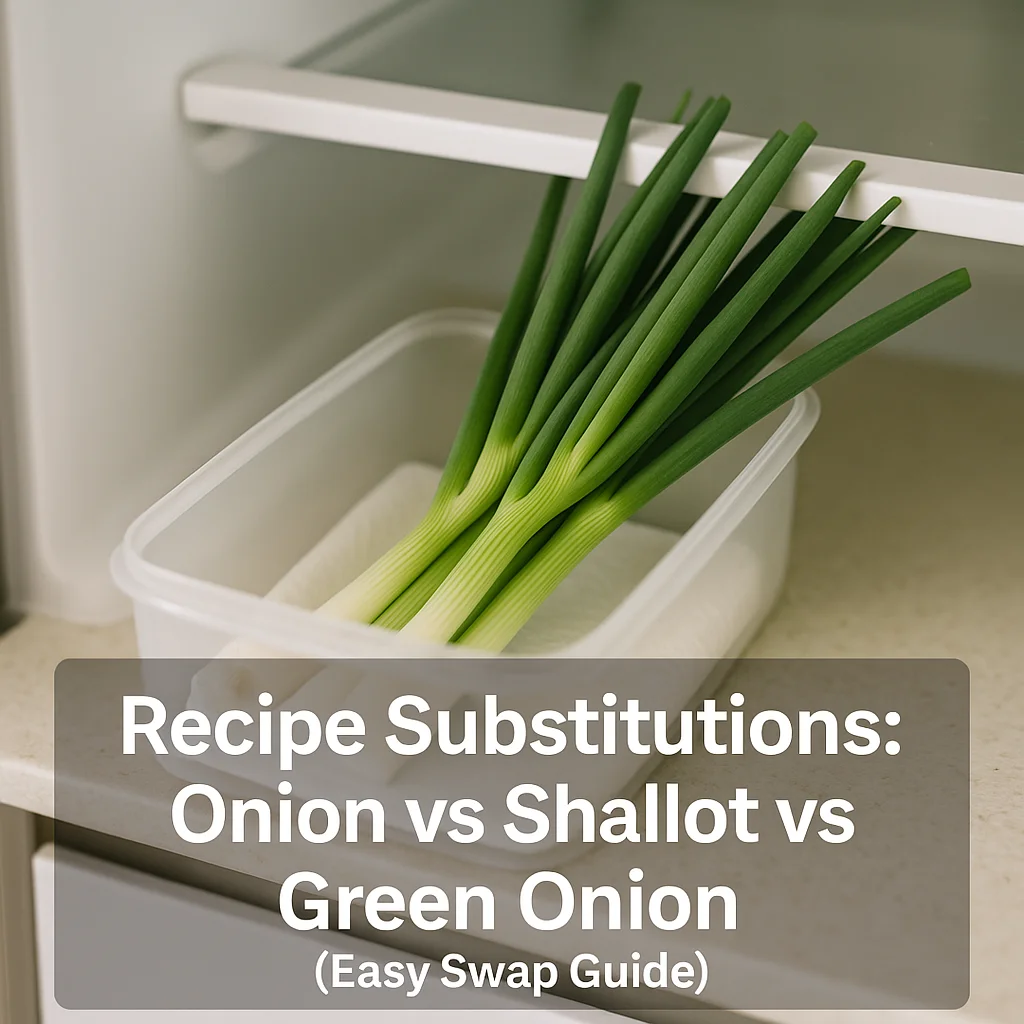
- Green Onions: Store in a jar with a little water, covered loosely with a plastic bag, in the fridge to maintain moisture. Leaves should remain crisp.
- Humidity Control: Use vegetable drawer settings when storing cut vegetables, and wrap in paper towels to prevent excess moisture.
- Fridge Layout: Avoid the back wall of the fridge where temperatures fluctuate more.
- Ethanol Management: Keep onions and shallots separate from potatoes; ethylene gas accelerates sprouting and spoilage.
- For Ripeness Testing: Gently squeeze the bulb: it should feel firm and solid.
- If Cut: Store leftover halves in airtight containers to prevent drying and odor absorption.
- If Discolored: Remove any slimy or discolored parts and rinse well before use.
- Cut Methology: Slice in uniform pieces for even cooking—essential for precise substitutions.
- If/Then Troubleshooting:
- If sprouting: Remove sprouts and store in a cooler location.
- If slimy: Discard as it indicates bacterial growth.
- If pungent smell: Keep well-sealed to prevent odor absorption.
- If sogginess appears: Adjust fridge humidity settings.
- If new to substituting: Always add slowly and taste.
- If browning in storage: Indicate too much moisture; adjust storage method.
- If taste concerns: Start with a smaller substitution ratio and gradually increase.
- If drawers are too cold: Place produce on a higher refrigerator shelf area.
15–20 Minute Weekly Prep Routine
- Check for spoiled or mushy pieces in stored onions, shallots, and green onions.
- Trim and rinse green onions, leaving some root and shaking excess water off.
- Slice onions and store them in airtight containers for quick recipes during the week.
- Peel and mince shallots for salad dressings and store in a small, resealable bag.
- Store all prepared produce properly in the fridge, respecting section divisions to avoid cross-contamination.
- If I Only Had 2 Minutes:
- Check for moisture in stored veg drawer and adjust storage as needed.
- Quickly remove any sprouting or wilting pieces.
- If Your Fridge Is Weird:
- Too Dry: Place produce in airtight containers with a damp paper towel.
- Too Humid: Use dry paper towels in vented containers to absorb excess moisture.
- Freezing Back Wall: Move everything slightly forward to prevent freezing damage.
Common Mistakes and How to Fix Them
- Mistake: Storing onions in the fridge. Consequence: Accelerates softening. Fix: Keep at room temperature in the pantry.
- Mistake: Not separating onions and potatoes. Consequence: Speeds spoilage. Fix: Store apart in different areas.
- Mistake: Cutting onions long in advance. Consequence: Deteriorates faster. Fix: Only slice when ready to cook.
- Mistake: Using too much shallot for onion. Consequence: Overpowering flavor. Fix: Use half the amount as onion.
- Mistake: Storing green onions in airtight containers. Consequence: Wilts faster. Fix: Stand upright in water.
- Mistake: Ignoring storage drawer settings. Consequence: Wrong humidity levels cause spoilage. Fix: Adjust settings as needed.
- Mistake: Discarding shallot skins. Consequence: Wasting valuable stock flavor. Fix: Use in broths and stocks.
- Mistake: Leaving cut ends uncovered. Consequence: Dries out quickly. Fix: Seal exposed ends tightly.
- Mistake: Misidentifying smell as spoilage. Consequence: Wasting good produce. Fix: Check firmness to distinguish spoilage.
- Mistake: Tossing mushy first layer shallots. Consequence: Discarding usable inner layers. Fix: Peel away the damaged layer first.
Food Safety Notes
- Wash all produce under running water before use but not before storage to prevent mold.
- Discard any onions or shallots with mold, and cut away any soft spots before preparation.
- If green onions smell off or appear slimy, best to be on the safe side and toss them.
Quick Reference Table
| Produce | Best Storage | What to Avoid | Typical Problem | Quick Fix |
|---|---|---|---|---|
| Onions | Cool, dry place | Fridge storage | Softening | Room temperature handling |
| Shallots | Well-ventilated area | Excess moisture | Sprouting | Dry environment |
| Green Onions | Jar with water in fridge | Airtight storage | Wilting | Maintain slight moisture |
FAQ: Your Questions About Onion, Shallot, and Green Onion Substitutions
- Can I swap onion for shallot in every dish? Generally, yes, but expect a milder flavor with less heat.
- Are green onions the same as scallions? Yes, they are different terms for the same vegetable.
- How do I measure onion versus shallot? Use an equal amount, since shallots often taste stronger, adjust for taste.
- Can frozen onions be used as a substitute? Yes, but they will alter texture and may become watery.
- What part of the green onion should I use? Use both white and green parts; they have the best flavor.
- Will shallot change the taste significantly? Possibly; it's usually milder yet sweeter, so reduce the sugar added.
- Do cooked onions just taste like shallots? Cooked onions have a more lingering flavor, while shallots harmonize with the dish.
- When is it worth using shallots over onions? In raw dishes or delicate sauces where refined flavor profiles matter.
- Can dried onion powder substitute fresh onions? Yes, but only when the raw onion texture is not crucial.
- What recipes are best for green onions? Use them in salads, garnishes, and as toppings for a fresh crunch.
Closing Thoughts
- Store produce separately to control ethylene and moisture interference.
- Use paper towels to manage and absorb excess moisture in containers.
- Rinse only before use to maximize shelf-life in storage.
Remember, understanding the nuances between onions, shallots, and green onions can transform your cooking and reduce waste. Happy cooking, and feel free to explore more swap guides on our Complete Post List or a range of Substitutions and Problem Solving Topics!