Why Tomatoes Get Mushy + How to Keep Flavor and Texture
Why Tomatoes Get Mushy
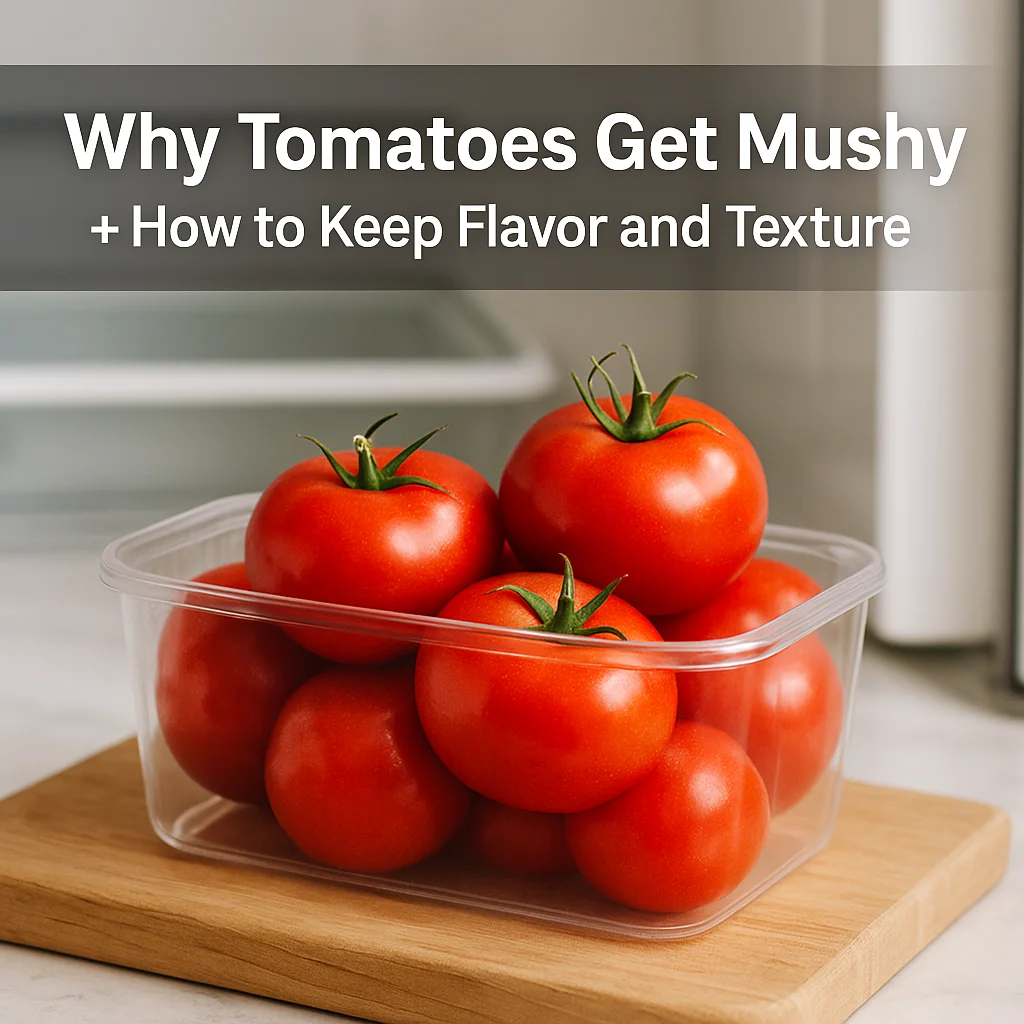
We've all been there—dealing with once-perfect tomatoes that have turned into mushy disappointments. This frustration often happens due to moisture retention, ethylene gas exposure, and temperature swings. Understanding these factors can help you preserve the tomatoes' desired flavor and texture.
Fast Rules
- Store tomatoes at room temperature away from direct sunlight.
- Avoid refrigerating tomatoes unless they're overripe.
- Place ripe tomatoes stem side down to prevent moisture loss.
- Keep tomatoes away from ethylene-producing fruits like bananas.
- Use a cotton cloth or paper towel to absorb excess moisture.
- Check tomatoes daily to catch spoilage early.
- If sliced, consume promptly or refrigerate in an airtight container.
Buying Checklist
Choose tomatoes that are:
- Firm yet give slightly to pressure.
- Evenly colored without blemishes or dark spots.
- Fragrant with a fresh tomato scent.
- Heavy for their size, indicating juiciness.
- Avoid signs of cracking or slimy patches.
The Real Fix: Step-by-Step Solution
Our goal: Maintain tomatoes’ firmness by controlling moisture and temperature.
- Store at Room Temperature: Keep tomatoes in a single layer on the counter away from direct sunlight, as this prevents dehydration and flavor loss.
- Avoid Refrigeration: Cold temperatures dull flavor and make tomatoes mealy over time.
- Airtight or Vented: Limit moisture loss with a vented container if you must refrigerate overripe tomatoes.
- Use Paper Towels: Line containers with paper towels to absorb excess moisture and maintain a dry environment.
- Placement: Store tomatoes stem side down to minimize air exposure and reduce moisture loss.
- Monitor Ripeness: Check daily for softness; if overripe, consume quickly to avoid wasting.
- Ethylene Control: Store away from ethylene-producing fruits to delay ripening.
- If Unripe, Encourage Ripening: Place near bananas or apples to speed up ripening when desired.
- If Requiring Fridge Use: If the fridge is too humid, open a vent slightly; if too dry, add a damp paper towel for equilibrium.
If/Then Troubleshooting:
- If tomatoes feel soft, consume them immediately.
- If they're losing taste, reduce exposure to air.
- If dealing with mold, discard the affected ones promptly.
- If bruises appear, focus on consuming those tomatoes first.
- If skins crack, adjust storage to cooler spaces but not the fridge.
- If a fridge's vegetable drawer is too humid, leave it slightly open.
- If they're stored in a damp place, improve airflow by separating them.
- If the kitchen is overly hot, move to a cooler counter location.
15–20 Minute Weekly Prep Routine
- Check tomatoes for firmness and consume any that are starting to soften.
- Organize by ripeness: Unripe near ethylene fruits, ripe in reserved area.
- Place a paper towel in storage containers for moisture control.
- Inspect for blemishes or cracks and prioritize for salads or saucing.
- Store stem down and give regular checks.
If I only had 2 Minutes
- Quickly separate ripe from unripe.
- Keep a paper towel handy for quick moisture absorption.
Note: "If your fridge is weird"—too dry or humid fridges need monitoring. Adjust moisture by using or removing wet paper towels as needed.
Common Mistakes
- Refrigerating ripe tomatoes: Leads to mealiness; store at room temp instead.
- Storing in plastic bags: Causes moisture collection; use breathable containers.
- Ignoring ethylene exposure: Speeds up ripening; keep tomatoes separate.
- Overlooking moisture: Promotes mold; incorporate absorbent materials.
- Piling tomatoes: Causes bruising; store in single layers only.
- Forgetting to check ripeness: Results in waste; get vigilant about checking.
- Keeping tomatoes in the sun: Causes dehydration; place away from windows.
- Allowing damaged tomatoes to touch: Leads to faster spoilage; segregate them.
- Not adjusting for fridge quirks: Results in texture loss; tweak humidity as necessary.
- Using airtight containers for fully ripe tomatoes: Can cause rotten taste; leave space for ventilation.
Food Safety Notes
Wash tomatoes just before consumption to prevent early spoilage. Discard tomatoes with visible mold, overly soft spots, or strong smell impurities to avoid health risks.
Quick Table
| Produce | Best storage | What to avoid | Typical problem | Quick fix |
|---|---|---|---|---|
| Tomatoes | Room temp, paper-towel lined, stem down | Refrigeration, ethylene exposure | Mushiness | Control humidity & temperature |
FAQ
- Why do tomatoes get mushy in the fridge? Cold temps slow enzymes but damage cell structure leading to mealiness.
- How long can I keep tomatoes at room temperature? Usually 3-5 days if stored properly with stems down and dry conditions.
- What’s the best container for storing tomatoes? Vented baskets allow air circulation, preventing moisture build-up.
- Can I freeze tomatoes to keep them fresh? Freezing is possible but changes texture; best for sauces post-thawing.
- Do all tomatoes need the same storage? Yes, but be mindful of their ripeness stage to adjust conditions as needed.
- Should I remove stems before storage? No, they help prevent air from quickening spoilage.
- Why is ethylene gas bad for tomatoes? It accelerates ripening, making them spoil faster if not controlled.
- Can I store cut tomatoes at room temp? No, refrigerate them and consume within 1-2 days.
Closing
- Store tomatoes at room temperature and away from ethylene producers to delay ripening.
- Focus on monitoring moisture to prevent mold growth and mushiness.
- Check for ripeness often to consume ripe tomatoes at the perfect time.
Keep these tips in mind, and you'll enjoy perfect tomatoes all year round. For more guides and tips, visit our post list and our comparisons and problem-solving topics.