How to Choose Tomatoes: Best Signs for Cherry/Roma/Beefsteak
Stop Wasting Your Tomatoes: Find Out Why They Go Bad So Fast
We’ve all faced the frustration of buying fresh tomatoes, only to find them mushy and unusable just days later. The culprit? Often, it’s a combination of poor initial selection and improper storage. While tomatoes can be incredibly rewarding when selected and stored correctly, they can also be quick to spoil due to moisture, exposure to ethylene gas, and temperature swings.
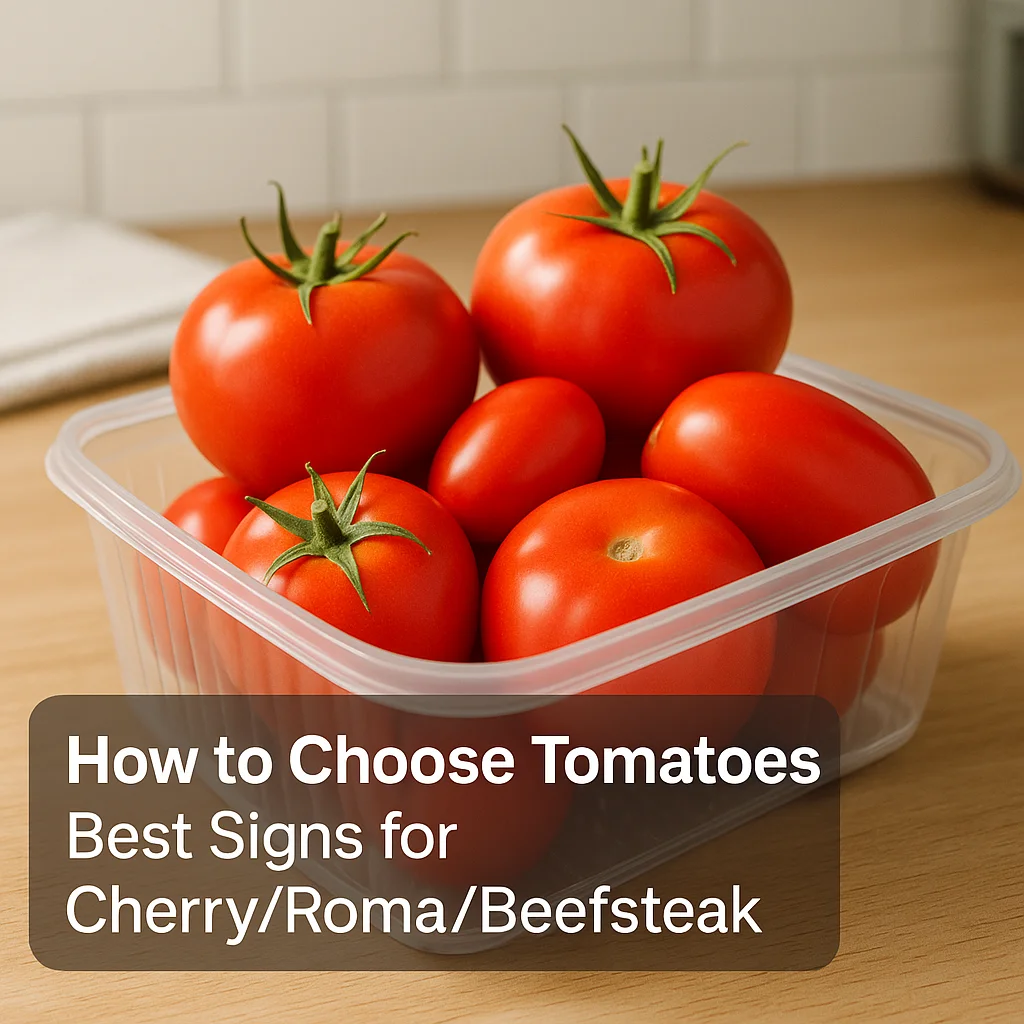
Fast Rules for Immediate Improvement
- Store tomatoes stem-side down to reduce air exposure.
- Keep tomatoes at room temperature until fully ripe.
- Avoid refrigerating unless absolutely necessary; it dampens flavor.
- Check for firm, smooth skin with deep color when buying.
- Smell the tomatoes for a strong, sweet fragrance.
- Avoid bruised or overly soft tomatoes.
- Separate from ethylene-producing fruits like bananas.
- Use paper towels to control moisture if refrigerating.
- Choose tomatoes with a slight give, indicating ripeness but not overripeness.
- Avoid temperature swings to prevent condensation and spoilage.
Your Ultimate Tomato Buying Checklist
Selecting the perfect tomatoes can be easy with a keen eye. Here’s what to consider:
- Color: Opt for vibrant reds without green patches.
- Texture: Look for smooth, unblemished skin.
- Feel: The tomato should be firm with a slight give.
- Smell: A rich, sweet aroma signals a ripe tomato.
- Size: Choose consistent sizes for even ripening.
- Weight: A heavier tomato is packed with juice and flavor.
- Stem: A green, fresh-looking stem indicates freshness.
- Avoid: Soft spots, wrinkles, and discoloration.
The Real Fix: Step-by-Step Solution for Optimal Tomato Enjoyment
Let’s aim to keep your tomatoes fresh by controlling moisture and ethylene exposure, ensuring they remain tasty and usable longer.
- Keep it dry: Store tomatoes at room temperature, away from moisture that can accelerate spoilage.
- Ripeness check: Monitor daily to detect when they reach full ripeness, characterized by a slight give under gentle pressure.
- Separate: Do not store with bananas or apples to prevent premature ripening from ethylene gas.
- Airflow: Use a bowl or open container that allows air circulation to minimize condensation.
- Avoid cold damage: Only refrigerate when fully ripe and if necessary, using the crisper drawer on a low humidity setting.
- Padded support: Place tomatoes on a single layer over a paper towel to absorb excess moisture.
- Correction measures: If refrigerated tomatoes lose flavor, let them sit at room temperature before use to regain some taste.
- Inspect and rotate: Regularly check for any signs of spoilage such as mold or soft spots, and use those first.
- Ripeness stages: For unripe tomatoes, keep them stem-side down on a sunny windowsill to ripen evenly.
- Select appropriate containers: If storing chopped tomatoes, use an airtight container with a paper towel on top to moderate moisture levels.
- Exclude damaged tomatoes: Use or remove any bruised tomatoes to prevent them from affecting others.
- If your tomatoes are ripening too fast in humidity, store in a cooler environment.
- If they spoil at room temperature, try chilling the ripest ones but eat them soon after.
- If skins wrinkle, they might be dehydrated; storing in a perforated bag can help retain some moisture.
- If tomatoes fail to ripen, check sunlight exposure or try a paper bag to concentrate ethylene.
- If they taste bland, avoid refrigeration until fully ripe, if possible.
- If strange odors arise, ventilation may be inadequate; increase airflow around your tomatoes.
- If rot spots appear, inspect your storage setup for trapped moisture.
- If they remain too firm, warmth can speed up ripening.
15–20 Minute Weekly Prep Routine for Tomatoes
- Inspection: Check all tomatoes for blemishes or soft spots.
- Sort and categorize: Separate into unripe, ripe, and slightly overripe groups.
- Storage setup: Decide which will stay at room temperature and which need refrigerating.
- Moisture control: Line storage areas with paper towels to manage excess moisture.
- Roast or prep: Use up the ripest tomatoes in meals or prepare to freeze for later use.
- Check containers: Inspect for adequate ventilation or airtight seals as needed.
- If I only had 2 minutes:
- Quick sort into ripeness categories.
- Refrigerate the very ripe ones you can't use immediately.
- If your fridge is weird:
If too dry, consider leaving tomatoes at room temperature longer. If too humid, consider vented containers.
Common Mistakes and How to Fix Them
- Refrigerating too soon: Kills flavor → Store at room temperature until fully ripe
- Ignoring airflow: Trapped moisture → Use bowls for better air circulation
- Overcrowding: Pressure damage → Store in single layers
- No paper towels: Excess moisture → Always pad with towels in storage
- Relying on plastic bags: Suffocation → Prefer open containers or paper bags
- Neglecting temperature control: Spoils quicker → Avoid windowsills with excessive light/heat
- Forgetting to check ripeness: Overripe waste → Regularly inspect and use accordingly
- Bunching different stages: Uneven ripening → Separate unripe and ripe tomatoes
- Leaving stems on: Collect moisture → Store stem-side down to block rot
- Ignoring ethylene producers: Accelerated spoilage → Keep away from other fruits like bananas.
Food Safety Notes for Tomatoes
- Always wash tomatoes right before using them, not before storage, to avoid excess moisture and mold growth.
- Discard any tomatoes with significant mold, foul smell, or large soft spots to minimize health risks.
- Only consume fully ripe tomatoes and avoid green parts unless intended for recipes that require them.
Tomato Storage Quick Reference Table
| Produce | Best Storage | What to Avoid | Typical Problem | Quick Fix |
|---|---|---|---|---|
| Cherry | Room temperature on countertop | Refrigeration | Flavor loss | Keep them at room temperature |
| Roma | Room temperature till ripe | High humidity | Mold growth | Storage in vented areas |
| Beefsteak | Open counter or on breadboard | Ethylene proximity | Overripening | Avoid ethylene-producing fruit |
Frequently Asked Questions About Choosing Tomatoes
- How can I tell if a tomato is too ripe? Look for deep, uneven discoloration and soft spots.
- What's the best time to refrigerate tomatoes? Only once they are fully ripe, to preserve flavor.
- Why should tomatoes be stored stem-side down? Reduces air entry and potential for decay.
- Can I store tomatoes with other veggies? Yes, but avoid ethylene producers like bananas.
- Does refrigerating tomatoes really affect taste? Yes, cold impairs their natural flavor profile.
- How can I speed up ripening? Place tomatoes in a paper bag to trap ethylene gas.
- Are wrinkled tomatoes still good? They can be, but check for overall firmness and smell.
- Can I freeze tomatoes? Yes, but better for cooking use due to texture change.
- What's the difference between Roma and Beefsteak? Roma is denser/fewer seeds; Beefsteak is larger with more juice.
- Is it safe to eat slightly green tomatoes? Yes, if cooked; raw, they can be hard to digest.
Saving Money with Tomato Shopping: Top Three Rules
- Rely on your senses: always check for aroma, firmness, and color.
- Avoid buying more than you can consume in a week to minimize waste.
- Store smart: room temperature for ripening, refrigerate sparingly.
Embrace these tips, and enjoy your tomatoes with less waste and more flavor. For more guides, check out our full list of articles or visit our step-by-step buying and prep checklist.