“5 a Day” Made Easy: A Simple Daily Routine That Actually Works
From Frustration to Freshness: The Real Reason You're Wasting Produce
You've bought a batch of vibrant fruits and vegetables, confident that you'll reach your “5 a Day” goal. Yet, days later, they sit sad and mushy in your fridge. Much of this frustration is due to improper storage, which accelerates spoilage through moisture build-up, temperature swings, and ethylene gas exposure.
Quick and Actionable Rules: Make It Happen
- Store bananas alone: they emit a lot of ethylene, ripening others too fast.
- Keep tomatoes at room temperature: the fridge can make them mealy.
- Use airtight containers for cut fruits: to prevent dehydration.
- Store leafy greens with a paper towel: absorbs moisture and delays wilting.
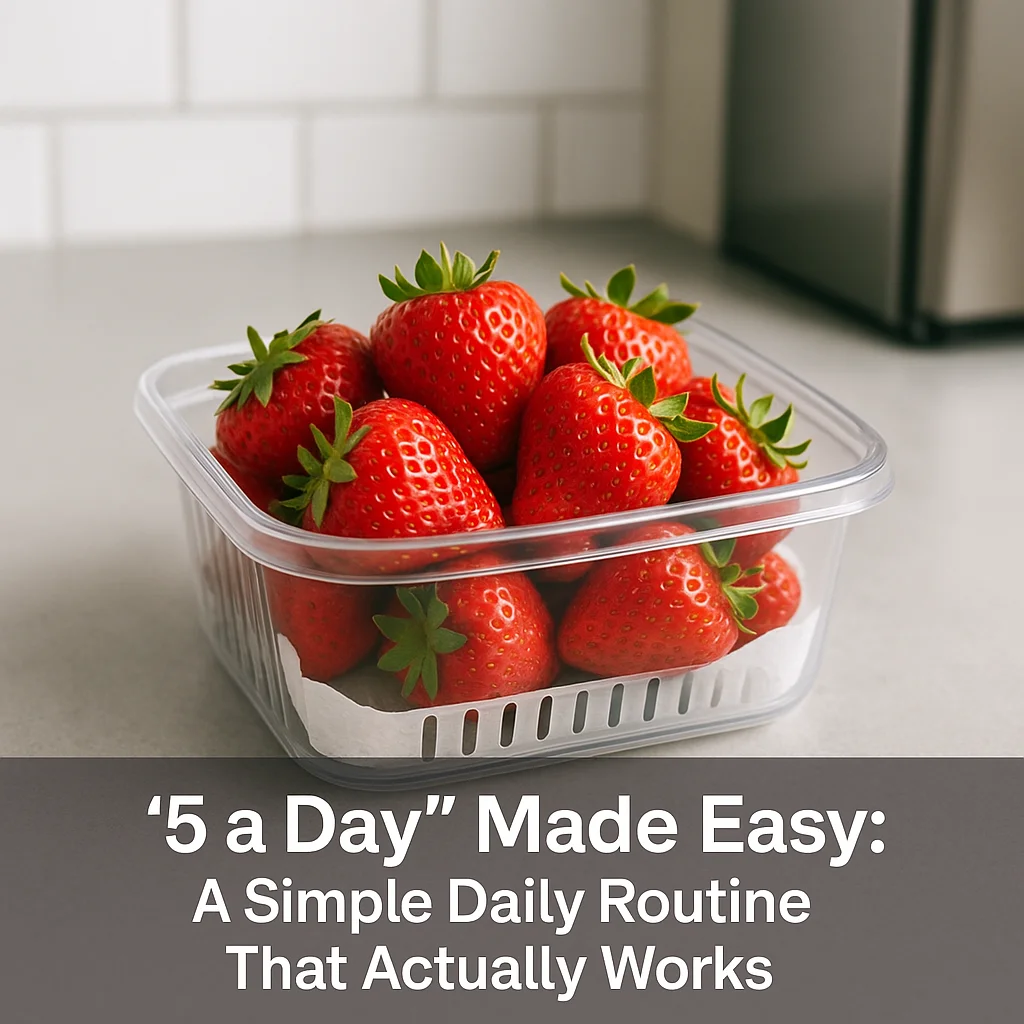
- Refrigerate berries unwashed in a vented container: reduces mold risk.
- Separate apples from other produce: they emit ethylene gas.
- Use two fridge drawers: one for high humidity, one for low.
- Wrap cucumbers in a paper towel: keeps them dry without dehydration.
- Check temperature regularly: ideal fridge temp is 37-40°F (3-4°C).
- Don't keep potatoes and onions together: moisture leads to sprouting.
Smart Shopping: Buying Better Produce
Selecting the right fruits and vegetables at the store can reduce waste later. Here's what I recommend:
- Choose firm, brightly colored produce, avoiding any with soft spots or bruising.
- Smell fruits like melons. A pleasing aroma usually indicates ripeness.
- Go for smaller, fresh stocks instead of bulk buys, which may spoil before consumption.
- Avoid pre-packaged produce as they tend to hide damaged items.
- Check the ripeness level and plan your week: buy certain fruits like avocados at different stages.
Achieving 5 a Day: A Detailed Step-by-Step Routine
To keep produce fresh, let's focus on “avoid temperature swings and control moisture.”
- Store leafy greens: Wash, spin dry, store in an airtight container with a paper towel. The towel absorbs excess moisture.
- Tomatoes: Keep on your counter. Avoiding the fridge prevents mealy texture due to enzyme activity.
- Berries: Keep in their carton or a slightly vented container, unwashed, in your fridge. This reduces the likelihood of mold.
- Bananas: Keep on the counter, away from other fruit to control ethylene exposure.
- Cucumbers: Wrap in a paper towel, then store in a produce drawer in the fridge. This keeps them fresh and crunchier.
- Broccoli and similar: Store upside down in a high-humidity fridge drawer to maintain crispness.
- Apples: Keep in the fridge to last longer, away from leafy produce to prevent faster ripening.
- Carrots: Remove green tops, ensure dry and store in an airtight container to prevent dehydration.
- Onions and potatoes: Store separately, in cool, dark places to avoid moisture-induced sprouting.
- Ripeness check: Daily, inspect produce for ripeness. Consume or transfer to the fridge if needed.
- Fridge drawers: Use one for high-humidity items (leafy greens) and the other for low-humidity produce (fruit).
- Temperature check: Ensure your fridge is consistently between 37-40°F (3-4°C) for ideal preservation.
- Inspect for spoilage: Regularly check for signs like sliminess or bad odor.
- If fruits are overripe, make smoothies, jams, or freeze them immediately to save for later use.
- If berries mold → Throw away moldy parts and rinse the rest carefully before immediate consumption.
- If greens are wilted → Refresh by immersing them in cold water for a few minutes.
- If bananas ripen too fast → Freeze peeled for future use in smoothies.
- If cucumbers are slimy → Toss; they are beyond saving.
- If tomatoes are too soft → Use in sauces or soups immediately.
- If potatoes sprout → Cut off the sprouts and use promptly.
- If apples become mealy → Bake into pies or crisps.
- If carrots wilt → Try soaking in ice water, then use quickly.
15–20 Minute Weekly Prep Routine
- Inspect produce: Quickly go through your inventory for any signs of spoilage.
- Prep your greens: Wash, dry, and store with a towel.
- Organize fruits: Cluster similar ethylene producing items together; separate those that are sensitive.
- Chop veggies: Prepare ready-to-eat snacks for your week; store in airtight containers.
- Cook up scraps: Use edible peels, stems, or overripe items in soups or compost what you can't use.
If I only had 2 minutes: Inspect produce for spoilage, put apples in the fridge, and place a paper towel in the greens container.
If your fridge is weird: Place a hygrometer to measure humidity. If too humid, add a dry towel; too dry, sprinkle some water inside drawer liners.
Avoid These Common Mistakes
- Buying too much produce → Leads to waste. Fix: Plan meals and shop more often.
- Storing tomatoes in the fridge → Ruins texture. Fix: Keep on the counter.
- Washing berries before storage → Increases mold risk. Fix: Wait until just before use.
- Crowding fridge drawers → Hurts air circulation. Fix: Allow space between items for air flow.
- Not adjusting the humidity drawer settings → Causes dehydration or wilting. Fix: Use appropriate settings.
- Ignoring gas-emitting fruits → Leads to faster spoilage. Fix: Store separately.
- Leaving cut fruits exposed → Makes them dry out. Fix: Use airtight containers.
- Piling heavy items on delicate produce → Causes bruising. Fix: Store fragile items on top.
- Not rotating stock → Leaves older produce forgotten. Fix: Place new buys behind older items.
- Storing root veggies in sunlight → Induces sprouting. Fix: Keep in a dark, cool space.
Food Safety Guidelines: When and How to Wash
Wash produce just before eating. This prevents early mold growth from added moisture. Always toss items that show visible mold, have a sour odor, or are severely bruised. When in doubt, it's safer to compost.
Quick Reference Table: Storage Solutions
| Produce | Best Storage | What to Avoid | Typical Problem | Quick Fix |
|---|---|---|---|---|
| Bananas | Counter | Fridge | Ripening quickly | Separate and freeze |
| Tomatoes | Counter | Fridge | Mealy texture | Sauce or cook |
| Berries | Fridge, vented | Sealed containers | Mold | Inspect, rinse, consume |
| Cucumbers | Fridge, wrapped | Uncovered | Slime | Discard if slimy |
FAQ about Mastering Your "5 a Day"
- Can washing all produce right away keep it fresher? No, it can trap moisture and promote mold.
- Is it okay to eat sprouted potatoes? Yes, if sprouts are removed. Avoid green potatoes.
- Why do my greens wilt so quickly? Moisture build-up and poor storage. Keep them dry with paper towels.
- How should I store mixed fruit salad? In an airtight container in the fridge, consume within two days.
- Can I freeze my "5 a Day" to last longer? Yes, freezing is excellent for many fruits and veggies, especially if ripe.
- What to do with overripe fruits? Ideal for smoothies, baking, or freezing for later.
- How do I know if my produce drawer is too humid? Check for condensation. Reduce by allowing air vents or adding absorbents.
- Is ethylene gas harmful? No, but it speeds up ripening. Manage exposure for freshness.
- Which produce should I keep separate? Apples, bananas, and tomatoes produce ethylene. Store them separately.
- Why avoid storing onions and potatoes together? Together, they promote spoiling due to moisture and gas exchange.
Wrapping Up With Savings
- Avoid overcrowding the fridge to prevent spoilage.
- Buy only what you need for the week to minimize waste.
- Store foods in their optimal conditions, distinct for each type.
Start implementing these strategies today, and you'll soon enjoy fresher produce, less waste, and a healthier lifestyle. Visit our post list and check out the Nutrition & Health guide for more helpful insights.