December Seasonal Produce Guide: What’s Best + Storage Tips
Can’t Finish Your December Veggies Before They Spoil? Here’s Why
It's a common scene: you buy all the wonderful seasonal produce at the start of December, only to find half of it rotting away in your vegetable drawer by Christmas. This happens because of improper storage: condensation increases mold growth, and temperature swings can cause texture damage. Understanding these mechanisms can help you store your produce better to avoid waste.
Your Quick-Start Rules for Better Produce Longevity
- Store leafy greens in airtight containers with a paper towel to absorb excess moisture.
- Keep fruits in a separate fridge drawer to manage ethylene gas exposure.
- Use vented bags for root vegetables to allow airflow and prevent mold.
- Place stone fruits on the countertop until fully ripe, then refrigerate.
- Keep different types of fruits and vegetables separate to avoid cross-contamination.
- Check for condensation daily; wipe it off to prevent mold and rot.
- Group similar ethylene producers together—apples with apples, bananas with bananas.
Buying Checklist: What to Look Out for and Avoid
When shopping for December produce, try these tips:
- Choose firm and brightly colored Brussels sprouts. Avoid those with yellowing leaves.
- Look for pomegranates with deep red, unblemished skins.
- Select squash that feel heavy for their size and have dull, not shiny, skin.
- For citrus fruits, avoid any with soft spots or wrinkling as this indicates age.
- Ensure root vegetables like carrots are firm; floppy ones are past their prime.
The Real Fix: Step-by-Step Solution for Perfect Produce
Goal: Keep produce fresh by controlling moisture and temperature while separating ethylene producers and sensitive items.
- Start by cleaning your refrigerator drawers to remove any existing mold or debris.
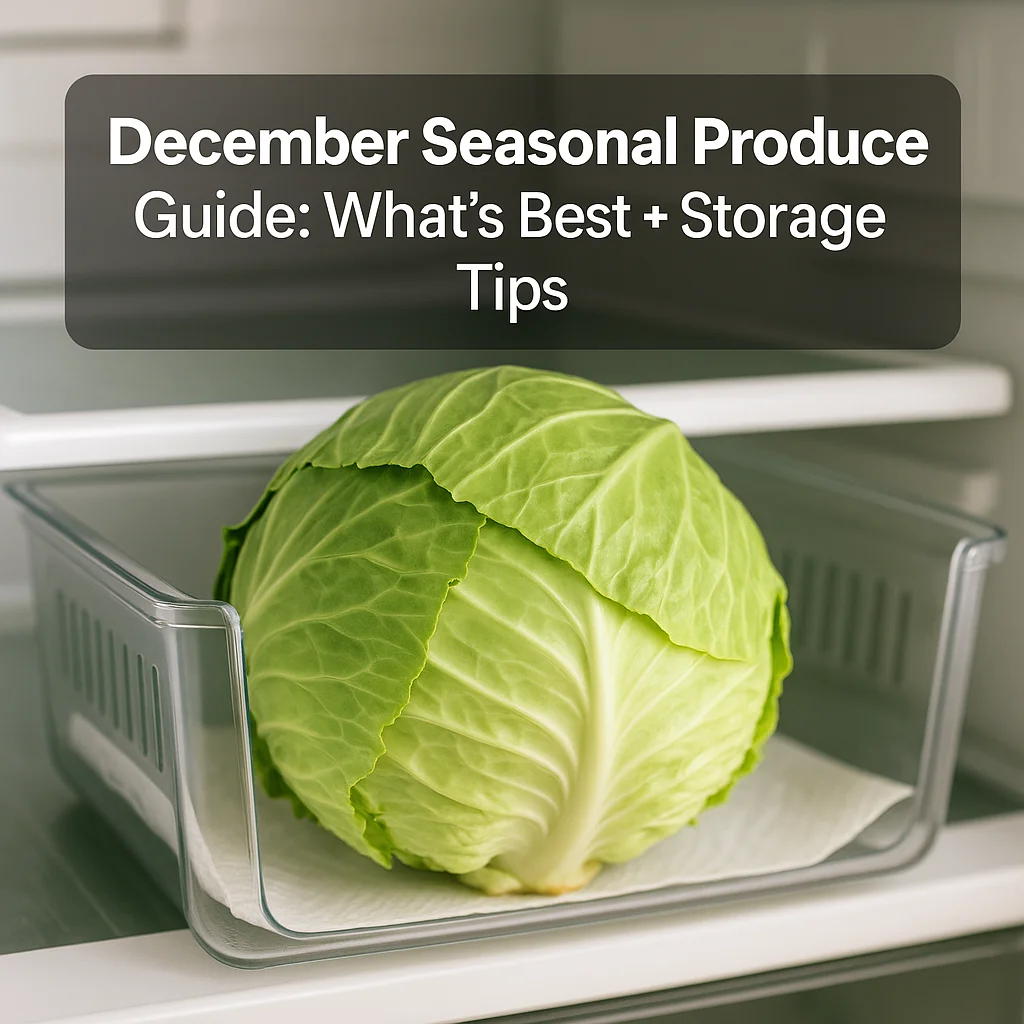
- Line the bottom of your crisper drawer with a dry paper towel to absorb excess moisture, which accelerates spoilage.
- Store leafy greens in airtight containers to prevent dehydration. Add a paper towel inside to absorb moisture.
- Keep hardier root vegetables in a vented plastic bag to allow them to ‘breathe’ and prevent mold buildup.
- Group your fruits that release ethylene gas, like apples and bananas, away from vegetables to slow down their ripening.
- Place quick-spoiling berries in a single-layer container to prevent crushing; add a soft paper towel beneath to absorb moisture.
- For squash and pumpkins, keep them in a cool, dark pantry instead of the fridge to prevent chill damage.
- If your leafy greens begin to wilt, revive them in a bowl of ice water for 20 minutes to restore crispness.
- Monitor your produce every day for signs of decay—excess moisture, mold, or bad smells.
- Adjust fridge placement: leafy greens and herbs should be on a higher shelf, while fruits can be kept in dedicated drawers.
- Ventilation matters; do not overcrowd drawers as this restricts airflow, accelerating spoilage.
- For avocados, place unripe ones on the countertop until they begin to soften, then refrigerate.
- If bananas ripen too fast, wrap their stems in plastic wrap to reduce ethylene emission.
- To handle condensation issues, wipe down shelves and drawers with a towel regularly.
If/Then troubleshooting:
- If your greens are moist, then replace the paper towel immediately to prevent mold.
- If berries start to mold, then discard affected ones and ensure others are in a dry container.
- If you notice soft or mushy spots, then remove those parts to slow spoilage.
- If apples are getting too soft, then they might be too warm—move them to a colder spot.
- If your fridge is too cold, then adjust the thermometer to prevent items from freezing.
- If citrus fruits dry out, then wrap them in a lightly wet paper towel inside the fridge.
- If your bananas are turning black, then separate them and place away from direct sunlight.
- If your cucumbers are slimy, then reduce moisture by ensuring airflow and a dry towel.
15-20 Minute Weekly Prep Routine for Busy Bee Efficiency
- Wash and dry all produce when you get home (except berries and mushrooms).
- Trim stem ends of leafy greens and store in airtight containers with a towel.
- Portion root veggies into bags for easy weeknight access.
- Prep snack-ready fruits (like apple slices) and store in airtight containers with lemon water to prevent browning.
- Check your inventory for any aging items and plan meals to use them before they go bad.
- If I only had 2 minutes: Separate ethylene-sensitive and ethylene-producing fruits, remove any visible spoilage, and quickly wipe drawers.
- If your fridge is weird: Adjust placements to avoid too humid areas by using a demisting packet, or back-wall-freezing spots by moving produce closer to the front.
Common Mistakes and How to Fix Them
- Storing tomatoes in the fridge beyond full ripeness → leads to mealy texture → Keep them on a cool countertop until they're ripe.
- Overcrowding the crisper drawer → causes moisture build-up and faster spoilage → Spread items out or use separate storage.
- Leaving cucumbers unwrapped in the fridge → premature softening → Wrap them in a cloth or paper towel.
- Not separating fruits and veggies → ethylene exposure causes premature ripening → Use separate drawers.
- Ignoring condensation → molds quickly develop → Regularly check and wipe away moisture.
- Using sealed bags for all produce → certain veggies will rot without airflow → Use vented bags for some veggies.
- Not checking for spoilage frequently → mold spreads quickly → Inspect fruits and vegetables daily.
- Refrigerating hard squash → affects texture and flavor → Keep it in a cool, dry place outside the fridge.
- Storing onions and potatoes together → onions cause potatoes to sprout and spoil → Store them separately in a cool, dry spot.
- Washing berries immediately before storage → excess moisture can lead to mold → Only wash before use.
Food Safety Notes: Play It Safe
Always rinse fruits and vegetables under running water just before consumption, not before storage, to prevent bacterial growth. Use a vegetable brush for tougher surfaces like potatoes. If any part of produce shows mold, discard it entirely. Soft or slimy textures usually mean the product should be tossed to be safe.
Quick Reference Table
| Produce | Best Storage | What to Avoid | Typical Problem | Quick Fix |
|---|---|---|---|---|
| Leafy Greens | Airtight container with paper towel | Excess moisture | Mold and wilting | Change towel frequently |
| Root Vegetables | Vented bags | Sealed containment | Mold growth | Ensure airflow |
| Fruits | Separate drawers, depending on ethylene | Cross-mixing | Premature ripening | Group ethylene types together |
| Berries | Single-layer in vented container | Crushing | Mold | Absorb moisture with paper towel |
| Squash | Cool, dry pantry | Refrigeration | Texture and flavor loss | Room temperature storage |
FAQ: December Produce Explained
- Do all vegetables have to be stored alike? No, storage varies; leafy greens need airtight, while root vegetables need ventilation.
- Can all fruits be refrigerated immediately? Some are best left to ripen at room temperature, like stone fruits and avocados.
- How do I prevent fruit flies in my kitchen? Keep fruit stored separately and clean ripened produce regularly.
- Why do my greens wilt quickly? They might be too moist; use a paper towel in airtight storage.
- Are spots on citrus fruits a bad sign? Small spots can be okay, but larger soft areas mean they're going bad.
- What’s the best way to store apples over winter? In a separate fridge drawer away from ethylene-sensitive produce.
- Should onions and potatoes be stored in the fridge? No, they should be stored in a cool, dark pantry space.
- Why do my carrots get limp quickly? They may be losing moisture, so wrap them in a towel to retain crispness.
Final Thoughts: Wrapping Up December's Harvest
- Keep temperatures stable to prevent condensation-related spoilage.
- Separate ethylene producers from sensitive items to slow down over-ripening.
- Use appropriate containers to manage moisture balance effectively.
With these tips in hand, you'll enjoy fresher produce with less waste all December long. Visit our full post list for more great tips on fresh produce storage. For more seasonal insights, check our monthly seasonal guides.