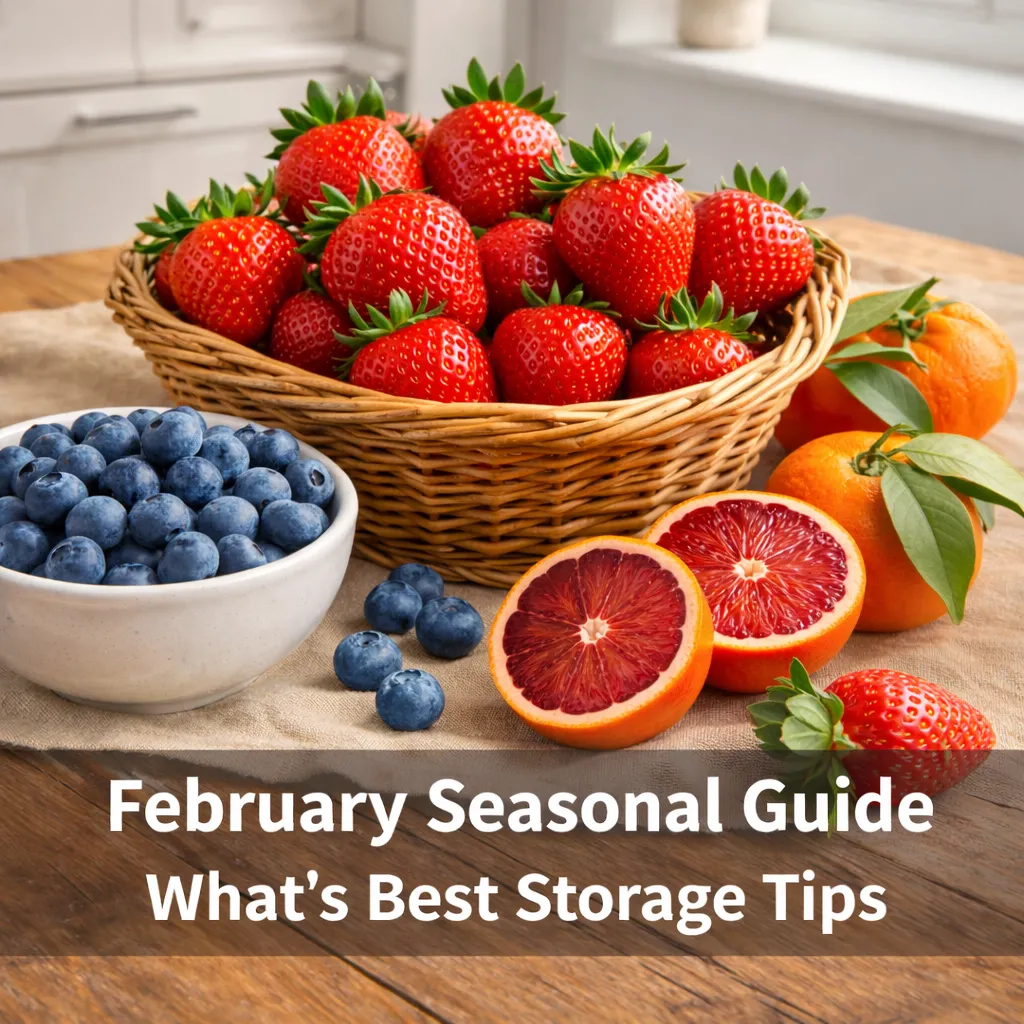
February Seasonal Produce Guide: What’s Best + Storage Tips
Why Good Produce Goes Bad: A Common Problem
The joy of bringing home vibrant, fresh produce from the store can quickly sour after finding a soggy, mold-spotted mess in your fridge drawers. There's usually a common culprit: excess moisture and improper storage temperatures. When produce is exposed to moisture, it hastens mold growth and speeds up spoilage. Similarly, fluctuating fridge temperatures cause condensation, leaving your greens wilted and fruits mealy.
Fast Rules for Keeping Produce Fresh
- Store leafy greens in vented containers lined with paper towels to absorb excess moisture.
- Keep ethylene-sensitive produce away from ethylene-producing fruits like apples and bananas.
- Avoid washing produce before storage unless necessary.
- Store root vegetables in a cool, dark place, not the fridge.
- Use airtight containers for berries to prevent mold growth.
- Keep citrus fruits at room temperature for a juicier taste.
- Rotate stored items to use older produce first.
- Don’t overload refrigerator bins; allow air circulation.
- Check fridge settings; ideal is 32°F - 40°F (0°C - 4°C).
- Inspect produce regularly and remove any spoiled items immediately.
Buying Checklist: Choosing the Best Produce
When selecting seasonal produce, focus on signs of freshness and quality that tell you it will last longer at home:
- Look for vibrant colors: Discoloration often signals spoilage or age.
- Avoid surface damage: Chips, bruises, or cuts can lead to faster spoilage.
- Check firmness: Soft spots on fruits and vegetables may indicate deterioration.
- Smell matters: A pleasant, fresh smell usually indicates freshness. Avoid anything with a sour or off odor.
- Heft matters: Choose heavier items for their size; they are often juicier and more nutritious.
- Avoid condensation: If produce in prepackaged bags appears wet, it might be on the verge of spoilage.
The Real Fix: Step-by-Step Solution
To extend the life of your February produce, aim to control moisture while ensuring proper air circulation:
- Separate Ethylene Producers: Keep ethylene-producing fruits like apples and bananas away from sensitive items such as berries and leafy greens. This slows ripening and spoilage.
- Layer Leafy Greens with Paper Towels: Store greens like kale and spinach in vented or perforated bags lined with paper towels. This absorbs excess moisture that speeds up decay.
- Refrigerate at Stable Temperature: Set your fridge between 32°F - 40°F to prevent condensation buildup that occurs with temperature swings.
- Keep Root Vegetables in a Dark, Cool Spot: Store onions and potatoes in a pantry or basement rather than the fridge. Reduces sprouting and softening caused by fridge humidity.
- Store Berries in Airtight Containers: Rinse just before eating to avoid mold due to moisture exposure.
- Avoid Washing Produce Until Ready to Use: Washing adds moisture, increasing the risk of mold. Exceptions include visibly dirty items or root vegetables.
- Check Produce Regularly: Look for signs of mold, softness, or discoloration and remove spoiled pieces to protect the rest.
- Use a Produce Drawer for Humidity Control: Adjust your fridge drawers based on the produce; high humidity for leafy greens, low for fruits like apples.
- Maintain Air Circulation: Avoid over-stuffing refrigerator bins to allow consistent air flow which prevents hotspots and uneven cooling.
- Handle with Care: Gentle handling prevents bruises, which can lead to spoiling.
- Keep Citrus at Room Temperature: If not consuming immediately, refrigerate after a week to prolong shelf life.
- Vent and Compress: Fresh herbs can be stored wrapped loosely in a damp towel and placed inside an airtight bag.
If you notice:
- Bruised apples → separate immediately to avoid ethylene spread.
- Moisture swapping (around drawers) → adjust humidity levels.
- Fruit flies → check for overripe produce and remove it.
- Foul smells → locate and discard spoiled items promptly.
- Greens with yellow spots → trim bad leaves and dry the rest.
- Pit indentations on fruits → refrigerate to slow ripening.
- Berries with mold → check all and remove affected ones carefully.
- Sprouting potatoes → remove sprouts and store in complete darkness.
15–20 Minute Weekly Prep Routine
- Inspect and Sort: Remove any spoiled produce, then group items that need similar storage.
- Prep for Storage: Line containers with paper towels for moisture-absorbing items.
- Wash Produce Starting to Decline: Use those first; wash, dry thoroughly, and store.
- Label and Rotate: Mark containers with purchase dates and move older items to the front.
- Organize Produce by Storage Requirement: Use separate shelves for high and low ethylene producers.
If I only had 2 minutes:
- Sort through fridge and remove bad items immediately.
- Store berries in a dry container with lid.
- Separate fruits that emit high levels of ethylene gas.
If your fridge is weird: Be aware of common problems like a too-dry environment drying out herbs or a freezing back wall damaging delicate produce. Adjust settings and bin locations accordingly.
Common Mistakes: What to Avoid
- Leaving produce in plastic bags → traps moisture and speeds rotting. Fix: Use perforated bags.
- Too much stacking in fridge drawers → causes crushing and bruising. Fix: Allow space.
- Storing onions and potatoes together → leads to sprouting due to gassing. Fix: Separate them.
- Neglecting fridge checks → unnoticed spoilage spreads faster. Fix: Regularly check freshness.
- Washing right before storing → introduces moisture. Fix: Clean only when ready to use.
- Not using airtight seals for herbs → drying out. Fix: Store in damp paper towels inside bags.
- Turning fridge too cold → limits flavor retention. Fix: Maintain optimal temperature settings.
- Overfilling storage spaces → results in uneven cooling. Fix: Encourage air flow.
- Ignoring root vegetables storage → molds quickly. Fix: Keep in dry, dark areas instead.
- Mismanaging fridge humidity settings → spoiling greens faster. Fix: Match settings to produce type.
Food Safety Notes
It's best to wash produce just before you plan to use it unless it's very dirty. Pay attention to fresh veggies and fruits with damaged parts as these should be consumed or preserved sooner. Toss any produce that shows signs of mold, becomes slimy, or has an unpleasant odor or taste. When in doubt, throw it out to avoid foodborne illnesses.
Quick Table
| Produce | Best Storage | What to Avoid | Typical Problem | Quick Fix |
|---|---|---|---|---|
| Berries | Airtight container in fridge | Moisture; unsealed bags | Mold growth | Rinse only before consuming |
| Leafy Greens | Vented bag with paper towel | Unvented bags | Wilting | Use paper towel for absorption |
| Citrus | Room temperature or fridge | Plastic wrap | Losing moisture | Store at room temperature* |
| Potatoes | Cool, dark place | Fridge | Sprouting/softening | Separate from onions |
| Herbs | Damp towel in bag | Open on counter | Drying out | Seal with damp towel |
FAQ
- Can I store all fruits in the fridge?
No, some fruits like bananas are best left on the counter to ripen. - How do I stop berries from getting moldy?
Store in airtight containers and rinse just before use. - What's the best way to store leafy greens?
Use a vented bag with paper towels to avoid moisture build-up. - Should potatoes be kept in the fridge?
No, they’re sensitive to the cold and sprout more easily. - Can ethylene gas affect product quality?
Yes, it speeds up ripening and spoilage of sensitive items. - What should I do with wilted greens?
Revive with a cold water soak or blend into smoothies. - Are rotten smells in the fridge dangerous?
They indicate spoilage, so remove and discard the source immediately. - Does washing vegetables affect shelf life?
Yes, moisture aids decay, so wash only before using. - What is the ideal fridge temperature for produce?
A range of 32°F - 40°F is optimal. - Why does produce go bad faster in plastic bags?
Traps moisture, which accelerates spoilage and mold development.
Closing
- Always adjust storage methods based on what you’ve got at home.
- Prioritize separating sensitive items from ethylene producers.
- Consistently check for spoilage to avoid accelerated decay.
Remember, with a little organization and the right methods, you'll waste less and save more, keeping your seasonal produce fresh and delicious. Happy storing!
Looking for more insights on seasonal produce storage? Head to our Seasonality Hubs for more monthly guides. Or explore other articles here.