January Seasonal Produce Guide: What’s Best + How to Store It
Why Does Produce Often Go to Waste?
Picture this: you’re excitedly buying a heap of fresh fruits and veggies one wintry January day, only to find them limp and lifeless a week later. Why does this happen? It often boils down to improper storage — moisture leads to mold, and temperature swings can spoil them faster than you can say "ugh!"
Quick and Effective Storage Rules
- Refrigerate greens immediately in breathable bags.
- Keep root vegetables in a cool, dark place.
- Separate ethylene-producers like apples from sensitive items.
- Avoid washing produce until just before use to prevent mold.
- Store onions and garlic away from potatoes to avoid sprouting.
- Use airtight containers for pre-prepped vegetables.
- Never refrigerate unripe fruit, let them ripen on the counter.
- Use a crisper drawer setting for fruits.
- Keep fridge drawers moisture-controlled using paper towels.
- Regularly check for bad produce to prevent spoilage spread.
The Best Way to Pick Produce at the Store
For January produce like citrus, cabbage, sweet potatoes, and apples, freshness is key. Here’s what to look for:
- Citrus: Choose fruits that feel heavy for their size and have thin, tight skins.
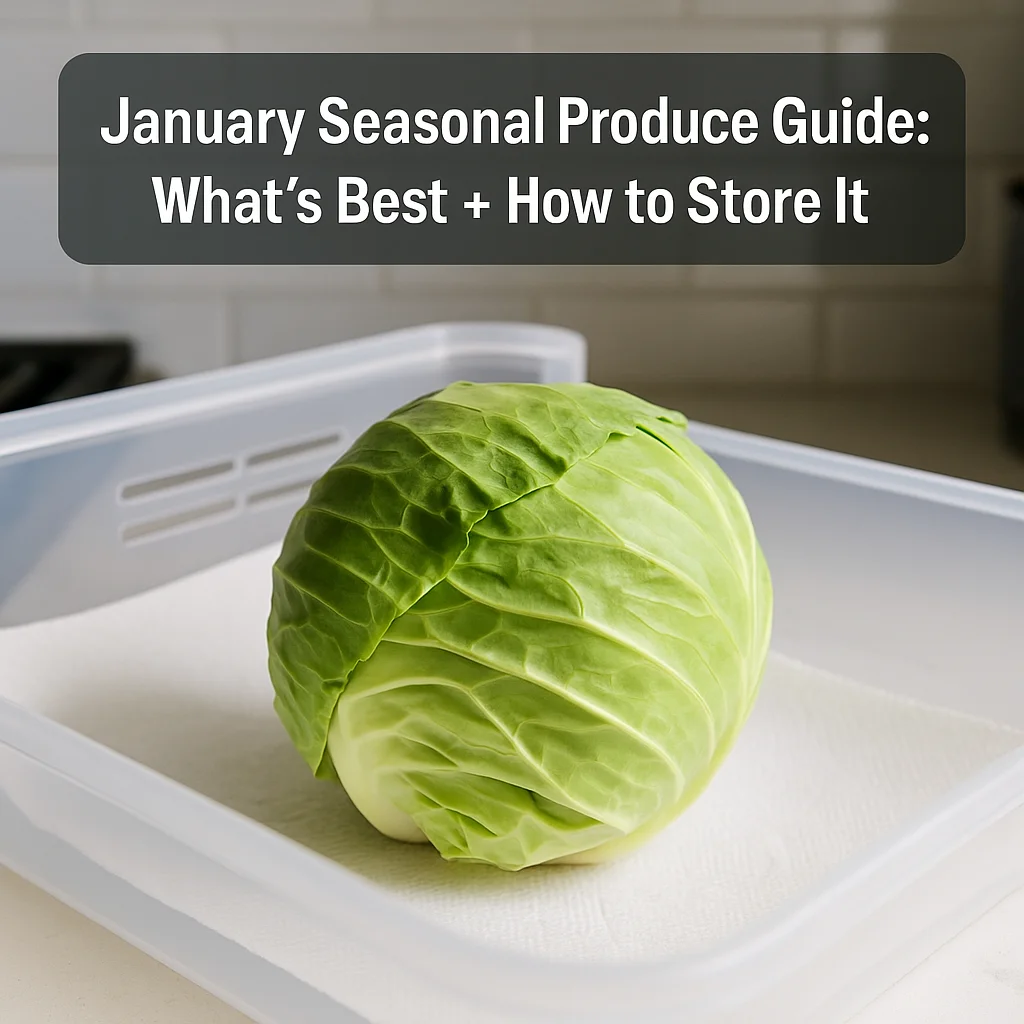
- Cabbage: Look for firm, densely packed heads with crisp leaves.
- Sweet potatoes: Opt for small to medium-sized ones that are unblemished and firm.
- Apples: Select those with smooth skin, firm texture, and a pleasant aroma.
- Avoid any produce with soft spots, mold, or obvious signs of damage.
Your Step-by-Step Solution To Proper Storage
The goal is to keep produce fresh, reduce moisture, and control ethylene exposure. Here's how I recommend doing it:
- Sort produce: Upon arriving home, separate ethylene-producing fruits like apples and bananas from other produce. They accelerate aging.
- Refrigerate correctly: Greens should go in breathable bags in the crisper with a paper towel to absorb excess moisture.
- Citrus on the counter: Keep citrus in a fruit bowl but away from direct sunlight to avoid condensation.
- Root veggies in a paper bag: Store in a cool cupboard to prevent sprouting with minimal light exposure.
- Balance humidity: Adjust fridge settings — high humidity for leafy greens, low humidity for fruits.
- Airtight storage for cut fruits: Seal in containers to reduce oxygen exposure that speeds degradation.
- Monitor fridge temperature: Keep it consistent, ideally around 37°F (3°C) to avoid bacterial growth and spoilage.
- Wrap celery and herbs loosely: Store with a damp paper towel for freshness but not sogginess.
- Check top shelves: Avoid the top shelf for sensitive produce as temperatures can fluctuate most here.
- Bananas out of the fridge: Let them ripen on the counter; only refrigerate once ripe to extend their life.
- Squeeze lemons gently: A sign of their freshness without squeezing too hard to bruise.
- Remove dry leaves from cabbage for better air circulation and longevity.
- Turn bags as needed: Occasionally shuffle produce to prevent pressure points that cause bruising.
- Frequent inspection: Perform a quick check every few days for signs of spoilage and act accordingly.
- If you see signs of moisture buildup, add paper towels inside containers to absorb excess.
- If fridge drawers feel overly humid, adjust drawer settings or open containers slightly.
- If produce freezes, check back wall temps and move sensitive items further inward.
- If onions sprout, relocate them to a cooler, drier spot immediately.
- If a banana gets overripe, make banana bread to save waste.
- If condensation forms on the storage lid, wipe down and reassess drawer settings.
- If strawberries turn moldy, remove affected ones and consume or freeze the rest.
- If cabbages smell off, discard any soft, slimy leaves and assess inner leaves.
A 15–20 Minute Weekly Prep Routine
- Gather produce from shopping bags and categorize them for storage.
- Wash and dry carefully any greens: Spin them or pat dry with a towel to start fresh.
- Store washed greens in a bag with a dry paper towel in the crisper.
- Divide fruit: Keep room-temperature fruits out and refrigerate others.
- Create ready-to-eat fridge containers: Prep citrus segments, root slices, etc.
If I only had 2 minutes: Prioritize separating ethylene producers, placing greens in crisper, and spacing out root veggies. Consider washing fruit only if necessary.
Note: If your fridge is weird (too dry/humid or freezing), use an extra fridge thermometer to dial in the right spot for each variety of produce.
Don't Make These Common Mistakes
- Washing too early: Increases mold growth → Wash right before use.
- Storing potatoes in the fridge: Causes texture changes → Keep them in a dark cupboard.
- Packing in plastic: Traps moisture → Use breathable or vented containers.
- Overcrowding drawers: Leads to bruising and spoilage → Arrange for space and airflow.
- Exposing produce to sunlight: Quickens ripening → Use shaded areas for storage.
- Ignoring temperature zones: Causes spoilage → Use correct fridge designations.
- Forgetting ripeness: Overlooked bananas spoil → Monitor and consume or peel for freezing.
- Not inspecting: Small mold can spread → Check often and remove bad items swiftly.
- Wrong drawer setting: Humidity mismatch can ruin texture → Consult fridge manual settings.
- Leaving ethylene-sensitive together: Ripening accelerates → Store separately.
Food Safety Notes
Always wash fruits and vegetables just before using to minimize mold risk, if fruits exhibit sour or off odors or show obvious surface mold, it's safest to toss them. When in doubt, err on the side of caution!
Quick Reference Table
| Produce | Best storage | What to avoid | Typical problem | Quick fix |
|---|---|---|---|---|
| Apples | Fridge, crisper drawer | Exposure to ethylene-sensitive produce | Rapid ripening | Store separately |
| Citrus | Countertop, cool area | Direct sunlight | Condensation buildup | Move to shaded area |
| Greens | Fridge, breathable bag | Washing too early | Mold growth | Wash just before use |
| Root Vegetables | Cool, dark cupboard | Exposure to light | Sprouting | Keep in paper bags |
| Sweet Potatoes | Room temperature, dark | Fridge | Texture changes | Keep out of fridge |
Frequently Asked Questions
- Can I store all fruits together? No, separate ethylene producers from sensitive produce.
- Why do my greens turn bad quickly? Likely due to moisture; use paper towels in storage.
- Is it okay to store potatoes in the fridge? No, it alters their starch content; store in a dark place instead.
- What causes citrus to spoil fast? Sun exposure accelerates ripening; keep them cool.
- How often should I check my produce? Every few days to catch spoilage early.
- Can all vegetables go in the crisper? Not always, match drawer settings to produce needs.
- What’s the best way to store onions? In a dry, cool area away from potatoes.
- Why do bananas ripen so fast? Ethylene gas from other produce; store separate.
- Is bruising a big deal? Yes, it speeds up spoilage; handle gently.
- Should I freeze excess fruit? Yes, when approaching overripe to extend usability.
Conclusion: Key Rules for Saving Money
- Separate ethylene-producers from other produce to control ripening.
- Use the right container and humidity balance for each produce type.
- Inspect produce regularly to eliminate any bad apples quickly.
Keeping January’s bounty fresh is about understanding your produce and being mindful of storage techniques. Happy storing and eating!
Discover more on how to manage seasonal produce over at our full post listings, or delve into specific months with our seasonal guide hubs.