July Seasonal Produce Guide: What’s Best + Storage Tips
Why July Produce Goes to Waste and How to Prevent It
Picture this: You bring home a bountiful haul of fresh July produce, only to find it wilted or moldy within days. The main culprit? Improper storage. Moisture, temperature swings, and ethylene gas can rapidly degrade the quality, leading to frustration and food waste.
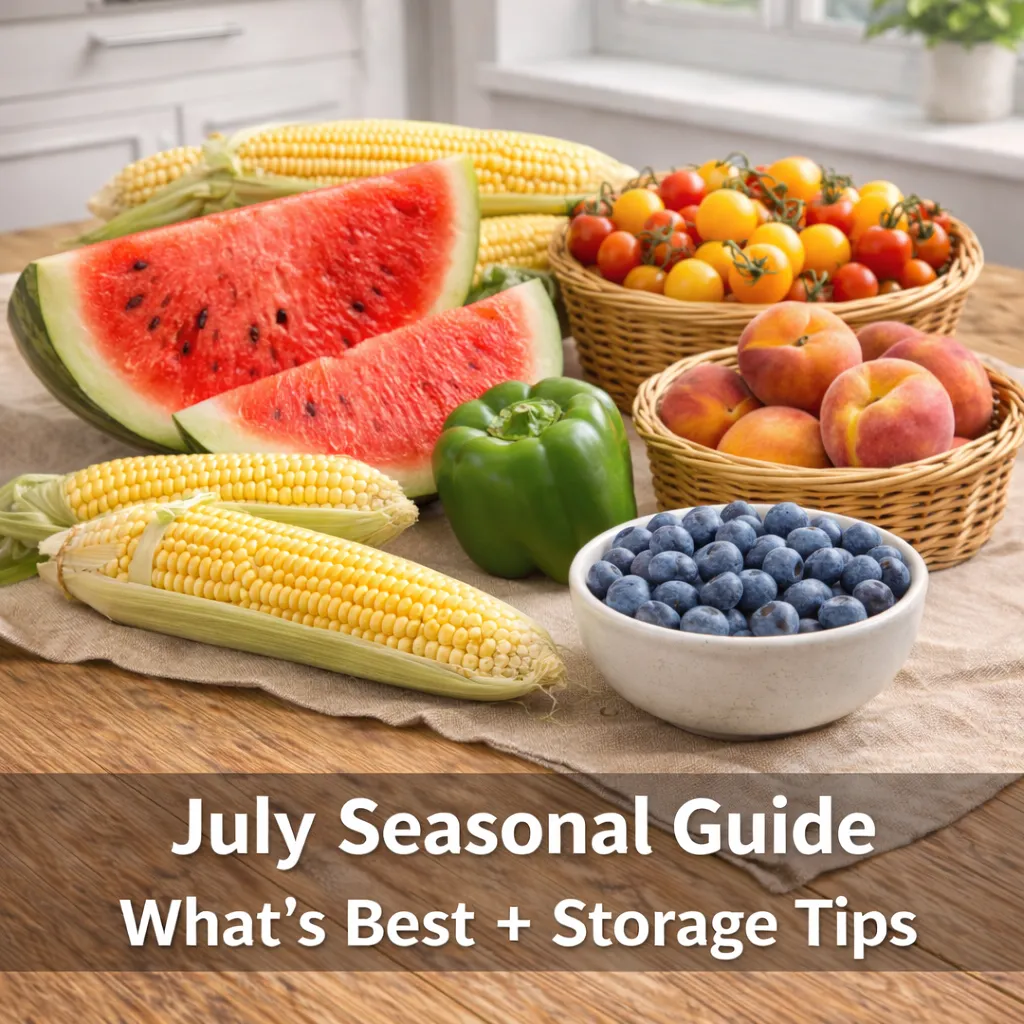
Fast Rules for July Produce
- Keep berries dry and in the fridge.
- Store tomatoes at room temperature.
- Refrigerate leafy greens in a covered container with a paper towel.
- Store cucumbers in the fridge, away from ethylene-producing fruits.
- Keep corn in the husk and refrigerate promptly.
- Let peaches ripen at room temperature, then chill.
- Separate ethylene-sensitive produce from high ethylene producers like bananas.
- Avoid washing produce until ready to use to prevent microbial growth.
- Rotate your produce to use the oldest first.
- Check regularly for spoilage and remove affected items quickly.
Buying Checklist: Choose Wisely at the Store
- Select firm, brightly colored berries without mold.
- Look for tomatoes with smooth skin and no soft spots.
- Pick leafy greens with crisp leaves, no wilting or discoloration.
- Choose cucumbers that are firm and dark green, avoid softness.
- Opt for corn with tight green husks and fresh silks.
- Select peaches that give slightly to gentle pressure, not mushy.
- Avoid produce with cuts or bruises; these can harbor spoilage.
Step-by-Step Solution: Perfect Storage for Longevity
Our goal here is to maintain the ideal environment: balanced moisture, stable temperature, and ethylene control for fresher produce.
- Berries: Store in a vented container lined with a paper towel in the fridge. This absorbs moisture, preventing mold.
- Tomatoes: Keep at room temperature and away from direct sunlight. Fridge alters texture and flavor.
- Leafy Greens: After washing, spin dry and store in a sealed container with a paper towel. Maintains crispness by managing moisture.
- Cucumbers: Store in the fridge, preferably in the crisper drawer. Keep away from apples and bananas, the ethylene speeds decay.
- Corn: Refrigerate in the husk within a day of purchase. Retains moisture and sweetness.
- Peaches (Unripe): Let sit at room temperature till ripe, then refrigerate. This halts overripening.
- Peaches (Ripe): Place in fridge to slow down enzyme activity and spoilage.
- Routine Check: Inspect produce every two days for signs of spoilage like soft spots or an off smell.
- If storing cut produce: Use airtight containers to prevent dehydration.
- If condensation forms: Vent the container briefly to let it escape.
- Avoid fridge doors: The temperature swings make them unreliable for sensitive produce.
If something doesn't seem right:
- If berries are mushy, they're absorbing too much moisture—reduce humidity.
- If tomatoes lack flavor, let them sit out longer or at warmer temperatures.
- If greens wilt quickly, check the dryness of your paper towel—replace it.
- If cucumbers become watery, check for ethylene producers nearby.
- If corn dries out, ensure it's used within the recommended time.
- If peaches overripen, refrigerate sooner.
- If you see condensation in containers, ventilate briefly or reduce fridge humidity.
15–20 Minute Weekly Prep Routine
- Wash and thoroughly dry all leafy greens; store as directed.
- Inspect all produce for any early spoilage; discard as needed.
- Separate high ethylene producers from sensitive items.
- Trim stems of any herbs and place in water-filled jar, then cover loosely with a plastic bag.
- If I only had 2 minutes:
- Check fridge settings for correct humidity.
- Dispose of any clearly spoiled items.
- Swap paper towels in leafy greens if needed.
- If your fridge is weird:
If it’s too dry, add a damp paper towel; if too humid, ensure vents are open; if it freezes toward the back, keep sensitive items towards the front.
Common Mistakes and Their Easy Fixes
- Leaving berries wet → invites mold → dry thoroughly before storing.
- Refrigerating tomatoes → affects texture/flavor → keep at room temperature.
- Not covering greens → wilting → use a sealed container.
- Mixing cucumbers with ethylene producers → spoilage → store separately.
- Letting corn sit out → loss of sweetness → refrigerate quickly.
- Ignoring paper towel checks → soggy produce → change towels regularly.
- Forgetting to rotate produce → increases waste → use oldest produce first.
- Fridge door storage → temperature swings → place on shelves inside.
- Cutting produce too soon → faster spoilage → cut close to time of usage.
- Storing unripe peaches in fridge → arrests ripening → let ripen on counter.
Food Safety Notes
Always wash produce just before use to minimize bacterial growth during storage. If produce smells off, feels slimy, or has visible mold, discard it to avoid foodborne illness.
Quick Reference Table for July Produce
| Produce | Best Storage | What to Avoid | Typical Problem | Quick Fix |
|---|---|---|---|---|
| Berries | Fridge, vented container | Wetness | Mold | Dry them |
| Tomatoes | Room temperature | Fridge | Flavorless | Keep out |
| Leafy Greens | Fridge, sealed container | Uncovered storage | Wilting | Cover and add towel |
| Cucumbers | Fridge, crisper | Ethylene exposure | Sogginess | Store separately |
| Corn | Fridge, in husk | Room temp storage | Dry/kernels | Refrigerate |
| Peaches | Ripe: Fridge; Unripe: Counter | Immediate fridge for unripe | Unripened | Mature first |
Frequently Asked Questions
- How can I tell if my tomatoes have gone bad? Look for soft spots and an off smell.
- Is it okay to refrigerate bananas? It can halt ripening; store them at room temperature.
- Can I store apples and bananas together? No, keep them apart to slow down spoiling.
- What’s the best storage for herbs? Keep them like flowers in water, loosely covered in fridge.
- Should I store unripe avocados in the fridge? No, let them ripen first on the counter.
- Is it safe to eat wilting greens? If they smell or feel slippery, best to discard.
- Does washing fruit remove pesticides? Rinsing minimizes residues; peeling is more effective.
- What’s the best way to store cut fruits? Airtight containers in the fridge retain moisture.
- How do I deal with condensation in container storage? Vent the container to let excess moisture escape.
- My fridge freezes at the back; how should I adapt my storage? Keep sensitive produce towards the warmer front.
Closing Thoughts
- Keep it dry—eliminate excess moisture at every step.
- Manage ethylene—store sensitive items separately.
- Watch your temperatures—protect delicate produce from cold damage.
Master these essentials, and you’ll enjoy vibrant July produce with less waste and more taste. If you want to read more about seasonal produce, visit our complete post list or see the monthly seasonal guides house.