Seasonal Differences by Region: Temperate vs Tropical Produce (Simple Guide)
Why Produce Spoils: The Real-Life Frustration
We've all been there: you buy fresh fruits and vegetables with plans for delicious meals, but life happens, and they go bad too soon. Why? The answer often lies in not accounting for differences between temperate and tropical produce. Moisture, temperature swings, and improper storage can quickly lead to mold, spoilage, and waste.
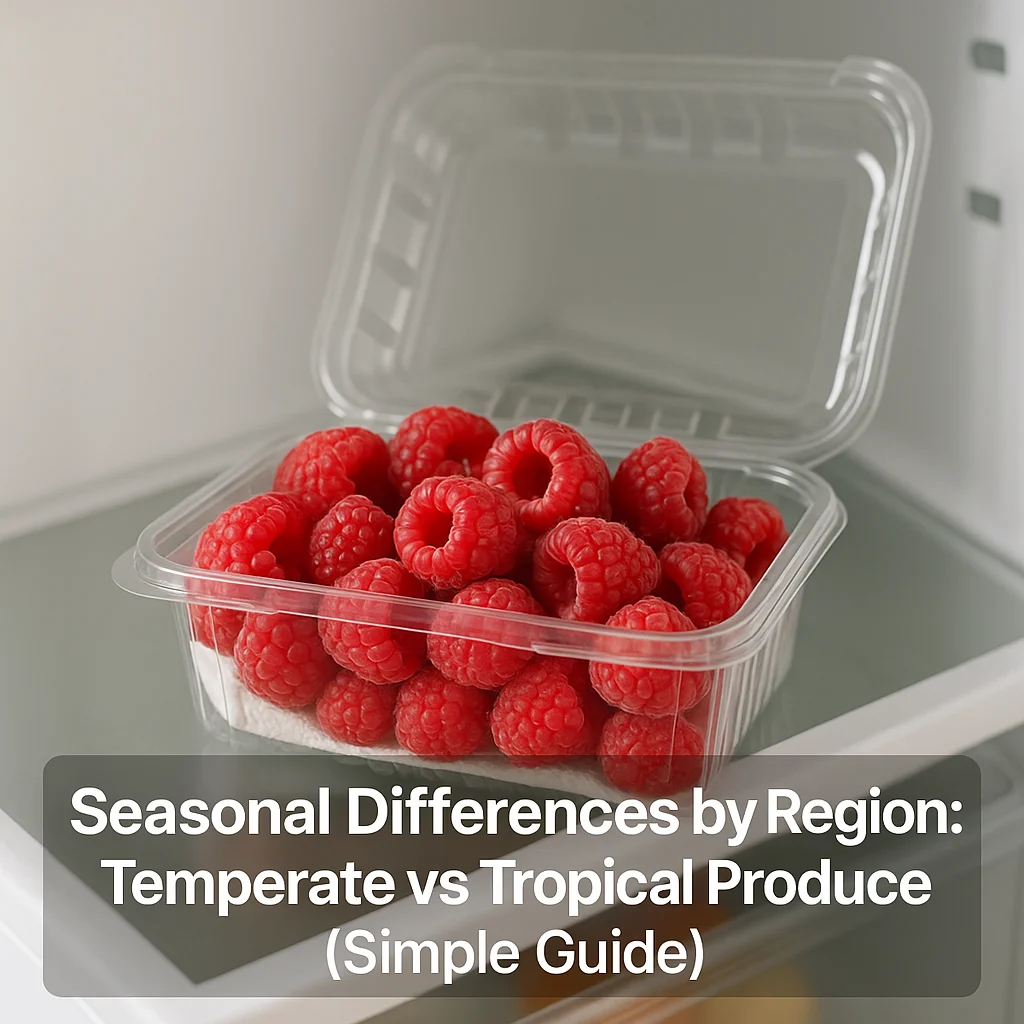
Fast Rules for Storing Produce like a Pro
- Keep tropical fruits at room temperature until ripe; store in the fridge once ripe to slow down further ripening.
- Temperate fruits like apples prefer cooler conditions; store in the fridge crisper drawer.
- Control moisture to prevent mold; a paper towel in the container helps absorb excess moisture.
- Avoid temperature swings to keep produce from getting damaged by condensation.
- Keep ethylene-sensitive produce away from ethylene producers like bananas and avocados.
- Use vented containers for fruits to allow air circulation.
- Label containers with dates to keep track of freshness.
- Separate damaged produce to prevent ethylene-induced over-ripening.
- For leafy greens, store in a slightly humid environment within the fridge.
- Always wash fresh produce right before eating, not before storing.
Buying Checklist: Choose the Best, Avoid the Worst
At the store, make informed choices to extend the life of your produce:
- Look for: firm fruits and vegetables with vibrant color and no soft spots.
- Avoid: overly ripe or extensively bruised produce that will spoil quickly.
- Choose: seasonal produce when possible; it’s fresher and often cheaper.
- Smell: ensure fragrant fruits are not overpowering; strong scent can indicate over-ripeness.
- Inspect: leaves and stems should be crisp and free of damage.
The Real Fix: Step-by-Step Solution
Goal: Keep it dry but not dehydrated, control ethylene, and avoid temperature swings.
- Sort by Type: separate temperate from tropical produce to manage different storage needs.
- Use Paper Towels: line containers with paper towels to absorb extra moisture, preventing mold.
- Choose Right Containers: use vented containers or bags for air circulation, crucial for moisture-sensitive items.
- Monitor Ripeness: transfer tropical fruits to the fridge once ripe to slow down further ripening.
- Avoid Ethylene Build-up: store ethylene-producing fruits away from sensitive ones.
- Maintain a Stable Temperature: position long-storing produce in fridge drawers, away from the door, to avoid temperature swings.
- Check for Condensation: adjust fridge settings if you notice consistent condensation inside produce containers.
- Label and Rotate: mark dates on produce containers and rotate regularly, consuming the oldest first.
- If Ripening Becomes a Problem: place unripe fruits in a paper bag with an ethylene-producer to speed ripening.
- If Molds Appear: separate moldy produce immediately; throw it out if extensively moldy.
- If fruit feels too soft, check for bruising and separate delicate items.
- If leafy greens wilt, dampen a paper towel and store with them in the drawer.
- If fridge leaves produce too cold, adjust the setting or change shelf position.
- If peppers shrivel, place in a moderately humid section of the fridge.
- If condensation frequently happens, crack open the container slightly to balance moisture.
- If smell indicates over-ripeness, consider using or processing the fruits immediately.
- If ethylene exposure is an issue, store produce types separately in segmented areas.
- If color fades unusually fast, examine temperature settings and adjust as necessary.
15–20 Minute Weekly Prep Routine
- Sort and Inspect: identify and prioritize using produce needing quick consumption.
- Snack Readiness: wash, peel, and cut snacking vegetables, storing in vented containers.
- Fruit Organization: separate out ripe fruits to encourage immediate use.
- Labeling: make sure all stored produce is labeled with purchase date.
- Review Fridge and Pantry: adjust storage according to needs of the items after a quick inspection.
- Humidity Check: ensure fridge humidity settings meet your current produce types’ needs.
If I only had 2 minutes:
- Quickly check for excessive ripeness or mold.
- Transfer tropical produce ready to eat into the fridge.
- Adjust humidity settings in fridge drawers as needed.
If your fridge is weird:
Too dry? Add a damp paper towel to leafy greens. Too humid? Open vents slightly, especially in crisper drawers. Freezing back wall? Keep produce away from direct contact with that wall.
Common Mistakes and How to Fix Them
- Mixing ethylene-producers: leads to faster spoilage. Fix by storing separately.
- Ignoring ripeness: causes waste. Fix by monitoring regularly and eating in order.
- Skipping labeling: leads to forgotten items. Fix by always writing down the purchase date.
- Overstuffing drawers: restricts airflow. Fix by maintaining some space for ventilation.
- Storing damp items: breeds mold. Fix by drying before placing in the fridge.
- Leaving produce in plastic store bags: traps ethylene and moisture. Fix by using breathable bags or containers.
- Not adjusting for fridge settings: causes improper moisture levels. Fix by taking the time to adjust accordingly.
- Leaving cut produce exposed: leads to fresh loss. Fix by wrapping or covering exposed sides.
- Adhering to “one method fits all”: doesn’t cater to varying produce needs. Fix by tailoring storage according to type.
- Storing fruits next to sensitive items: fastens ripening. Fix by segregating based on sensitivity.
Food Safety Notes: When to Wash and Toss
- Wash produce just before consumption to avoid premature spoilage.
- If you spot mold on fruits or vegetables, cut away visible mold plus an inch surrounding; if extensively moldy, toss the entire item.
- For leafy greens, remove wilted outer leaves and use fresher inners.
- If produce gives off an off-putting smell or becomes incredibly limp, it's time to discard.
- Change water in herb storage containers every few days to avoid sliminess.
Quick Table
| Produce | Best Storage | What to Avoid | Typical Problem | Quick Fix |
|---|---|---|---|---|
| Bananas | Room temperature, away from other produce | Refrigeration pre-ripeness | Rapid ripening | Monitor closely; consume quickly |
| Apples | Criper drawer in fridge | Room warmth | Wrinkling and aging | Store in sealed bag in crisper |
| Leafy Greens | Fridge, humid environment | Wet or overly dry storage | Wilting | Dampen paper towel, store together |
| Tomatoes | Room temperature | Fridge | Mealy texture | Ripe tomatoes into fridge |
| Tropical Fruits | Room until ripe, then fridge | Immediate fridge storage | Delayed ripening | Let ripen, then cool |
FAQs: Your Produce Questions Answered
- Q: Can I store all fruits together? A: No, ethylene producers and sensitive produce should be kept apart.
- Q: Why do my bananas ripen too fast? A: Ethylene from nearby produce speeds ripening; store separately.
- Q: Is refrigeration bad for all tropical fruits? A: Yes, except once they’re fully ripe.
- Q: How can I tell if produce has gone bad? A: Look for mold, slimy texture, sour smell, or discoloration.
- Q: Why should I label my produce? A: To track ripeness and avoid wasting older fruits.
- Q: What’s the best way to rejuvenate wilted greens? A: Submerge them in ice water for a few minutes.
- Q: Should I wash fruits before storing? A: No, wash them just before eating to minimize spoilage.
- Q: How to keep berries fresh longer? A: Store them in a single layer in the fridge, covered lightly with foil.
- Q: Why do my fridges create so much condensation? A: It can happen with improper temperature; ensure the fridge is adjusted correctly.
- Q: Is it necessary to use paper towels? A: They help manage moisture and prevent mold, so I recommend it.
Closing Thoughts
- Always evaluate and adapt storage based on your equipment and produce specifics.
- Use simple tricks like paper towels and the right containers for smart storage.
- Frequent checks and adjustments will avoid minor issues turning into waste.
With these simple rules, you can save both time and money by minimizing produce waste. Start small, and you'll soon see the results in your savings.
Find more helpful tips and guides on our full post list or explore our seasonal guides.