Summer Produce Guide: Watermelon, Tomatoes, Corn + Heat-Friendly Tips
Why Your Summer Produce Goes to Waste and What Really Causes It
It's happened to all of us: you buy fresh watermelon, tomatoes, and corn only to find them spoiling far too quickly. The reason? It's usually a combination of high moisture, inconsistent storage temperatures, and poor handling at home.
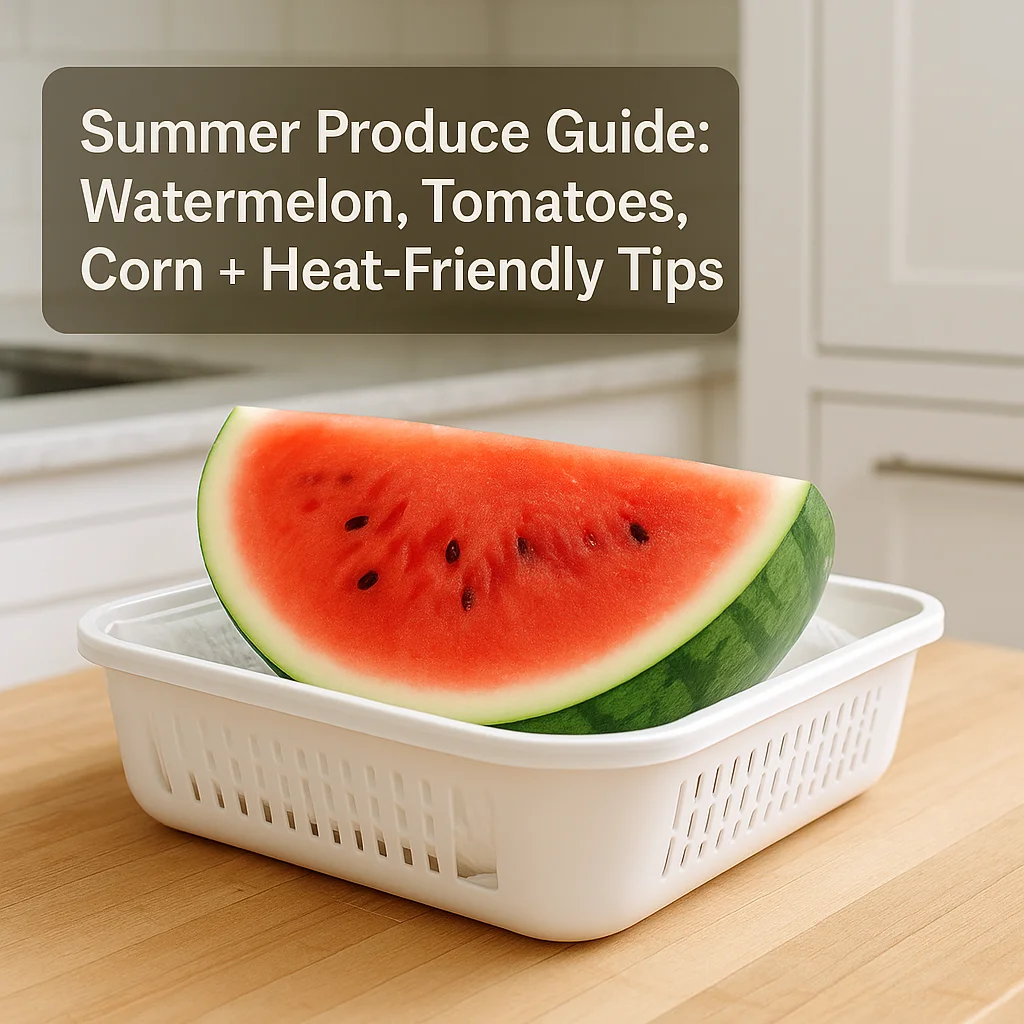
Fast Rules for Keeping Summer Produce Fresh
- Store tomatoes at room temperature and away from sunlight.
- Keep watermelon cool but not cold; avoid the fridge until cut.
- Refrigerate corn with husks on in a crisper drawer.
- Use airtight containers for cut watermelon.
- Avoid stacking produce on top of each other to prevent bruising.
- Employ paper towels to absorb excess moisture.
- Avoid storing tomatoes with ethylene-producing fruits.
- Maintain consistent temperatures; avoid placing near fridge vents.
- Check for soft spots and mold regularly.
- Rotate stock to use older items first.
Buying Checklist: Choosing the Best Produce
- Watermelon: Look for a yellow spot and sound hollow when knocked.
- Tomatoes: Choose firm but slightly yielding flesh with a vibrant color.
- Corn: Select firm, heavy ears with bright green husks and plump kernels.
- Avoid any produce with visible blemishes, mold, or signs of dehydration.
- Check for fresh stems on tomatoes and watermelon for freshness.
- Inspect corn silk to ensure it's not dried out or blackened.
The Real Fix: Step-by-Step Solution
Goal: Keep them at optimal condition by managing moisture and temperature.
- Watermelon: Store whole at 50-60°F (10-15°C); fridge if cut. Why: Reduces moisture loss and avoids chilling injury. Cue: Hollow sound, no soft spots.
- Cut Watermelon: Use airtight containers in the fridge to lock in moisture. Why: Moisture regulation and fridge odors prevention. Cue: Firm texture, absence of slime.
- Tomatoes: Store stem-side down on counter away from sun. Why: Prevents bruising and uneven ripening. Cue: Firm, vibrant red/orange color.
- Corn: Keep in the crisper drawer, unhusked, for max moisture retention. Why: Prevents drying and maintains sweetness. Cue: Kernels are plump and juicy.
- Place in a low-humidity fridge drawer if the environment is too humid, to prevent mold. Cue: No visible moisture or mold on produce.
- Check and turn watermelon every couple of days to avoid pressure points forming. Cue: Even firmness all over.
- Avoid storing watermelon and tomatoes skin in contact with metal. Why: Metal can accelerate spoilage. Cue: Undamaged surfaces.
- Use paper towels under tomatoes to absorb condensation and prevent mold. Cue: Dry surfaces and firm feel.
- Avoid storing near fruits that emit ethylene, such as bananas. Why: Accelerates ripening and spoilage. Cue: Rapid softening or overripeness.
- Ensure your fridge maintains a consistent temperature to avoid condensation damage. Cue: Absence of water droplets.
- Inspect produce every few days to identify and remove any items showing spoilage. Cue: No off smells or visible mold.
- If humidity is too high → Store in dry areas and rotate often.
- If watermelons are too soft → Avoid excess handling and check for pressure spots.
- If temperature fluctuations occur → Store away from fridge vents and freezer sections.
- If mold forms → Remove immediately and discard affected portions.
- If fridge is too dry → Consider wrapping cut produce in slightly damp paper towels.
- If produce is browning quickly → Minimize exposure to air and handle gently.
- If overripe → Use quickly in smoothies, sauces, or frozen treats.
- If you find bruising → Reassess storage space to avoid stacking.
15–20 Minute Weekly Prep Routine
- Wash watermelon; cut and store in airtight containers.
- Wash tomatoes lightly before drying and placing on the counter.
- Inspect corn for any spoiled kernels and store in fridge.
- Review all produce every 2-3 days for any spoilage cues.
- If ripeness is uneven, group by similar softness or color.
- Cut unused produce for immediate or future use (freeze, if possible).
- Check fridge settings and make adjustments if necessary.
- Keep paper towels in use where moisture could be an issue.
- If I only had 2 minutes:
- Wipe down the moisture in crisper drawers.
- Rotate tomatoes and watermelon.
- Check for and remove any overly soft produce.
- If your fridge is weird:
If too dry, dampen paper towels; if too humid, open vent slightly; avoid back where walls run coldest.
Common Mistakes and How to Fix Them
- Storing tomatoes in the fridge → Flavors dull and they go mealy → Keep on the counter.
- Leaving cut watermelon uncovered → Juice loss and dryer flesh → Use airtight containers.
- Not husking corn before storage in humidity → Faster spoilage → Store in crisper with husks.
- Stacking tomatoes → Bruising and accelerated ripening → Place stem-side down, single layer.
- Ignoring condensation → Encourages mold → Use paper towels under produce.
- Mixing produce types indiscriminately → Ethylene damage → Separate sensitive produce types.
- Buying overripe tomatoes → Short shelf life → Choose slightly underripe or just ripe.
- Forgetting about temperature swings → Condensation and spoilage → Store away from door or vents.
- Incorrect fridge humidity setting → Mold or dehydration → Adjust based on produce needs.
- Using metal storage directly → Spoils faster → Opt for glass or plastic containers.
Food Safety Notes
Rinse produce under water just before use to minimize bacterial growth. If you spot mold, cut away affected sections plus additional cushion to be safe, or discard if pervasive.
Quick Reference Table
| Produce | Best Storage | What to Avoid | Typical Problem | Quick Fix |
|---|---|---|---|---|
| Watermelon | Cool, dry place (whole) | Direct fridge storage (whole) | Soft spots | Reposition regularly |
| Tomatoes | Counter, stem-side down | Refrigeration | Mealy texture | Keep at room temp |
| Corn | Fridge, crisper drawer | Leaving husks exposed | Husk deterioration | Husk removal, airtight |
Frequently Asked Questions
- Should I refrigerate my watermelon immediately after buying? No, keep it in a cool, dry place until cut.
- Why shouldn't I refrigerate tomatoes? Refrigeration dulls their flavor and texture.
- Can I freeze cut watermelon? Yes, but it may become mushy when thawed; best for smoothies.
- How do I know if my corn has gone bad? Check for discolored kernels and off-smell.
- Does stacking tomatoes harm them? Yes, it can cause bruising; store in a single layer.
- What's the best way to store cut tomatoes? In an airtight container in the fridge, if necessary.
- Can corn be stored at room temperature? Ideally not, refrigerate as soon as possible.
- When do I discard watermelon? At signs of slime or significant softness.
Closing Thoughts
- Keep watermelon cool until cut to retain freshness.
- Store tomatoes outside the fridge for optimal taste.
- Check corn and other produce regularly for early spoilage signs.
Remember, fresh taste begins with smart storage. For even more tips, visit our complete post list or check out our monthly seasonal guides. Enjoy your summer bounty!