How to Store Apples: Fridge vs Counter + Ethylene Effects
The Frustration of Wasting Apples and Why It Happens
You've bought a fresh batch of apples, only to find them turning brown and soft way too soon. It’s frustrating. The culprit? Often it's improper storage or ethylene gas encouraging them to ripen faster than expected. Understanding the right storage can help you prevent this scenario.
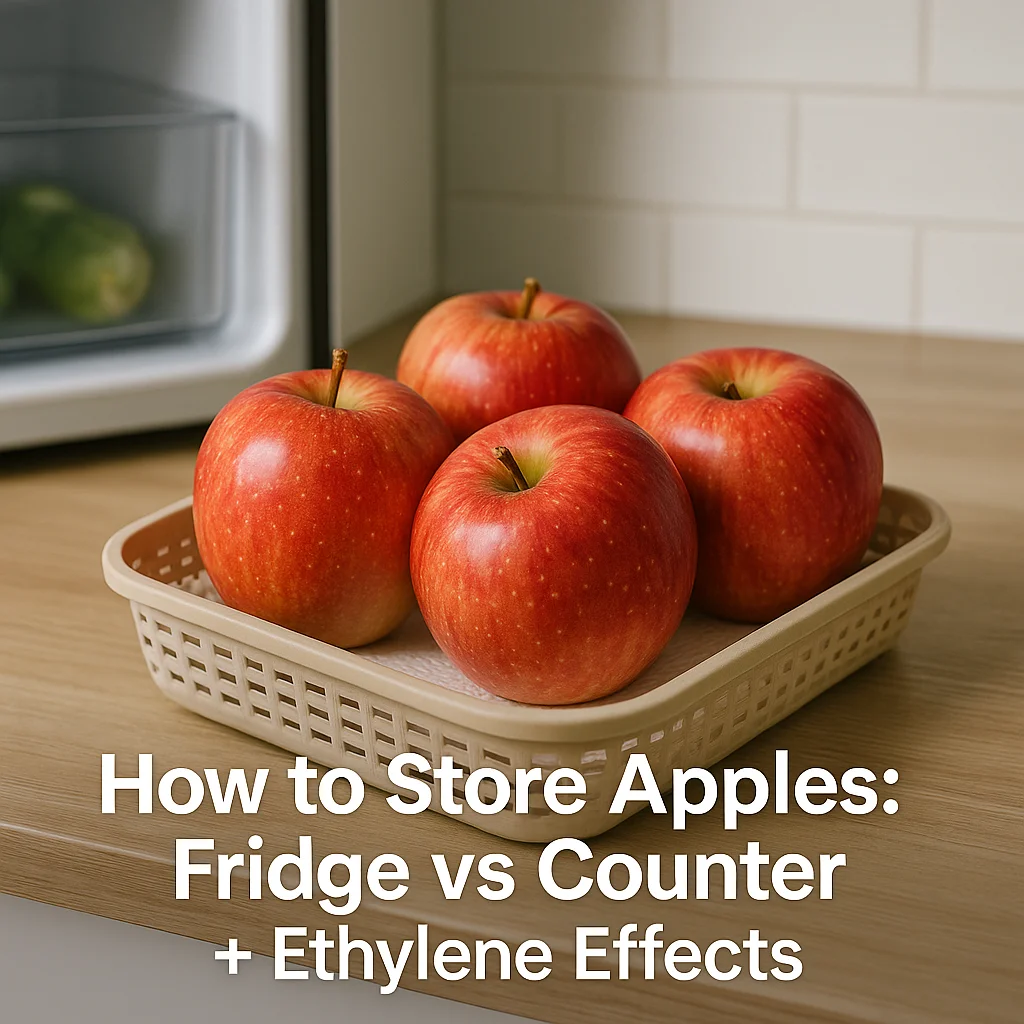
Fast Rules for Storing Apples
- Store apples in a cool environment to slow down ripening.
- Refrigeration is often best for long-term freshness.
- Avoid storing apples near ethylene-sensitive produce.
- Use vented bags to maintain airflow and reduce condensation.
- Avoid washing apples before storage to prevent early spoilage.
- Keep apples away from strong odors to maintain natural flavor.
- Check apples regularly for soft spots or mold.
Buying Fresh Apples: Checklist
Choosing the right apples at the store makes a big difference. Here’s how to pick them:
- Look for firm apples without soft spots.
- Select apples with vibrant color; dull or pale apples may be overripe.
- Avoid apples with bruises or punctures; these areas spoil quickly.
- Choose apples with a fresh, crisp scent.
The Real Fix: Step-by-Step Solution
The goal here is to keep your apples fresh longer by cooling them without dehydration. Follow these practical steps:
- Place apples in a vented plastic bag in the fridge's crisper drawer to manage moisture while allowing airflow.
- Store apples away from ethylene-sensitive produce like leafy greens to prevent premature ripening.
- If refrigerated, keep apples at a consistent temperature to avoid condensation and texture damage.
- Use a paper towel inside the bag to absorb excess moisture, reducing mold risk.
- If apples are unripe, keep them on the counter for a day or two to develop flavor before refrigerating.
- Check apples daily for soft spots or mold and use those fruits first.
- Avoid stacking apples tightly. Space allows for better air circulation.
- If possible, opt for an apple variety known for longer storage life, like Granny Smith or Fuji.
- If apples need to ripen quickly, place a banana nearby. To slow down, remove any overripe fruits.
- If apples are shriveling, add a slightly damp paper towel in the bag to increase humidity.
- If apples taste of fridge, make sure they’re not near strong odors like onions.
- If apples are getting too soft, it’s time to use them in cooking rather than fresh eating.
- If mold appears, remove affected apples immediately to prevent spreading.
15–20 Minute Weekly Prep Routine
- Check each apple for spots or damage and set aside those for first use.
- Refresh the vented bag with a dry paper towel.
- Reorganize apples in the fridge to ensure air circulation.
- If I only had 2 minutes: Quickly sort out soft or overripe apples and switch drying paper towel.
- Plan meals that use up apples showing signs of age.
If your fridge is weird: If too dry, add a damp cloth in the crisper. If usually too humid or near freezing, place apples in a higher drawer to avoid freezing.
Common Mistakes Made when Storing Apples
- Storing near bananas → Overripening → Separate these fruits.
- Putting apples in sealed bags → Lack of airflow → Use vented bags or poke tiny holes.
- Leaving apples unrefrigerated → Quick spoilage → Refrigerate for better longevity.
- Ignoring bad apples → Spoilage spreads → Regularly inspect and remove affected fruits promptly.
- Washing before storage → Increased mold risk → Rinse just before eating.
- Piling apples on top of each other → Bruising → Store in a single layer for airflow.
- Refrigerator too cold (< 32°F) → Freezer burn → Set crisper drawer temp to around 34°F - 40°F.
- Using non-vented bags → Moisture buildup → Opt for vented bags or containers.
Food Safety Notes
Wash apples just before eating to ensure freshness and reduce the risk of mold formulating during storage. Toss any apples with visible mold or slimy spots.
Quick Reference Table
| Produce | Best storage | What to avoid | Typical problem | Quick fix |
|---|---|---|---|---|
| Apples | Fridge, vented bag | Sealed bag | Overripening | Remove from ethylene producers |
FAQ: All About Apple Storage
- Should I store apples in the fridge? Yes, for prolonged freshness.
- Can I leave apples on the counter? Short-term, to ripen unripe apples.
- Why do some apples go soft quickly? Ethylene exposure or improper storage.
- What are ethylene gas effects? It accelerates ripening even in adjoining produce.
- Is it okay to eat a bruised apple? Cut away bruised parts; use promptly.
- Can I freeze apples? Yes, but they’re best used for cooked dishes.
- Do ethylene absorbers help? Useful in mixed fruit storage, not usually necessary with just apples.
- Should I buy waxed apples? They can last longer due to reduced moisture loss.
- How do I tell if an apple has started to spoil? Soft, wrinkled skin, mold, or off-smell are signs.
Closing Notes
- Refrigerate apples promptly for longer life.
- Use vented bags for balanced moisture control.
- Keep apples away from ethylene producers to avoid overripening.
With these tips, you'll enjoy fresh, crispy apples for a lot longer. Happy storing!
Explore more about produce pairings and storage at Storage and Shelf Life and check our full post list.