How to Store Avocados: Unripe vs Ripe vs Overripe (Step-by-Step)
Hook: Why Do Avocados Go Bad So Quickly?
We've all experienced the heartbreak of reaching for an avocado, only to find it has turned into an unappealing mound of brown mush. The real culprit? Improper storage techniques coupled with the avocado's natural characteristics—especially ethylene gas and temperature sensitivity—accelerate the journey from perfect to perished.
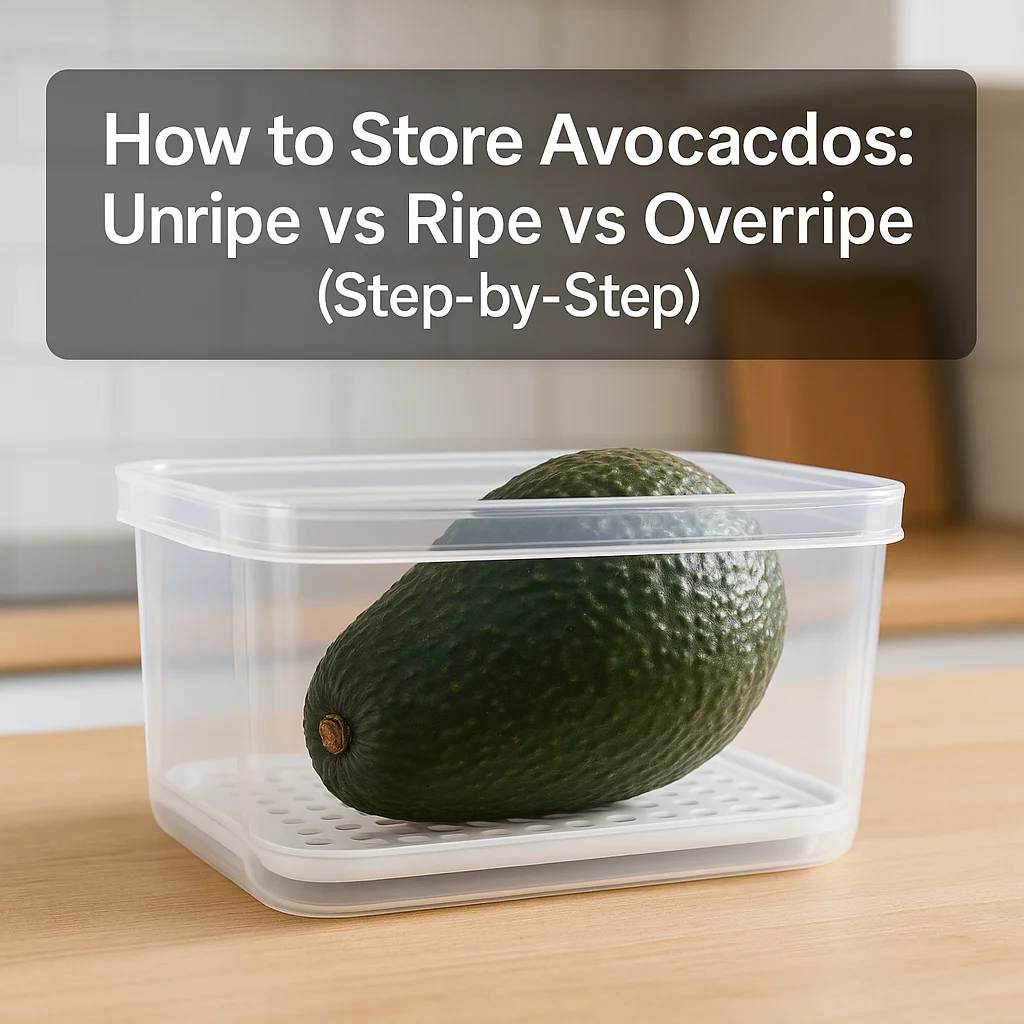
Fast Rules for Storing Avocados
- Store unripe avocados at room temperature.
- Refrigerate ripe avocados to slow down further ripening.
- If they're overripe, they're best used immediately or refrigerated for another day max.
- Keep avocados away from apples, bananas, or onions unless you need them ripened faster due to ethylene.
- Always handle avocados gently to avoid surface damage.
- When storing halves, keep the pit in and cover with plastic to reduce browning.
- Use an airtight container for cut avocados to prevent dehydration and oxidation.
- Store in the fridge’s crisper drawer to manage moisture and temperature better.
- Position avocados in stable areas of the fridge to avoid the temperature swings of the door.
Buying Checklist: Choose Wisely at the Store
- Pick firm, unblemished avocados if you won’t use them immediately.
- Avoid avocados with dark spots, as these might indicate internal browning.
- Ripe avocados should yield to gentle pressure but bounce back.
- Smell the avocado—any sour odor could indicate spoilage.
- If planning to use quickly, select avocados that are just beginning to soften.
The Real Fix: Step-by-Step Solution
Prevent waste and spoilage by learning how to store avocados properly depending on their ripeness. This means controlling ethylene exposure and providing the right temperature zones.
- Assess Ripeness: If the avocado is firm and bright green, it’s unripe. Slightly soft and darker in skin indicates ripeness. Overripe avocados are very soft and may have dark, sunken spots.
- Unripe Avocados: Leave them on the countertop in a cool, dry area. Ethylene from the surrounding air is sufficient for gentle ripening.
- Accelerate Ripening if Needed: Place avocados in a paper bag with an apple. Ethylene from the apple speeds up the process.
- Once Ripe: Place avocados in the fridge’s crisper drawer. The cold slows enzyme activity, extending the window for use by 3–5 days.
- Storing Halves: Keep the pit in. Wrap tightly with plastic wrap, covering the exposed flesh to minimize air contact and oxidation. Even better, place the wrapped half in an airtight container.
- For Overripe Avocados: Immediate use is best. If not, store in a ventilated area of the fridge for a day. Check for any mushiness or off smells before use.
- Avoid Temperature Swings: Steady temperatures help maintain texture. Avoid placing avocados in the fridge door.
- Monitor Storage Area: Check for condensation or extreme dryness. Both can worsen spoilage conditions.
- If condensation occurs: Briefly remove the avocado to wipe it dry and reconsider placement.
- If overripe or mushy: Use in smoothies or as a base for dishes to mask texture flaws.
- If an avocado is unripe and in the fridge → Move it back to the counter.
- If it's ripe and you won't eat it today → Refrigerate immediately.
- If only part of the avocado is brown → Cut off the brown part and use the rest quickly.
- If there's a sour or fermented smell → Discard it to avoid food safety issues.
- If avocados feel heavier than normal → They may have absorbed moisture; check for spoilage.
- If using avocados soon but they're too firm → Pair with bananas in a paper bag.
- If surface damage occurs → Monitor closely as it'll spoil faster.
- If skin looks dry and leathery → Likely overripe; use immediately or discard.
15–20 Minute Weekly Prep Routine
- Review avocados for ripeness and sort accordingly.
- For ripe ones, prepare storage by washing and drying correctly.
- Check the fridge setup: temperature, moisture levels, and space allocation in the crisper drawer.
- Consume or prepare avocados nearing overripeness, perhaps in a salad or dip.
- If necessary, blend any excess avocados destined for wasting into a storage-friendly paste.
- Check each avocado for ripeness.
- Toss the ripe ones into the crisper drawer.
- Move any overripe avocados to the front of the fridge for quick use.
- Grab an overripe avocado for today’s meal.
If your fridge is weird: Too dry? Wrap avocados in a lightly damp towel. Too humid? Vent the storage container slightly.
Common Mistakes with Avocado Storage
- Storing in a bag on the counter → Traps heat → Place directly on a cooling mat instead.
- Forgetting to seal halved avocados → Causes browning → Always cover cut surfaces.
- Refrigerating unripe avocados → Delays ripening → Leave out until ripe.
- Keeping avocados in the fridge door → Leads to temperature fluctuations → Store deep in the fridge.
- Not checking for spoilage regularly → Leads to waste → Weekly assessments save money.
- Rushing ripening by adding too many ethylene fruits → Causes overripeness → Balance ethylene source needs.
- Leaving overripe avocados uninspected → Increased spoilage risk → Use or transform them quickly.
- Neglecting to check fridge settings → Causes varied storage environment → Adjust settings for optimal preservation.
- Using bags without ventilation → Traps ethylene excessively → Switch to breathable materials when necessary.
- Ignoring smell checks → Guarantees spoilage escape → Sniff tests aid in early identification.
Food Safety Notes
- Always wash avocados only just before cutting to prevent introducing moisture inside.
- Discard any avocado with mold, especially in the flesh, to avoid health risks.
- If in doubt about an overly brown or smelly avocado, it’s safer to toss it.
Quick Table for Avocado Storage
| Produce | Best storage | What to avoid | Typical problem | Quick fix |
|---|---|---|---|---|
| Unripe Avocado | Room temp, away from light | Refrigeration | Slows ripening | Bag with banana |
| Ripe Avocado | Fridge crisper drawer | Room temperature | Turns overripe fast | Chill immediately |
| Overripe Avocado | Fridge ventilated area | Not watching spoilage | Overripe decay | Immediate use or discard |
Frequently Asked Questions
- How can I tell if an avocado is ripe? — A gentle press near the top, yielding slightly, means it's ripe.
- Is it safe to eat an avocado with brown spots inside? — Cut them out; if odor and majority is okay, it's safe.
- Can I freeze avocados to extend shelf life? — Yes, mash with lemon juice and store in an airtight container.
- How do I keep an avocado from browning after it's cut? — Keep the pit, cover with plastic; it's all about reducing air contact.
- What's the best place in the fridge to store avocados? — In the crisper drawer; it has a stable temp and adequate humidity.
- How long can I refrigerate whole ripe avocados? — They’ll stay good for up to 5 days.
- Do avocados need to be stored separately from other fruits? — Only if you need to control ripening speed due to ethylene.
- What happens if I eat a spoiled avocado? — It may cause an upset stomach; it's best avoided.
- Does cutting into avocado flesh expose it to spoilage faster? — Yes, oxidation increases; seal it well to slow it down.
- Are blemished avocados unsafe to eat? — Not always; trim affected parts and use the remainder wisely.
Closing
- Refrigerate ripe avocados immediately to slow ripening.
- Store unripe avocados at room temperature for best ripening.
- Check and sort avocados weekly to manage freshness efficiently.
By treating avocados with care and attention, you'll save money and reduce waste. Happy avocado savoring!
Explore more topics at our complete post list.
Learn more about ethylene gas effects on produce in our detailed article here.