How to Store Bell Peppers: Whole vs Cut + Moisture Control
Preventing Bell Pepper Waste: Why They Spoil
Ever opened your fridge to find your bell peppers soft and slimy? It’s a common frustration. This happens because improper storage leads to moisture buildup or dehydration, accelerating spoilage. Too much moisture encourages mold, while too little can dehydrate them.
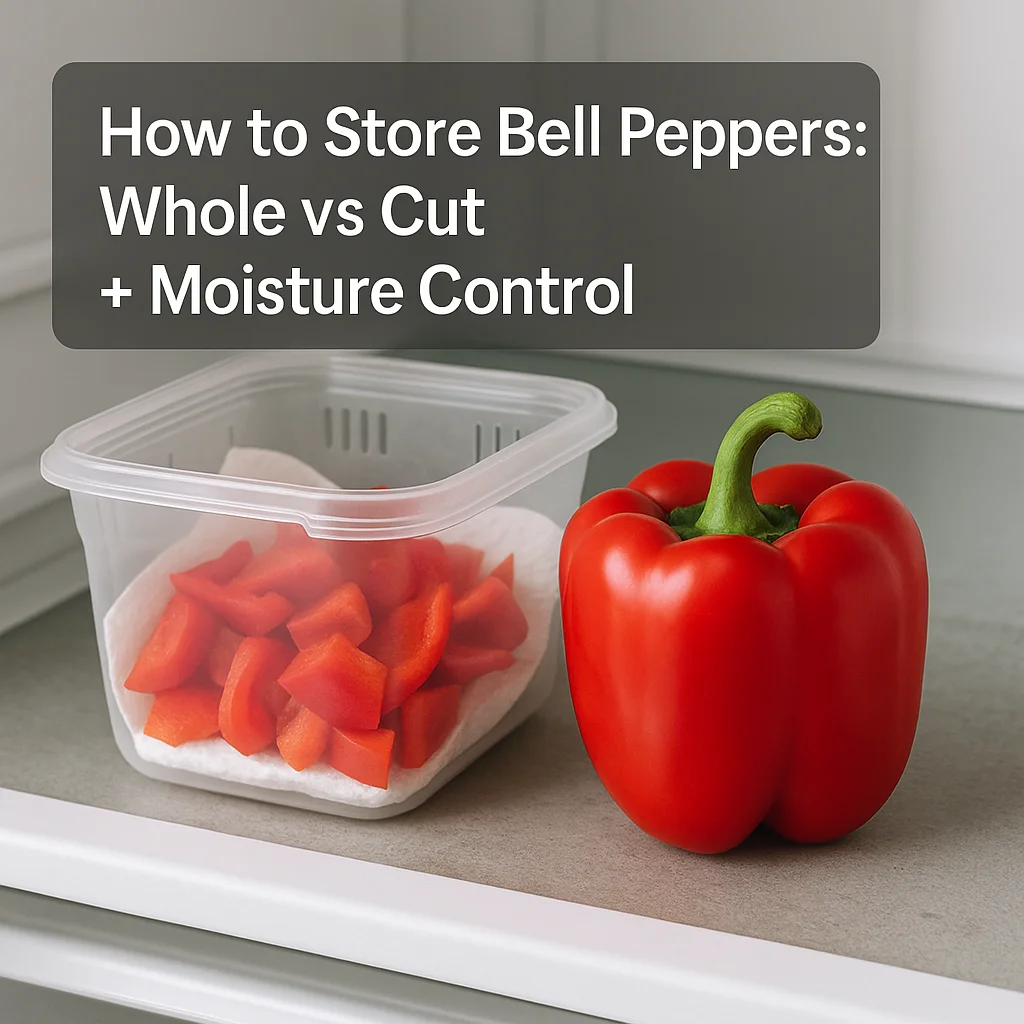
Fast Rules for Bell Pepper Storage
- Keep whole peppers in the fridge, loosely wrapped.
- Store cut peppers in airtight containers with a paper towel.
- Avoid placing them near ethylene-producing fruits.
- Use in a week for best freshness.
- Check for firm skin when buying.
- Wash just before eating or cooking.
- Control fridge humidity: not too dry, not too humid.
Bell Pepper Buying Checklist
When selecting bell peppers at the store, choose ones that are:
- Firm: The skin should be tight and wrinkle-free.
- Heavy for their size: Indicates freshness and juiciness.
- Free from blemishes: Avoid soft spots or shriveled areas.
- Brightly colored: Vivid colors often mean better flavor and nutrients.
Avoid peppers with:
- Any mold: Indicates spoilage has begun.
- Discoloration: Can be a sign of overripeness or damage.
The Real Fix: Step-by-Step Solution
To keep your bell peppers fresh, focus on controlling moisture while preventing temperature swings.
- Select the right peppers: Start fresh with firm, blemish-free pieces (prevents immediate spoilage).
- Store whole peppers in the fridge: Keep them in a vegetable drawer set to medium humidity to balance moisture retention.
- Keep unwashed: Only wash them before use to prevent premature moisture.
- Avoid overpacking: Leave space around peppers for air circulation (prevents condensation).
- For cut peppers: Store in airtight containers with a paper towel to absorb excess moisture.
- Check condensation: Wipe off any moisture inside the container to prevent mold.
- Use within 3-5 days: Cut peppers should not stay too long, even if stored well.
- Place strategically: Keep them away from the fridge's coldest zones, like the back wall, to avoid freezing damage.
- Monitor for mold or soft spots: These spoil quickly and should be used or removed immediately.
- Rinse briefly before eating: This helps remove residual surface dirt or pesticides.
- Separate from ethylene producers: Do not store near bananas or tomatoes as this gas accelerates ripening.
- If you see mold → Toss the whole pepper; it spreads quickly.
- When cuts look dry → A damp paper towel can help rehydrate (for short-term use).
- If peppers are puckered → Consider roasting to use them quickly.
- If fridge air is too dry → Use a breathable bag instead of a plastic one for whole peppers.
- If mold reappears → Adjust container's dryness by changing paper towels more often.
- If slicing releases juice → Means beginning of breakdown, use those quickly.
- When in doubt → If it smells off, compost it.
15–20 Minute Weekly Prep Routine
- Inspect all peppers: Quickly check for soft spots or mold; remove affected parts.
- Prep and cut: For everyday cooks, cut a few peppers into strips, store in an airtight container.
- Store efficiently: Whole peppers go into the crisper drawer; cut ones in sealed containers.
- Label and date: Keep track of freshness to ensure use within a week.
- If I only had 2 minutes: Just remove spoil spots and store rest quickly.
If your fridge is weird: If it’s too dry or humid, adjust the drawer settings or use moisture-absorbing elements like salt bags for excess moisture.
Common Mistakes with Bell Peppers
- Washing too early: Leads to moisture buildup → Always wash when ready to eat.
- Storing near onions: Can accelerate spoilage → Keep them separated.
- Ignoring mold: Affects nearby produce → Remove those peppers quickly.
- Not drying after cutting: Extra moisture could cause slime → Use a paper towel.
- Leaving cut peppers unsealed: Causes dehydration → Seal in airtight containers.
- Overstuffing the fridge: Poor air circulation → Do not overpack.
- Using plastic bags for whole peppers: Risk of condensation → Use breathable bags or wrap loosely.
- Not checking mold regularly: May go unnoticed → Inspect weekly.
- Freezing inadvertently: Ruins texture → Keep in crisper drawer.
Food Safety Notes
Wash bell peppers under running water just before eating or cooking, never before storage. If mold appears or they develop a bad smell, it's time to compost them. Better safe than sorry!
Quick Storage Table
| Produce | Best Storage | What to Avoid | Typical Problem | Quick Fix |
|---|---|---|---|---|
| Whole Bell Peppers | Fridge, crisper drawer, moderate humidity | High moisture, ethylene exposure | Mold, wrinkling | Loosely wrap, store separately |
| Cut Bell Peppers | Airtight container, paper towel | Exposure to air, inadequate moisture control | Browning, sliminess | Change towel, keep sealed |
FAQ about Storing Bell Peppers
- Can I freeze bell peppers? Yes, but blanch first to preserve texture.
- Do whole peppers need to be airtight? No, they need airflow; use breathable bags.
- Why do my peppers ripen too fast? Ethylene exposure from other fruits is likely.
- Should I wash peppers before storing? No, it adds unwanted moisture; wash when using.
- Is it okay to eat soft peppers? If very soft, it's better to roast or stew rather than eat raw.
- How do I know if they’re bad? Look for signs like mold, sliminess, or off smell.
- Can cut peppers touch whole ones? It's better to separate to reduce risk of contamination.
- Are wilted peppers usable? Yes, for cooking; good in sauces and soups.
- How to revive slightly wrinkled peppers? A quick steam can plump them slightly.
Closing: Essential Rules for Saving Money
- Monitor moisture: Balance prevents spoilage and wilting.
- Keep them dry until use: Washing preps but storing dry maintains quality.
- Use a system: Consistent checking preserves freshness, reduces waste.
Love your peppers and they will love you back with freshness and flavor. Good luck keeping your veggies vibrant!
Explore more produce storage tips at FruitVegGuide's complete post list.
Understand food pairing and shelf life at our science of storage section.