How to Store Blueberries: Wash or Not, Fridge vs Freezer
Why Your Blueberries Always Spoil Too Soon
You eagerly open the fridge for a healthy snack, but instead of vibrant blueberries, you find a mushy, moldy mess. Why does this happen? Often, it's due to moisture and temperature swings causing rapid spoilage. Understanding how to store blueberries properly can make all the difference.
Fast Rules for Storing Blueberries
- Do not wash before storing; wash only before eating.
- Keep in the fridge to slow down ripening.
- Use a breathable container to avoid condensation build-up.
- Avoid the fridge door to minimize temperature swings.
- Spread in a single layer if possible to prevent bruising.
- Freeze for long-term storage after washing and drying well.
- Consume within a week for maximum freshness.
Buying Checklist: Picking the Best Blueberries
Choosing high-quality blueberries is the first step in ensuring they last long with great taste.
- Look for firm, plump berries with a consistent color.
- Avoid containers with juice stains or overly soft berries.
- Check for mold at the bottom of the container.
- Purchase local and in-season for maximum freshness.
Step-by-Step Solution to Perfect Storage
Goal: Keep it dry but not dehydrated, and manage ethylene and temperature exposure.
- Inspect the blueberries, removing any damaged or moldy berries. This prevents the spread of mold.
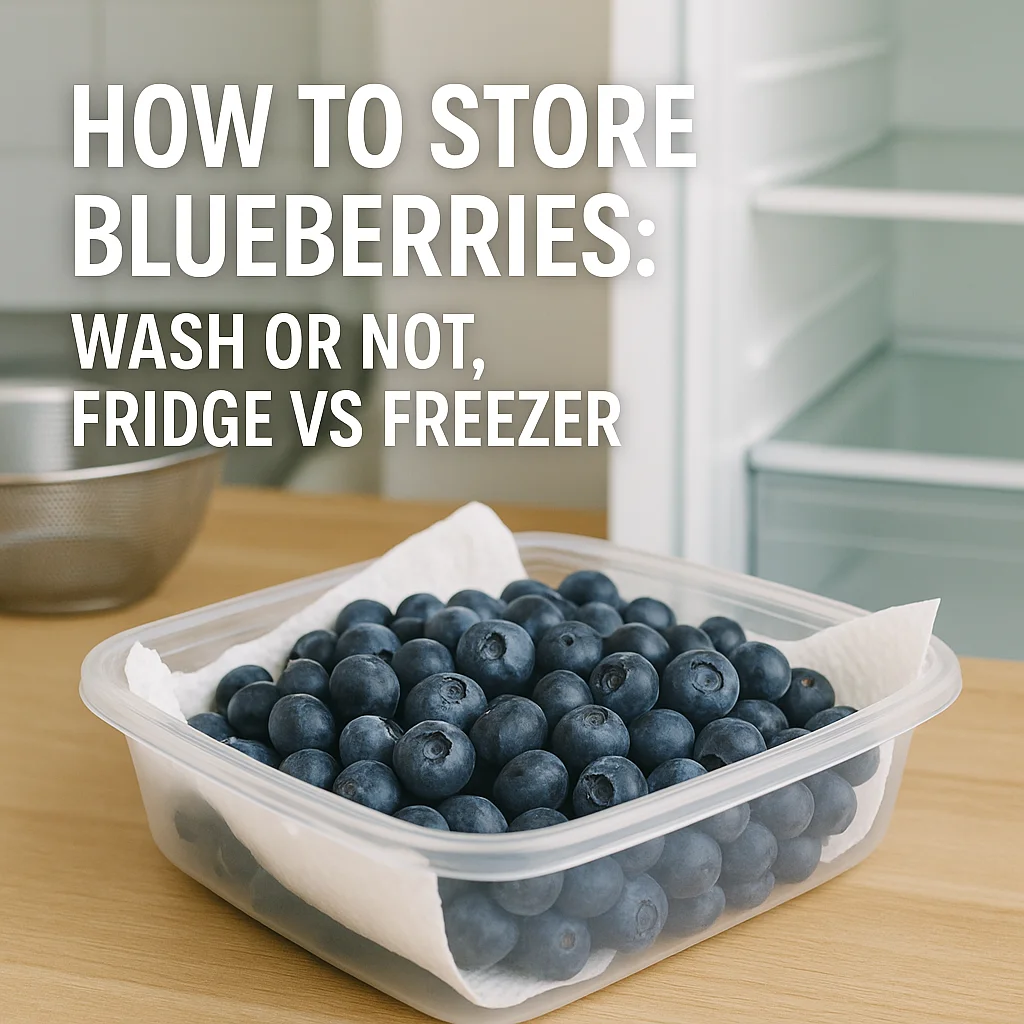
- Store in a breathable container or cover the original container with a paper towel. Encourages air circulation, reduces moisture.
- Place container in the fridge, away from strong-smelling produce. Prevents flavor absorption and minimizes ethylene exposure.
- Avoid the fridge door; instead, store them in a crisper drawer set to low humidity. Controls moisture levels more effectively.
- If freezing, wash and dry thoroughly before laying on a baking sheet in a single layer. Prevents clumping and maintains texture.
- Once frozen, transfer to an airtight container or freezer bag. Protects from freezer burn and moisture.
- Use a basket or bowl lined with a paper towel for countertop storage for daily use. Helps manage condensation if going to eat within 1–2 days.
- Check daily for signs of mold or spoilage. Timely removal of bad berries extends the life of the rest.
- If berries are losing color → Place deeper in the fridge away from light exposure.
- If you notice condensation inside → Remove the cover for a while to dry.
- If there is any mold or off smell → Discard immediately to prevent spoilage spread.
15–20 Minute Weekly Prep Routine
- Start by inspecting all the blueberries, discarding any that are soft or moldy.
- Line a breathable container with a paper towel and place the blueberries in a single layer.
- Label with the date acquired and place in the refrigerator.
- Set a reminder to check the blueberries mid-week for any spoilage.
- If I only had 2 minutes: Quickly inspect for mold, remove offenders, and place the container in the fridge.
- If your fridge is weird: Adjust drawer settings if too dry; use a humidifier for very dry climates. Keep away from the back wall if it tends to freeze.
Common Mistakes in Storing Blueberries
- Washing before storing → Leads to moisture and mold → Wash only before use.
- Using plastic bags → Traps moisture and accelerates decay → Use breathable containers.
- Leaving at room temperature for too long → Quick spoilage → Keep in fridge, eat soon.
- Storing near ethylene producers like apples → Faster spoilage → Use separated storage.
- Not checking them regularly → Mold spread → Inspect and discard bad ones promptly.
Food Safety Notes
- Always wash blueberries thoroughly before consuming.
- If any berry shows signs of mold, discard it; mold can spread easily.
Storage Cheat Sheet
| Produce | Best storage | What to avoid | Typical problem | Quick fix |
|---|---|---|---|---|
| Blueberries | Fridge in vented container | Washing before storing | Soft, moldy berries | Inspect and keep dry |
FAQ
- Do blueberries need to be refrigerated? Yes, refrigeration slows down spoilage.
- Can I freeze blueberries without washing them? Wash and dry them before freezing to remove surface bacteria and dirt.
- What causes blueberries to mold? Moisture and poor air circulation encourage mold growth.
- Can old blueberries be revitalized? Unfortunately, once they are mushy or moldy, they cannot be saved.
- Should I remove stems before storing? It's not necessary and might damage the fruit.
- How long do frozen blueberries last? Properly stored, they can last up to 10 months.
- What to do with excess blueberries? Freeze them or use them in cooking and baking.
- Why do my blueberries taste bitter? They could be underripe; allow them a brief period at room temperature.
Closing: Blueberry Storage Made Easy
- Inspect and separate bad berries immediately.
- Use breathable containers in the fridge.
- Wash only before you eat.
With these techniques, you'll save money and enjoy fresher blueberries with minimal waste. Check out other produce tips at all our guides or learn how ethylene affects storage in our ethylene guide. Happy snacking!