How to Store Cucumbers: Avoid Chilling Injury + Best Temperature Range
When Your Cucumbers Go Mushy
Imagine opening your fridge door, reaching for a cucumber, only to find it limp and mushy. It feels like money and dinner plans slipping through your fingers. This happens often because cucumbers are sensitive to chilling injury. They detest temperatures below 50°F, yet often find themselves too cold in our fridges.
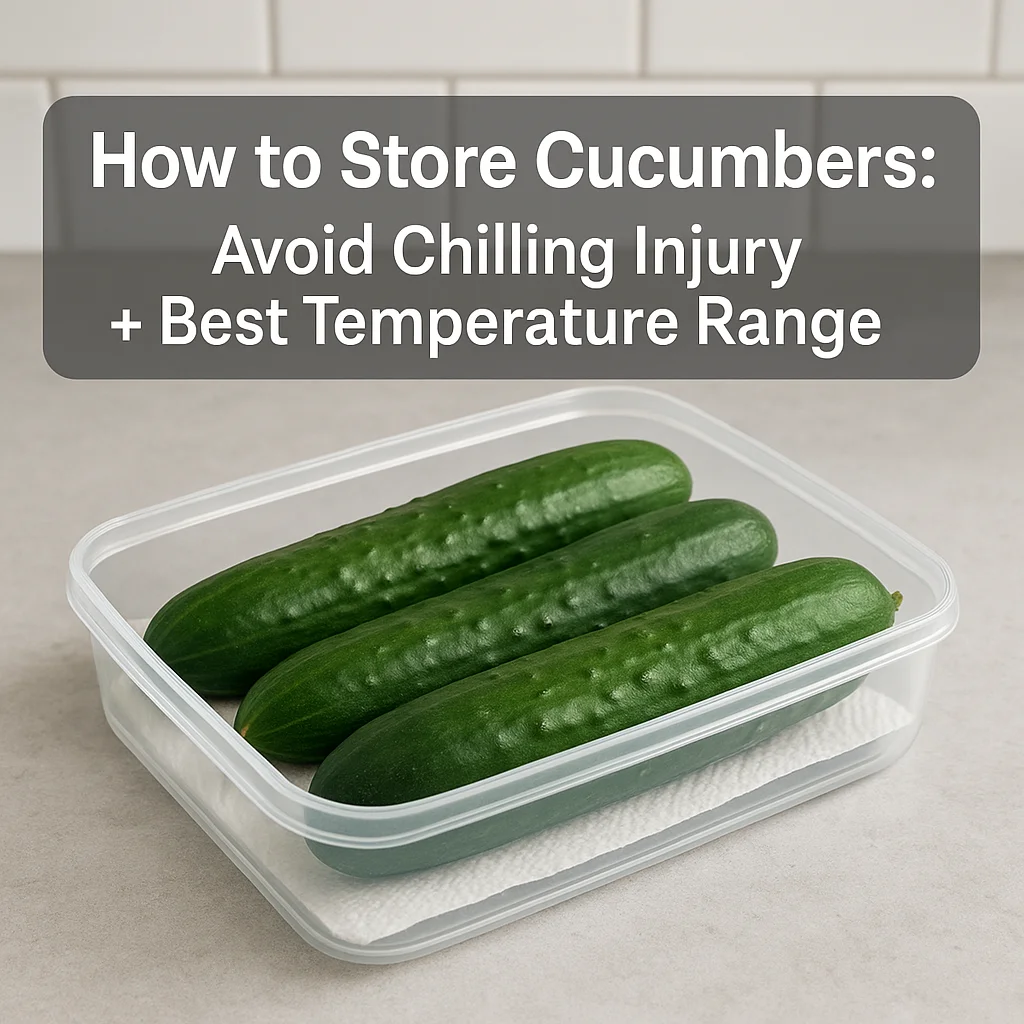
Quick and Easy Cucumber Storage Rules
- Store cucumbers at room temperature if you plan to eat them in a day or two.
- Keep cucumbers in the fridge if temperatures are hotter than usual.
- Avoid refrigeration periods extending beyond three days to prevent chilling injury.
- Never store cucumbers near apples or bananas; they produce ethylene, speeding spoilage.
- Use a vented container with a dry paper towel at the bottom to control moisture.
- Store whole cucumbers away from strong odors; they're prone to absorbing smells.
- Check cucumbers daily for firm texture and bright green color.
- Wipe away any moisture droplets to prevent mold.
- If keeping in the fridge, find the upper shelves or door where the temperature is more stable.
Choosing the Best Cucumbers at the Store
When buying cucumbers, look for firm and dark green fruits with a slight gloss. Avoid any with soft spots, yellowing, or wrinkles. These signs indicate aging or improper storage.
The Real Fix: Step-by-Step Solution
Our goal is to maintain a stable environment: neither too dry nor too moist, and without extreme temperature shifts. Follow these steps:
- Initial Inspection: Gently squeeze cucumbers. They should be firm with no soft spots. Check for a fresh smell or absence of smell.
- Dry Off: If the cucumbers are wet, dry them gently with a paper towel. Moisture accelerates spoilage through mold and softening.
- Container Choice: Place cucumbers in a vented container lined with a dry paper towel to absorb excess moisture.
- Fridge Placement: Store cucumbers in the vegetable crisper drawer or at the front of a shelf to keep them at the ideal 50°F. Temperature is more stable here.
- Avoid Ethylene Producers: Keep cucumbers away from fruits like bananas and apples that release ethylene gas, promoting faster aging and spoilage.
- Monitor Daily: Check them each day. Look for changes in firmness or color and remove any spotted ones.
- Address Odors: If you notice a funky smell, relocate them to another spot. Cucumbers absorb odors quickly, impacting taste.
- Quick Action on Softening: If a cucumber feels soft, use it immediately or place it in an ice bath to slow degradation.
If/Then Troubleshooting:
- If cucumbers are turning yellow, then they were likely stored too long or past ripeness — use immediately.
- If mold forms, then moisture was too high or they were too cold — remove moldy ones and dry the container.
- If they absorb odors, then relocate them and use more paper towels.
- If cucumbers stay firm but lack flavor, then check for ethylene exposure and adjust placement.
- If softening occurs, then check fridge temperature or increase container venting.
- If shriveling, then moisture levels may be too low — increase humidity by covering with a damp cloth.
- If they feel slimy, then use immediately after thorough wash or discard if smell is off.
- If condensation is constant, then improve air circulation around them.
15–20 Minute Weekly Prep Routine
- Gather Supplies: Get your vented container, paper towels, and cucumbers ready.
- Inspect and Sort: Group firm cucumbers together and set aside any showing signs of spoilage.
- Prepare Container: Line with a dry paper towel and place cucumbers with enough space between them for airflow.
- Fridge Spot: Choose the right spot within your fridge where temperature is stable, typically the middle shelves or crisper drawers.
- Daily Checks: Set a recurring reminder to check them each day for molds or soft spots.
- Immediate Decisions: Use softer cucumbers in recipes like salads or soups.
- If I only had 2 minutes:
- Quickly wipe and dry cucumbers if moist.
- Inspect and move any firm ones to a vented container.
- Use softer ones the same day in meals.
If your fridge is weird (too dry, too humid, or freezing): Consider adjusting the crisper settings, or place a hygrometer inside to monitor changes. Cucumber sensitivity requires extra care in extreme conditions.
Common Mistakes to Avoid
- Storing in closed containers → Excess moisture leads to rotting → Use vented containers.
- Refrigerating for longer than a week → Chilling injury begins → Opt for room storage short-term or frequent checks if in fridge.
- Keeping cucumbers on lower fridge shelves → Temperature might be too cold → Use higher shelves instead.
- Storing near ethylene producers → Faster spoilage → Keep separate from apples and bananas.
- Placing cucumbers near strong smells → Flavor contamination → Choose drawer spots or covered bins.
- Allowing condensation inside → Mold formation → Improve air circulation and moisture control.
- Ignoring initial firmness checks → Miss early spoilage signs → Squeeze and check regularly.
- Leaving moisture droplets → Mold growth → Always dry cucumbers before storage.
- Using non-vented containers → Poor air exchange → Incorporate a container with vents or openings.
- Skipping regular inspections → Missed spoilage → Keep a daily routine of checks for best results.
Food Safety Notes: How and When
Always wash cucumbers just before using, not before storage, to keep bacterial growth at bay. If a cucumber feels slimy or has an off odor, be conservative and discard it to avoid foodborne illnesses.
Quick Table for Cucumber Storage
| Produce | Best Storage | What to Avoid | Typical Problem | Quick Fix |
|---|---|---|---|---|
| Cucumber | Room temp (1-2 days) or fridge (max 3 days) | Prolonged cold temps, ethylene exposure | Chilling injury, fast spoilage | Check daily, adjust location |
FAQs About Storing Cucumbers
- Q: Can I store cucumbers on the counter?
A: Yes, if you plan to use them within 1-2 days. - Q: Why do cucumbers get soft in the fridge?
A: Chilling injury occurs because they're stored too cold. - Q: Should cucumbers be stored in plastic?
A: Use vented containers or bags, avoid sealed plastic. - Q: How can I extend cucumber shelf life?
A: Monitor for moisture and store correctly; consider freezing excess. - Q: What is the ideal fridge spot for cucumbers?
A: Middle shelves or veggie drawer with stable, warmer temps. - Q: Do cut cucumbers store well?
A: Wrap in paper towel and store in an airtight container for 1-2 days. - Q: Can I refrigerate cucumbers with other veggies?
A: Yes, but avoid ethylene producers like tomatoes or apples. - Q: Should I refrigerate cucumbers immediately after purchase?
A: No, unless it is extremely hot; otherwise, room storage for a couple of days is fine. - Q: Can cucumbers be frozen?
A: Yes, but note the texture changes; best for smoothies or soups afterward. - Q: Why do my cucumbers spoil quickly?
A: Check storage method, temperature, and proximity to ethylene producers.
Conclusion
- Keep cucumbers dry by storing them with paper towels in vented containers.
- Avoid ethylene producers; store in a separate area from bananas or apples.
- Inspect daily and act quickly at first signs of spoilage to minimize waste.
By following these straightforward steps, you'll save money, enjoy crisp cucumbers, and reduce frustration. Happy storing!