How to Store Fresh Herbs (Basil, Parsley, Cilantro): The Right Method for Each
Frustrations in the Kitchen: Why Herbs Go Bad So Quickly
We've all experienced it: you buy a bunch of fresh herbs with grand culinary plans, only to find them wilted and slimy a few days later. The real culprit? Mismanagement of moisture and temperature in storage. Herbs are delicate; they require specific conditions to thrive after harvest. Let’s tackle the mystery of fresh herb storage and eliminate frustration.
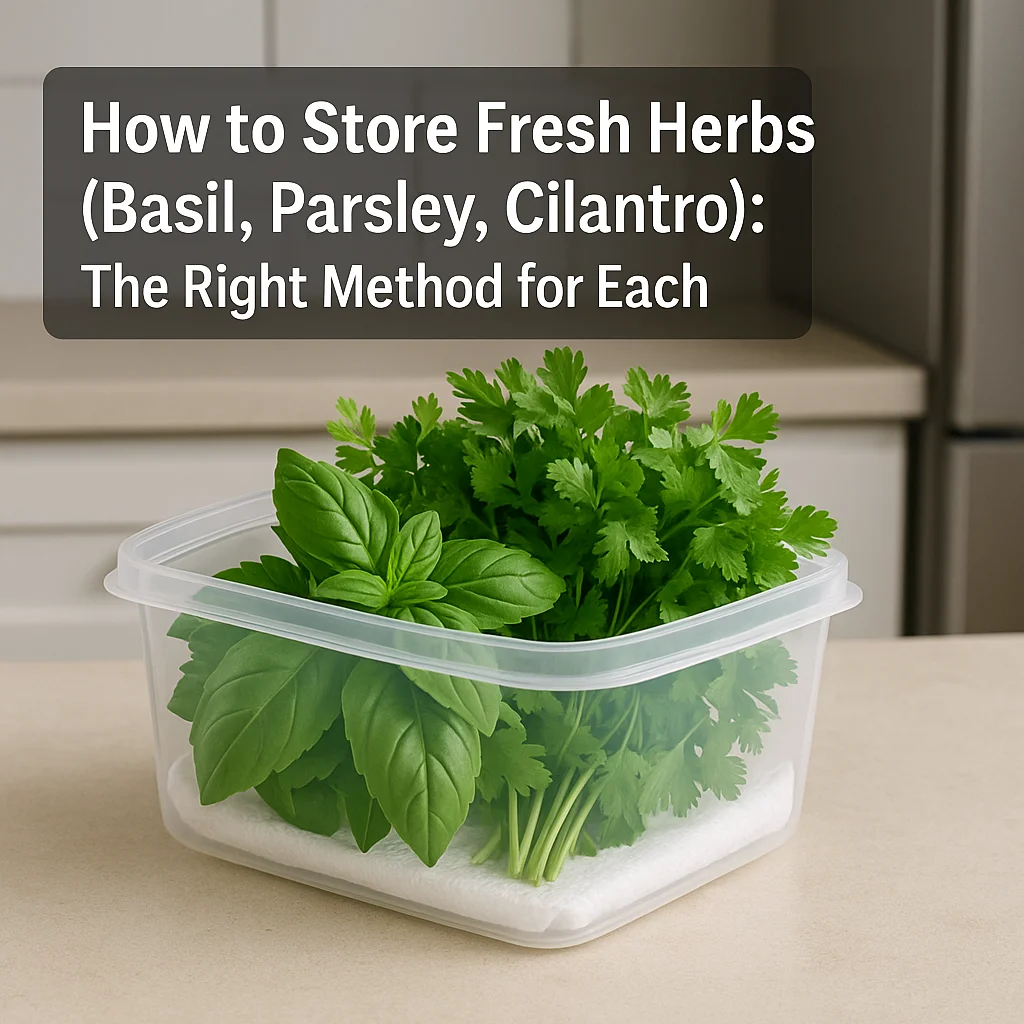
Fast Rules for Herb Storage
- Keep herbs dry, but not dehydrated.
- Store basil at room temperature; other herbs in the fridge.
- Use a paper towel to absorb excess moisture.
- Avoid storing near apples or bananas; they emit ethylene gas.
- Trim stems before storing to prolong freshness.
- Use airtight containers for hard herbs, vented jars for soft ones.
- Check regularly for signs of spoilage or condensation.
- Replace any wilted pieces immediately to prevent spread.
- If herbs get soggy, dry them immediately to salvage them.
- Consider freezing excess to minimize waste.
Buying Tips: Choosing Fresh, Quality Herbs
To start on the right foot, selecting the freshest herbs is crucial:
- Look for vibrant, crisp leaves without any wilting or browning.
- Avoid herbs with dark spots, as these are early signs of decay.
- Check for a strong, fresh aroma indicative of essential oil presence.
- For basil, opt for leaves still attached to the plant if possible.
- Steer clear of bundles with soggy or slimy stems.
- Consider growing your own for ultra-fresh availability.
Effective Storage Techniques: A Step-by-Step Solution
Goal: Maintain optimal moisture balance and avoid temperature swings to extend the life of your herbs.
- Begin by trimming the ends of the herb stems slightly to open up their vascular system.
- If storing basil, keep it at room temperature in a jar with water, like a bouquet.
- For other herbs like parsley and cilantro, wrap them gently in a damp paper towel.
- Slip the wrapped herbs into a partially opened plastic bag or a vented container.
- Store the bag or container in the crisper drawer of the fridge where moisture is controlled.
- Regularly check for excess moisture or any signs of wilting and mold.
- If you notice condensation, change the paper towel to prevent mold growth.
- Avoid storing herbs alongside ethylene-emitting fruits to reduce spoilage risk.
- Refresh water for basil storage every couple of days to prevent stagnancy.
- If herbs become limp, revive them briefly in ice water before using.
- Use glass or plastic containers with slight ventilation for an ideal balance of humidity.
- Label storage dates to use the herbs while still fresh.
If/Then Troubleshooting
- If stems are slimy, then remove affected stems immediately to prevent spreading.
- If leaves are turning black, then reduce moisture and check for ethylene exposure.
- If water has a foul smell, then change it instantly to preserve remaining herbs.
- If herbs are dry and brittle, then moisten the paper towel wrapping slightly.
- If basil leaves are wilting at room temp, then move to a cooler, shaded spot.
- If parts of herbs are yellowing, then check for excess exposure to ethylene gas.
- If herbs look healthy but smell off, then discard to avoid culinary disappointment.
- If using quickly drying fridges, then reevaluate moisture control setups.
15–20 Minute Weekly Prep Routine
- Upon arrival, inspect and separate herbs, discarding any that are damaged.
- Trim the stem ends for optimal water uptake during storage.
- Group herbs into basil and other types for appropriate storage conditions.
- Prepare storage mediums (jars, containers, bags) with paper towels or water.
- Place herbs into their respective containers gently to avoid bruising.
- Check storage areas for appropriate temperature and humidity levels.
- Note storage date and expected usage timeline for planning purposes.
- Refresh storage conditions mid-week as needed.
If I Only Had 2 Minutes
- Trim and submerge basil stems into water without delay.
- Quick wrap parsley and cilantro in damp towels and fridge.
- Avoid ethylene exposure by keeping well separated from fruits.
Note: If your fridge tends to run dry, consider a humidity-controlled drawer or increase towel dampness. If too humid, ensure storage is aerated to control mold.
Common Mistakes and How to Fix Them
- Storing all herbs alike → Results in unnecessary waste → Tailor conditions for each type.
- Ignoring stale water → Promotes bacteria → Refresh water every few days.
- Avoiding moisture completely → Leads to dehydration → Use damp paper towels appropriately.
- Exposure to high temperatures → Causes wilting → Store away from direct sunlight and heat sources.
- Misjudging fridge settings → Accelerates decay → Adjust drawer settings or use specialized compartments.
- Overcrowding storage → Prevents air flow → Keep herbs loosely packed.
- Never replacing tools → Continues spoilage process → Regularly replace towels and containers.
- Mixing herb types → Contaminates water balance → Store each kind separately.
- Nevlecting early signs → Full spoilage → Check condition daily.
- Not pre-trimming stems → Shortens freshness span → Promote better moisture absorption.
Food Safety Notes
For best safety and quality:
- Wash herbs right before use, not before storage, to minimize spoilage risk.
- Discard herbs at the first sign of blackening or sliminess.
- Use a fresh cutting board and knife when prepping multiple ingredients.
Quick Storage Table
| Produce | Best Storage | What to Avoid | Typical Problem | Quick Fix |
|---|---|---|---|---|
| Basil | Room temp, like a bouquet in water | Fridge cold | Wilting | Move to room temp, refresh water |
| Parsley | Wrapped in damp towel, fridge | Dry conditions | Brittle leaves | Dampen towel |
| Cilantro | Wrapped in damp towel, fridge | Too wet | Rotten stems | Change towel, vent container |
FAQs for Herb Storage
- Can I freeze fresh herbs? Yes, most herbs freeze well especially when stored in oil or as ice cubes.
- Why is my basil always wilting in the fridge? Basil prefers room temperature and may suffer cold damage in the fridge.
- Is it okay to store herbs in plastic bags? Yes, if they are wrapped in a paper towel and the bag is slightly open.
- How often should I change the water for basil? Every 2 to 3 days to maintain freshness.
- Why do my herbs turn black so quickly? This indicates excessive moisture or ethylene exposure; adjust storage accordingly.
- Can I use wilted herbs? If the texture isn't slimy, they can often be revived with an ice bath.
- What should I do with leftover herbs? Consider making herb butter or pesto for immediate use.
- Why is my cilantro always soggy? This may result from too much humidity; reduce towel moisture.
- How do I know when to throw out my herbs? Discard any herbs with foul smell, black spots, or sliminess.
- Can I store all herbs together? It's best to store separately due to different moisture needs.
Closing Thoughts
- Always tailor herb storage to each specific type.
- Monitor conditions to correct issues early.
- Opt for fresh purchases to avoid overstock and spoilage.
A little attention to detail goes a long way in keeping your herbs fresh and delightful. For more storage tips, visit our complete post list or learn about compatible storage pairings in our ethylene guide.