How to Store Lemons & Limes for Maximum Freshness (Fridge + Freezer)
You've Bought Lemons & Limes. Now What?
If you've ever found yourself tossing out lemons and limes that have become moldy or shriveled, you know the frustration. The main culprit is usually improper storage. When improperly stored, moisture can accumulate leading to mold, or exposure to air can cause dehydration.
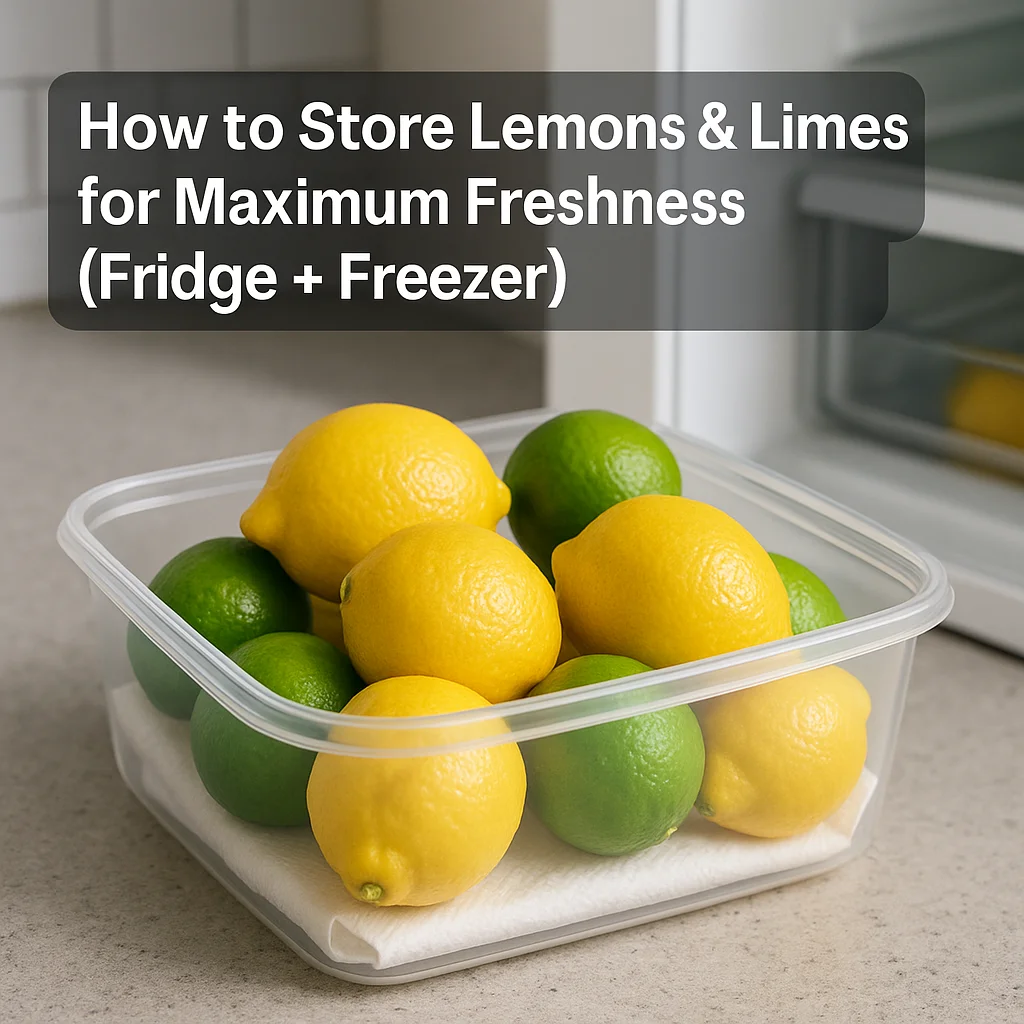
Fast Rules for Storing Lemons & Limes
- Store whole lemons and limes in the fridge for maximum freshness.
- Keep them in a loosely sealed plastic bag to reduce dehydration.
- Don't wash until you're ready to use; moisture speeds up spoilage.
- Place in the crisper drawer away from ethylene-producing fruits.
- Freeze slices or juice for long-term storage.
- Avoid temperature fluctuations to prevent condensation.
- Check regularly for signs of mold or drying out.
- Use or discard if they become overly soft or have mold.
- Don't pile; overcrowding can lead to faster spoilage.
Buying Checklist: Picking the Best Lemons & Limes
Choosing the right lemons and limes is the first step to ensuring they last long. Here's what to look for and avoid:
- Look for: Bright, firm fruits with no soft spots.
- Avoid: Dull, wrinkled, or very soft fruits; these signal age and quick spoilage.
- Check for: A heavy feel for their size, which indicates juiciness.
- Smell: A fresh citrus scent is a good sign; off smells could indicate spoilage inside.
The Real Fix: Step-by-Step Solution
The goal is to manage moisture and avoid temperature swings to keep lemons and limes fresh.
- Choose Firm Fruits: Firmness is a cue for freshness and longevity.
- Use Perforated Bags: Place fruits in a perforated bag in the fridge. This allows air circulation and reduces condensation that leads to mold.
- Fridge Temperature: Set the fridge between 37°F and 40°F to slow down enzyme activity that causes spoilage.
- Avoid Ethylene Exposure: Store away from apples and bananas to slow down aging, as they release ethylene gas.
- Drawer Setting: Use the crisper drawer, which maintains moisture without excess humidity.
- Regular Checks: Inspect weekly for signs of mold or softened spots, indicating it's time to use them.
- Freezing: For long-term storage, slice and freeze lemons/limes. Use airtight containers to prevent freezer burn.
- Preuse Wash: Wash before using, not before storing, to avoid added moisture.
- If condensation forms → open bag slightly to let moisture escape.
- If they dehydrate → use a more airtight container.
- If they get moldy quick → check fridge temperature and humidity settings.
- If there's no fresh scent → they've likely been stored too long.
15–20 Minute Weekly Prep Routine
- Inspect all lemons and limes for firmness and any signs of mold.
- Reorganize in the fridge, ensuring they have plenty of airflow and aren't crowded.
- If juice is wanted, extract and freeze in ice cube trays for easy use later.
- Plan to use older fruits first in your weekly meals.
If I only had 2 minutes:
- Quickly feel each fruit for soft spots or mold.
- Check fridge temperature setting.
- Shuffle the position of fruits for better airflow.
If your fridge is weird: If it's too dry, consider adding a damp paper towel; if too humid, increase air circulation or keep lid slightly open.
Common Mistakes and Their Fixes
- Leaving fruits on the counter: Leads to quick dehydration → Keep in the fridge.
- Storing in sealed bags with no holes: Promotes moisture buildup and mold → Use perforated bags.
- Washing before storing: Introduces excess moisture → Wash just before use.
- Placing near the fridge back wall: Might freeze and damage texture → Keep towards the front.
- Near ethylene-producing fruits: Ages them quicker → Store separately.
- Ignoring soft or moldy spots: Allows spoilage to spread → Discard affected fruits promptly.
- Not checking temperature settings: Improper settings lead to faster spoilage → Regularly check fridge temp.
- Stuffing drawers full: Reduces airflow → Keep them loosely packed.
Food Safety Notes
Always wash lemons and limes with water before using to remove potential contaminants.
Discard any fruit that has multiple moldy spots or a pervasive off-smell. When in doubt, it's better to err on the side of caution.
Quick Reference Table
| Produce | Best Storage | What to Avoid | Typical Problem | Quick Fix |
|---|---|---|---|---|
| Lemons | Fridge in perforated bags | Direct sunlight | Dehydration | Place in crisper drawer |
| Limes | Fridge, separate from ethylene producers | Airtight bags | Mold growth | Check for condensation |
Frequently Asked Questions
- Can I store cut lemons or limes in the fridge? Yes, but wrap tightly in plastic wrap to prevent drying.
- How long do they last in the fridge? Typically 3 to 4 weeks if stored properly.
- Is it safe to freeze lemons and limes? Yes, it can extend their usability for several months.
- What's the best fridge temperature? 37°F to 40°F is ideal to slow spoilage.
- How to tell if a lime is bad? Soft spots, discoloration, and off-smell are critical signs.
- Can I store them with other fruits? Avoid storing with ethylene-producing fruits to extend their freshness.
- Is condensation inside the bag bad? Yes, it can lead to mold. Allow for air circulation.
- What's the quickest way to use older lemons? Juice them and freeze the juice in trays.
- What if my limes have spots? Use them soon or cut out affected areas if minor.
- Should I remove them if my fridge freezes? Yes, adjust placement or fridge settings to prevent freezing damage.
Closing: Golden Rules for Saving Money on Lemons & Limes
- Always keep in the fridge, not on the counter.
- Avoid ethylene gas by keeping separate from certain fruits.
- Regular checks and organized storage extend life dramatically.
Storing lemons and limes correctly means you’ll always have fresh citrus on hand for your cooking and cocktail needs. It just takes a little effort and awareness to start seeing real savings and less waste. Remember to check our full list of posts and specific storage guides for more tips and tricks.