How to Store Onions: Best Conditions + Why They Shouldn’t Be With Potatoes
Why Onions Go Bad Faster Than You Think
We’ve all experienced it: reaching into the pantry only to find that an onion has gone soft or started to sprout unexpectedly. Often the culprit is simple: improper storage conditions that encourage moisture and warmth, leading to faster spoilage.
Fast Rules: Quick Tips to Remember
- Store whole onions in a cool, dry, and dark place.
- Avoid the fridge for whole onions unless cut.
- Keep onions in a well-ventilated container.
- Never store onions with potatoes.
- Keep cut onions in the fridge, in airtight containers.
- Use paper towels to absorb excess moisture.
- Check onions regularly for firmness.
- Keep onions from direct sunlight.
- Store away from ethylene-producing fruits like apples and bananas.
- Use sprouted onions soon; they’re still good, just less fresh.
Buying Checklist: What to Look for at the Store
- Firmness: Choose onions that feel firm to the touch.
- Skin: Look for dry, papery skins with no signs of spoilage or mold.
- Weight: Heavier onions are usually fresher.
- Avoid: Avoid onions with soft spots, green shoots, or cuts.
- Smell: Avoid onions with a strong odor, which can indicate decay.
The Real Fix: Step-by-Step Solution
Goal: Keep it dry and well-ventilated to extend shelf life.
- Pick the right spot: Find a cool, dry pantry space to store your onions. Avoid the fridge; it may lead to moisture build-up.
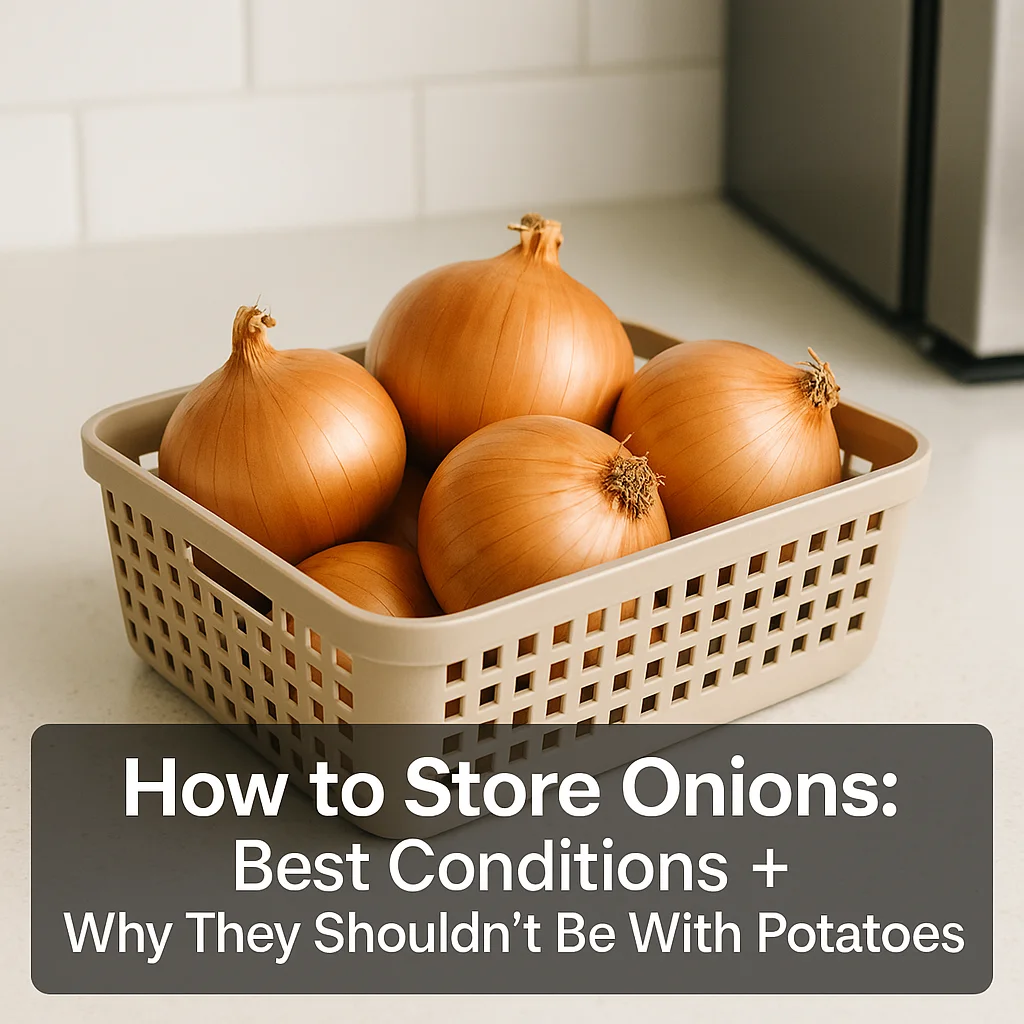
- Choose a container: Use a mesh bag or basket to store onions, allowing air circulation. This prevents moisture accumulation and mold.
- Use paper towels: Place paper towels at the bottom of the storage area to absorb excess moisture.
- Separate them: Store onions away from potatoes. Potatoes release moisture and emit ethylene gas, which speeds up onion spoilage.
- Check regularly: Inspect onions once a week for softness or sprouting. Use any questionable ones sooner.
- Avoid temperature swings: Keep a consistent temperature to prevent condensation within the storage area.
- Store cut onions: Place in airtight containers in the refrigerator, ensuring no other produce smells are absorbed.
- In case of sprouting: If onions sprout, use them quickly as they lose moisture and flavor.
- Precautions with green onions: Store in the fridge, wrapped loosely in paper towels, then inside a plastic bag.
- If onions feel soft → Check for mold or damage → Use immediately or discard.
- If onions are sprouting → Sprouts are edible, but use the onion soon.
- If there's an odor → Check for spoilage → Discard if rotten.
- If onions are moldy → Remove moldy parts if isolated → Discard heavily molded onions.
- If storing near potatoes → Keep them separate by at least a foot.
15–20 Minute Weekly Prep Routine
- Check onions for firmness and discoloration.
- Remove any sprouted or slightly softened onions for immediate use.
- Wipe down storage area with a dry cloth to remove dirt or debris.
- Rotate onions to use older ones first.
- If storing cut onions, replace paper towels in the bags or containers weekly.
- Ventilate storage area, ensuring airflow is not impeded.
- If I only had 2 minutes: Quickly check for sprouting or soft onions and place them on the top of the usage pile.
- If your fridge is weird: For a too-dry fridge, slightly open containers. For too humid, add extra paper towels. For freezing back wall, move items forward.
Common Mistakes: What to Avoid
- Storing with potatoes: Leads to spoilage → Store separately.
- Storing in plastic bags: Traps moisture → Use ventilated containers.
- Leaving in sunlight: Can cause sprouting → Store in a dark spot.
- Ignoring temperature changes: Causes condensation → Store consistently.
- Not separating damaged onions: Promotes spread of spoilage → Remove damaged ones immediately.
- Storing cut onions at room temperature: Loss of moisture and potential spoilage → Use the fridge.
- Choosing soft onions: Short shelf life → Pick firm onions.
- Letting onions touch the fridge back wall: Risk of freezing and deterioration → Keep them away from the back.
- Disregarding storage container choice: Inadequate airflow → Use mesh or basket containers.
- Overstacking in the pantry: Limits air flow → Keep them loosely arranged.
Food Safety Notes
- Wash onions just before use. Washing prior can encourage mold.
- Toss onions if they are slimy, smell foul, or have significant mold growth.
- For cut onions, use within a week. If they develop a strong odor or appearance changes, discard sooner.
Quick Table
| Produce | Best storage | What to avoid | Typical problem | Quick fix |
|---|---|---|---|---|
| Whole Onions | Cool, dark, vented | Moisture, sunlight | Mold, sprouting | Store ventilated, dark place |
| Cut Onions | Airtight in fridge | Room temperature | Odor absorption | Use airtight container |
| Green Onions | Fridge, loose wrap | Unwrapped, dry air | Wilting | Wrap in damp towel |
FAQ: Your Questions Answered
- Should I refrigerate whole onions? No, the fridge can cause moisture buildup leading to spoilage.
- Can I store onions with other vegetables? Yes, but keep them away from potatoes.
- Why do onions sprout? Sprouting is natural if stored too long or in warm conditions; use them soon if they sprout.
- What should I do with a sprouting onion? You can use it quickly; the sprouts themselves can also be eaten.
- Why shouldn't onions and potatoes be together? Potatoes release moisture and ethylene gas, which speed up onion spoilage.
- Can I eat an onion with mold? It’s best to trim small mold spots if isolated, but discard if significantly molded.
- Are cut onions safe to store? Yes, keep cut onions in airtight containers in the fridge.
- What's the best onion storage container? Use a mesh bag or basket for whole, and airtight containers for cut onions.
- How to handle onions when my pantry is warm? Optimize ventilation and remove any wilted or sprouting ones promptly.
- What's the right way to store green onions? Keep in the fridge, loosely wrapped in a damp paper towel.
Closing Tips
- Store in a cool, dark place away from moisture.
- Keep ventilation in your storage setup to avoid condensation.
- Always separate from potatoes to prevent spoilage.
Remember, proper storage practices not only save your onions but also your money and time. Keep these tips in mind, and happy onion storing!