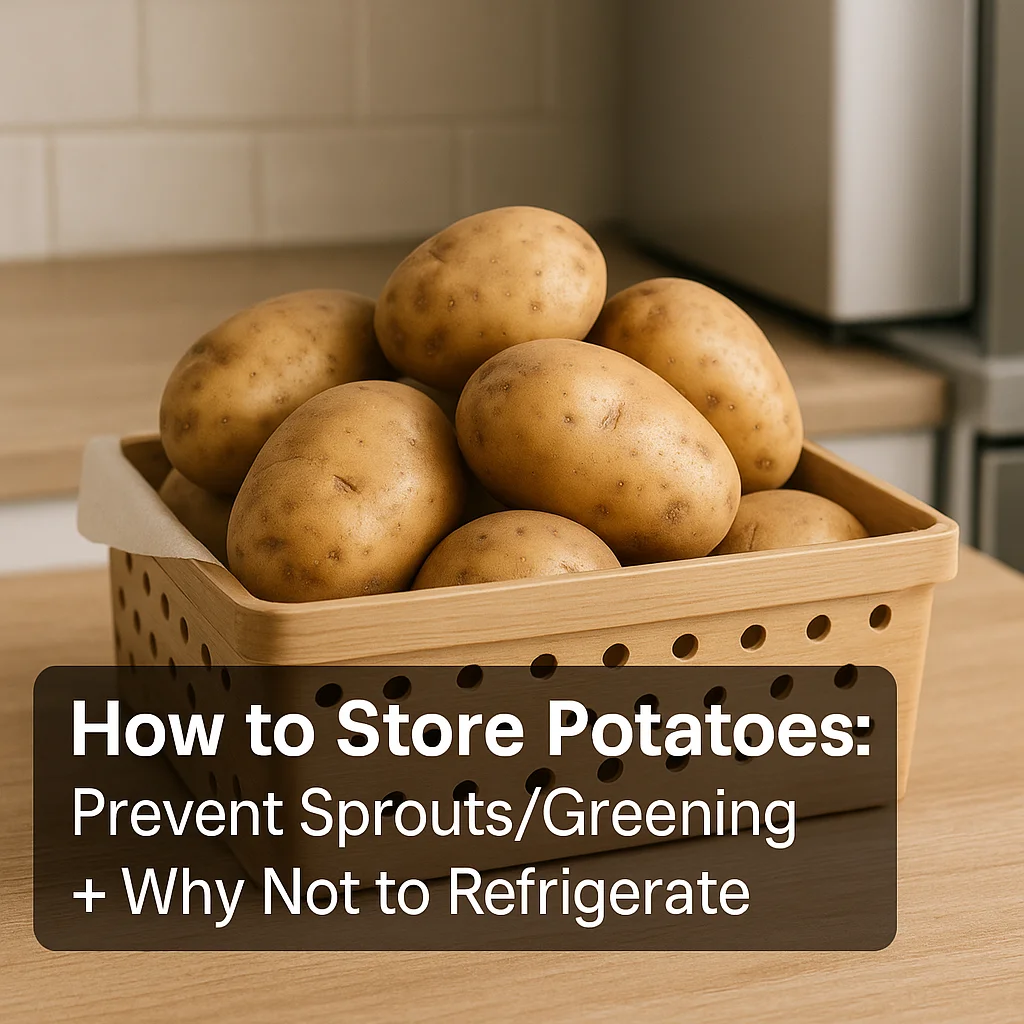
How to Store Potatoes: Prevent Sprouts/Greening + Why Not to Refrigerate
Potato Waste: Why It Happens
We've all experienced the frustration of opening a pantry to find our once-fresh potatoes turned green, sprouting, or overly soft. Much of this common problem stems from improper storage conditions that accelerate decay and spoilage.
Fast Rules for Storing Potatoes
- Avoid light exposure to prevent greening.
- Store in a cool, well-ventilated place.
- Do not wash before storage.
- Avoid placing potatoes near onions.
- Do not refrigerate; it alters taste and texture.
- Store in a paper bag or open basket.
- Check regularly for sprouting or soft spots.
- Rotate and use older potatoes first.
Buying Checklist: How to Choose Potatoes
Select firm potatoes with no cuts or significant blemishes. Avoid any that show signs of greening or sprouting — these will age faster or may have a bitter taste.
The Real Fix: Step-by-Step Solution
Goal: Store potatoes in a way that prevents sprouting and greening while avoiding refrigeration.
- Choose the right container. Use a well-ventilated basket or paper bag. This allows air circulation, preventing moisture build-up that leads to decay.
- Store in a cool, dark place. The ideal temperature is 45 to 50°F (7 to 10°C). Light exposure leads to greening due to chlorophyll formation.
- Avoid storing near fruits. Fruits like apples produce ethylene gas, which accelerates sprouting.
- Check for sprouting and remove affected potatoes. Regular checks mean you can catch problems early, which reduces waste.
- Keep potatoes dry. Moisture promotes rot, so dry any damp potatoes with a paper towel before placing them in storage.
- Do not wash before storing. Washing adds moisture which can lead to mold growth.
- Rotate stock regularly. First in, first out method helps prevent spoilage and maintains freshness.
- Avoid refrigeration. Cold temperatures convert starch to sugar, altering taste and texture.
- Inspect and remove spoiled ones promptly. Spoiled potatoes emit moisture and gas, accelerating spoilage of nearby potatoes.
- If sprouting starts, remove sprouts and use soon to prevent further degradation.
- If greening occurs, cut away the green parts before cooking.
- If softness develops, use those potatoes quickly as cooking will soften them further.
- If mold appears, discard the potato to prevent spreading mold spores.
15–20 Minute Weekly Prep Routine
- Inspect stored potatoes for signs of spoilage or sprouting.
- Remove any bad potatoes and rearrange the remaining ones.
- Wipe any moisture with a paper towel and allow them to air dry.
- Rotate stock to ensure older potatoes are used first.
- Check other vegetables in the same area to prevent cross-contamination.
If I only had 2 minutes:
- Spot-check for sprouting or greening.
- Quickly remove any visibly bad potatoes.
- Adjust the storage container if needed for better air circulation.
If your fridge is weird: Avoid storing potatoes in the fridge to prevent altered taste and texture. If using a very cool room, ensure it's not too humid.
Common Mistakes
- Refrigerating potatoes. Leads to sweet taste and gritty texture.
- Storing with onions. Causes faster spoiling due to ethylene gas.
- Leaving in plastic bags. Traps moisture and causes rot.
- Ignoring sprouting. Results in unusable parts and potential bitterness.
- Not rotating stock. Leads to early spoilage of older potatoes.
- Storing in direct sunlight. Causes greening and potential toxicity.
- Washing before storage. Adds moisture, encouraging decay.
- Not inspecting regularly. Misses early signs of spoilage.
Food Safety Notes
Always wash potatoes thoroughly before cooking to remove dirt and bacteria. Discard potatoes with excessive sprouting or greening entirely, as they may contain higher levels of solanine, which can be harmful.
Quick Table
| Produce | Best storage | What to avoid | Typical problem | Quick fix |
|---|---|---|---|---|
| Potatoes | Cool, dark, ventilated space | Refrigeration, plastic bags | Sprouting, greening | Remove bad ones, adjust storage |
FAQ
- Why are my potatoes turning green? They're exposed to light, which triggers chlorophyll production.
- Can I eat sprouted potatoes? Yes, but remove the sprouts and any green areas first.
- What's the best temperature for storing potatoes? Between 45° to 50°F (7° to 10°C).
- Why avoid putting potatoes in the fridge? Cold temps turn starch into sugar, changing taste and texture.
- How can I prevent potato sprouting? Store in a cool, dark place away from fruit.
- Are potatoes safe if they're soft? Slightly soft is okay, but very soft may be spoiling.
- Can I store potatoes in an airtight container? No, they need airflow to prevent moisture build-up.
- Should I wash potatoes before storing? No, extra moisture leads to decay.
- What's the effect of storing potatoes with onions? Speeds up spoilage due to ethylene gas from onions.
- How often should I check stored potatoes? Weekly checking helps catch problems early.
Closing
- Store in a dry, dark place to avoid greening and sprouting.
- Check potatoes weekly to prevent spoilage.
- Use a vented container to allow proper air circulation.
With these straightforward tips, you'll keep your potatoes fresh, firm, and ready for any recipe. Happy cooking!
Looking for more tips? Visit our extensive post list or read about storage, shelf-life, and ethylene pairing here.