How to Store Strawberries: When to Wash, Drying Tips, Mold Prevention
When Strawberries Go Bad: Why It Happens and How to Stop It
Nothing spoils a perfect bowl of strawberries like finding them mushy or moldy the next day. Most of the time, it's not about buying bad berries, but rather how they are stored. Moisture retention and temperature changes lead to faster mold growth and spoilage. Understanding these mechanisms is key to extending their shelf life.
Fast Rules to Keep Strawberries Fresh
- Avoid washing strawberries until ready to eat.
- Remove any damaged or moldy berries before storing.
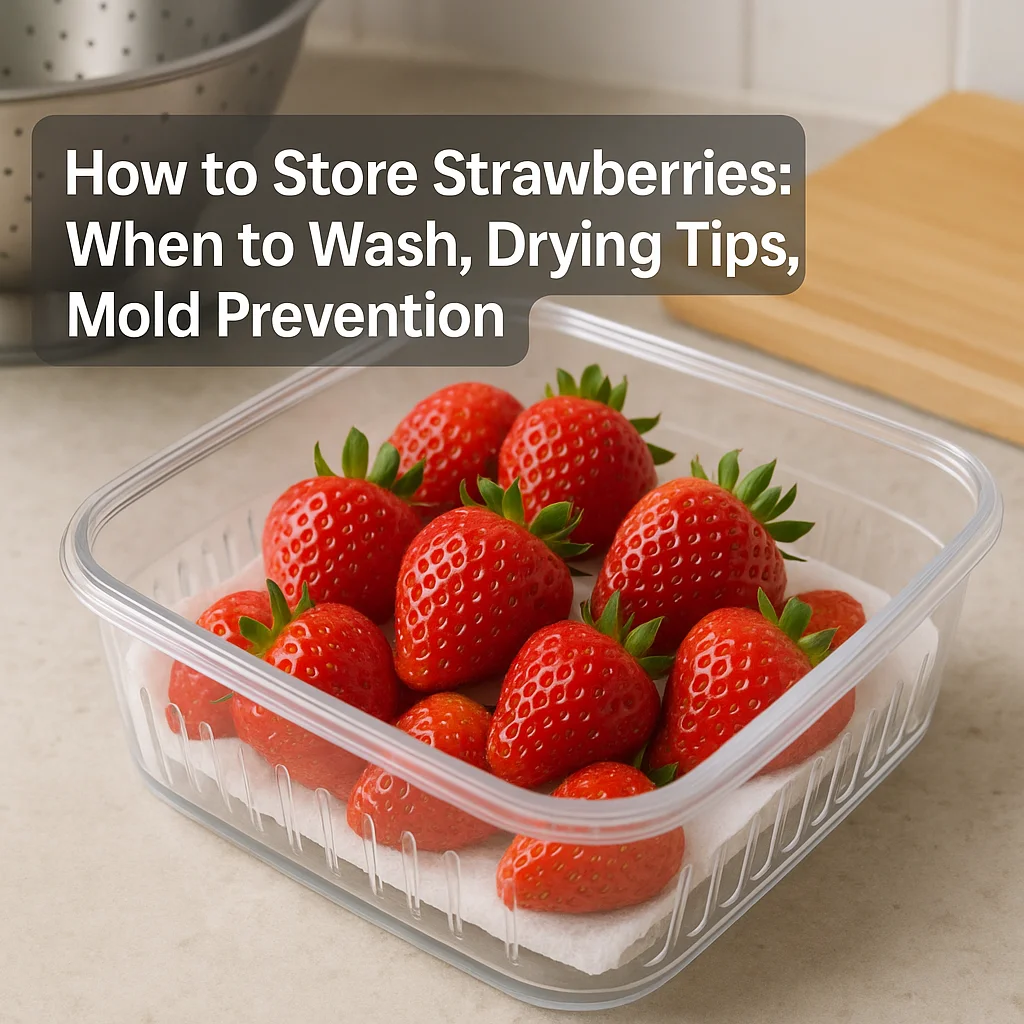
- Store them in a vented container lined with paper towels.
- Keep them in the fridge crisper drawer set to low humidity.
- Avoid direct contact with the fridge's back interior.
- If condensation appears, change the paper towels.
- Check daily and remove any spoiled berries.
- Do not store with ethylene-producing fruits like bananas.
Buying Checklist: How to Pick the Best Strawberries
When selecting strawberries, look for berries that are bright red, firm, and have fresh green caps. Avoid those with white or green tips, soft spots, or any signs of mold. Freshness at buying sets the stage for longer storage at home.
The Real Fix: Step-by-Step Solution to Longevity
The goal here is to keep strawberries dry but not dehydrated, optimizing their environment for freshness.
- Inspect upon purchase: Remove any strawberries that are mushy or discolored. This prevents spoilage from spreading.
- Repackage for storage: Transfer berries to a paper towel-lined container with a vented lid. This setup absorbs excess moisture while allowing airflow.
- Place in the fridge: Use the crisper drawer, set to low humidity. This helps maintain a stable, cool environment.
- Avoid washing: Wait until you are ready to consume. Moisture from washing speeds up mold growth.
- Check daily: Look for signs of moisture buildup or spoilage. A regular check ensures you catch issues early.
- Rotate the container: If condensation is present, change paper towels and rearrange the berries.
- Consume within 3 to 7 days: The sooner the better, but this timeframe optimizes freshness.
- Do not freeze unless overripe: Frozen berries are best used in smoothies or sauces where texture is less critical.
- If ripening is needed: Leave at room temperature for a few hours but monitor closely.
- If condensation occurs, change paper towels to prevent mold.
- If berries smell off, discard them immediately as they may spoil others.
- If texture softens, consider using in cooked recipes.
- If you see mold starting, remove the affected berries and re-check every day.
15–20 Minute Weekly Prep Routine for Strawberries
- Sort through a fresh batch and remove any bad berries.
- Line a vented container with paper towels and transfer good strawberries.
- Place in a crisper drawer, checking daily for any excess moisture.
- Replace paper towels if necessary and check berries regularly for spoilage.
- As the week closes, plan for any leftovers to be used in recipes or frozen.
If I only had 2 minutes:
- Quickly sift through for any visibly bad ones.
- Pop them into a paper towel-lined container.
- Get them into the fridge pronto!
If your fridge is weird (too dry, too humid, freezing back wall): Test a spot with a more stable temperature, perhaps nearer the door and away from the back wall, adjusting storage as needed.
Common Mistakes and How to Avoid Them
- Washing too early: Leads to moisture and mold. Wash only right before eating.
- Not changing wet towels: Promotes mold. Keep towels dry by replacing them as needed.
- Using sealed bags: Traps moisture and speeds spoilage. Use vented containers instead.
- Leaving stems off: Causes quicker drying and spoiling. Leave stems on until consuming.
- Ignoring daily checks: Allows spoilage to spread. Inspect daily to maintain quality.
- Storing with bananas or apples: These produce ethylene gas, hastening spoilage in strawberries.
- Slicing before storage: Increases surface area for spoilage. Slice right before serving.
- Overcrowding: Limits airflow causing faster mold growth. Ensure berries have space.
- Using unlined containers: Allows moisture buildup. Use paper towels for absorption.
- Freezing incorrectly: Causes texture changes. Freeze separated on trays, then bag.
Food Safety Notes
Wash strawberries right before use to avoid unnecessary moisture buildup. If you notice any signs of mold, discard the affected strawberries immediately; mold spores spread quickly among them.
Quick Table: Strawberry Storage Insights
| Produce | Best Storage | What to Avoid | Typical Problem | Quick Fix |
|---|---|---|---|---|
| Strawberries | Fridge, vented with paper towels | Sealed plastic bags, moisture | Mold, softening | Change towels, remove bad ones |
FAQ: Strawberry Storage
- Should I wash strawberries as soon as I buy them? No, only wash just before eating.
- How can I tell if a strawberry is going bad? Look for soft spots, discoloration, or a musty smell.
- Can I freeze strawberries? Yes, but only when they're ripe to overripe and for use in cooked/prepared dishes.
- Why avoid storing with bananas? Bananas release ethylene gas causing berries to spoil faster.
- What is the ideal fridge location for strawberries? The crisper drawer set to low humidity.
- How often should I check my strawberries in the fridge? Check them daily for any signs of spoilage or moisture.
- Can I store strawberries at room temperature? Only briefly if they need ripening; otherwise, the fridge is key.
- What if my fridge is too humid? Regularly change paper towels and monitor for excess moisture.
- How long can strawberries last in the fridge? With proper care, about 3 to 7 days.
- Are pre-cut strawberries okay to store? They spoil faster; cut only when ready to eat.
Closing Tips for Strawberry Storage
- Always store dry, and wash only when ready to consume.
- Use a vented container with paper towels to manage moisture.
- Check daily to ensure freshness and prevent spoilage spread.
Remember these steps, and you'll enjoy fresh strawberries longer! For more storage tips and resources, check our all posts page for a wealth of fruit and vegetable guides. Consider exploring our storage and shelf life section to help you pair your produce wisely. Stay fresh and waste less!