How to Store Tomatoes Without Losing Flavor (and When to Refrigerate)
Struggling with Mealy, Flavorless Tomatoes?
If you've ever ended up with tasteless, mealy tomatoes, you're not alone. It's incredibly frustrating to buy beautiful tomatoes only to have them spoil or lose flavor. Often, this happens because of moisture issues, temperature swings, or improper ripening processes. But fear not—there are simple, effective ways to store tomatoes to preserve their natural taste and texture.
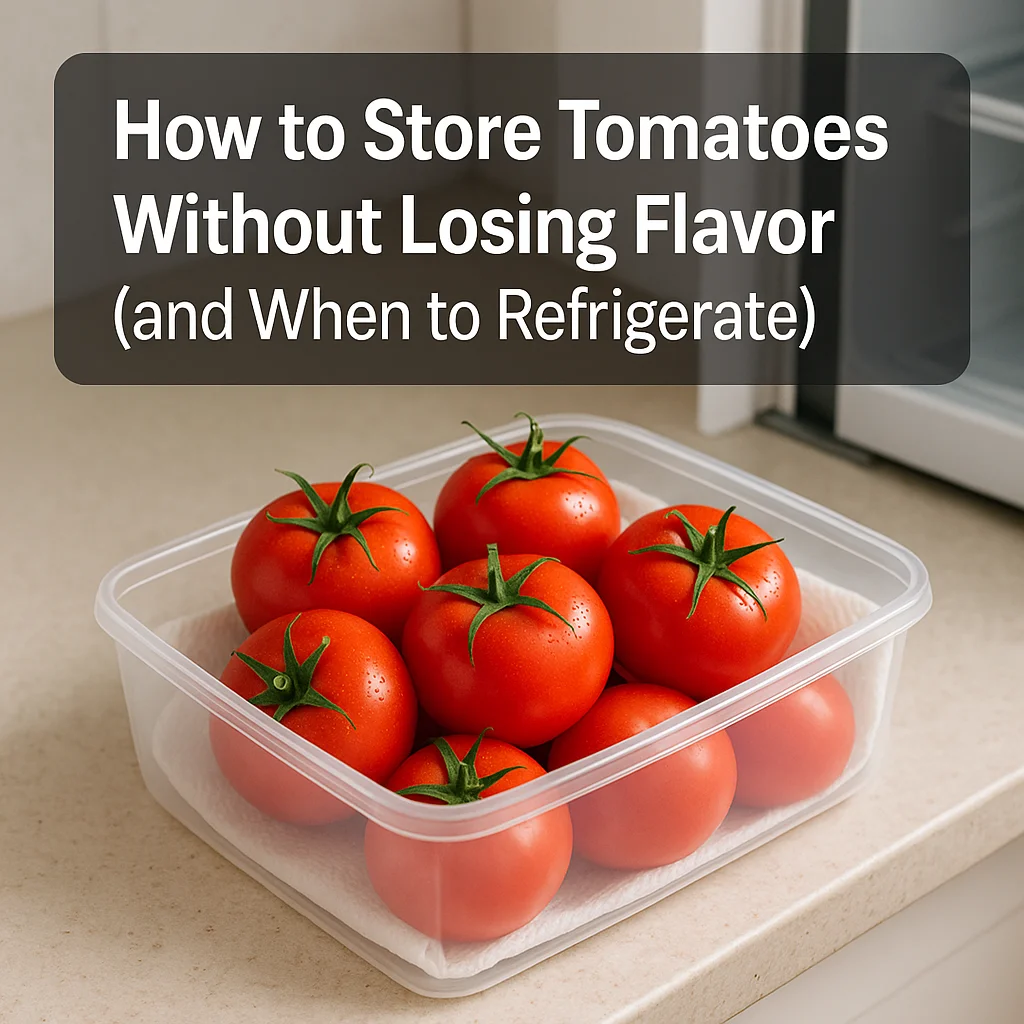
Fast Rules for Storing Tomatoes
- Store fresh tomatoes at room temperature, out of direct sunlight.
- Use a vented container or a bowl lined with a paper towel.
- If tomatoes are unripe, place them in a single layer, stem-side up.
- Never refrigerate tomatoes until they're ripe (or overripe).
- Refrigerate only firm, ripe tomatoes to extend shelf life without flavor loss.
- Avoid storing tomatoes with ethylene-producing fruits like bananas.
- Check daily for signs of ripeness or spoilage.
- Keep cut tomatoes in an airtight container in the fridge.
Picking Perfect Tomatoes at the Store
To ensure the best start, choose tomatoes that are firm with a slight give and are free from obvious blemishes or wrinkles. Look for vibrant, uniform coloring, a sweet earthy smell, and avoid any that are overly soft or have a dull appearance. Trust your senses!
Step-by-Step: Optimal Tomato Storage
Your goal is to balance moisture and ethylene exposure to maintain flavor and texture. Here’s how:
- Place unripe tomatoes stem-side up on a clean, dry surface to ripen naturally. Why: This position reduces bruising and retains moisture. Look for: They should have a uniform color and firmness.
- Check daily for ripeness by gently pressing the flesh—it should yield slightly but not be soft. Why: Overripe tomatoes quickly lose flavor and texture. Look for: Bright, deep color and no mushiness.
- Once ripe, if you can't use them immediately, refrigerate to slow down the rotting process. Why: Cold slows down enzyme activity that causes spoilage. Look for: Firm and cold to the touch.
- Store ripe tomatoes in a vented container at the lower part of the fridge. Why: This minimizes moisture buildup and temperature swings. Look for: No condensation on tomatoes.
- Place a paper towel at the bottom of the container to absorb excess moisture. Why: Moisture accelerates mold and spoilage. Look for: Dry paper towel, replace if damp.
- If tomatoes start to overripe, use them quickly in sauces or stews. Why: Overripe tomatoes are still flavorful but less firm. Look for: Soft spots or very deep color.
- Avoid storing tomatoes next to ethylene-sensitive produce like leafy greens. Why: Ethylene accelerates their ripening. Look for: Fresh appearance of nearby veggies.
- If storing cut tomatoes, seal them in an airtight container and place in the fridge. Why: This prevents dehydration and contamination. Look for: Bright, fresh surface.
If problems arise, follow this troubleshooting list:
- If tomatoes wrinkle, they've lost moisture; dehydrate for a longer shelf life.
- If they taste bland, they were likely refrigerated too early; let them ripen at room temp next time.
- If mold appears, they've been stored too damp; ensure vented storage next time.
- If they're still hard after days, they lack ethylene; pair with bananas.
- If they become too soft, make sauce immediately.
- If they're slimy, they’re spoiled; discard them.
- If any sour smell, they’ve gone off; compost immediately.
- If condensation is found, replace paper towel or open vent.
15–20 Minute Weekly Prep Routine
- Check all tomatoes and sort by ripeness: unripe on the counter, ripe in the fridge.
- Wipe down surfaces for cleanliness and moisture control.
- Replace paper towels in any storage containers to manage moisture.
- Plan meals that use overripe tomatoes first.
- Organize fridge for minimal temperature fluctuation.
- Inspect for spoilage regularly and adjust storage conditions as needed.
If I Only Had 2 Minutes
- Quickly sort tomatoes: ripe in fridge, unripe on counter.
- Lay a new paper towel in storage containers.
- Check for any that need immediate use.
If your fridge is weird: If it tends to be too dry, place a bowl of water to increase humidity. If too humid, add a dehumidifier or keep tomatoes closer to the door.
Avoid These Common Storage Mistakes
- Refrigerating unripe tomatoes → they lose flavor → Let ripen first.
- Storing in plastic bags → traps moisture → Use vented containers.
- Exposure to direct sunlight → speeds spoilage → Store in a cool shady spot.
- Ignoring daily checks → forget ripe state changes → Regular inspection is key.
- Mixing with ethylene producers → speeds ripening → Store them separately.
- Not using ripened ones first → waste and spoilage → Prioritize by ripeness.
- Ignoring condensation in the fridge → promotes mold → Replace paper towels often.
- Leaving sliced tomatoes uncovered → dehydration → Use airtight containers.
- Not separating from ripe bananas in the kitchen → unnecessary ripening → Maintain separate fruit bowls.
- Thinking a too-cold fridge will be better → disappointing texture → Check settings; optimal is ~45°F for tomatoes.
Food Safety Notes
Always wash tomatoes right before use, not when storing, as moisture increases mold risk. Discard tomatoes if you notice a sour smell, sliminess, mold, or off-taste, even if they appear okay.
Tomato Storage Quick Reference Table
| Produce | Best Storage | What to Avoid | Typical Problem | Quick Fix |
|---|---|---|---|---|
| Unripe Tomatoes | Counter, stem-side up | Refrigeration | Flavorless when ripening | Room temp ripening |
| Ripe Tomatoes | Fridge, vented container | Sunlight exposure | Losing moisture | Paper towel use |
| Sliced Tomatoes | Fridge, airtight container | Uncovered storage | Dehydration | Seal well |
FAQ
- Q: Should I refrigerate all tomatoes? A: No, only refrigerate fully ripe tomatoes to extend their freshness.
- Q: How do I store unripe tomatoes? A: Store them at room temperature, away from sunlight, until ripe.
- Q: How can I tell if a tomato is ripe? A: It will be slightly soft and have a deep color.
- Q: Why do my fridge tomatoes taste bland? A: They may have been refrigerated before they were fully ripe.
- Q: Can I eat tomatoes that have sprouted inside? A: It's better to discard these as sprouts may indicate age.
- Q: Can I store tomatoes with other fruits? A: Avoid storing with ethylene producers like bananas.
- Q: How often should I check stored tomatoes? A: Check them daily to manage ripeness and spoilage.
- Q: What's the best use for overripe tomatoes? A: Use them in sauces, soups, or stews for a rich flavor.
- Q: Are wrinkled tomatoes still good? A: They may be dehydrated but are often still usable for cooking.
- Q: What's the ideal fridge temperature for tomatoes? A: Aim for around 45°F for ideal storage.
Closing Thoughts
- Ripen first and refrigerate only if necessary to preserve flavor.
- Use vented containers and paper towels to minimize moisture issues.
- Check daily for ripeness to avoid spoilage and waste.
By applying these practical steps, you’ll enjoy delicious, fresh tomatoes and save money by avoiding spoilage. Want more tips? Explore our full guide library. Curious how ethylene affects different produce? Check our article on ethylene pairing.